



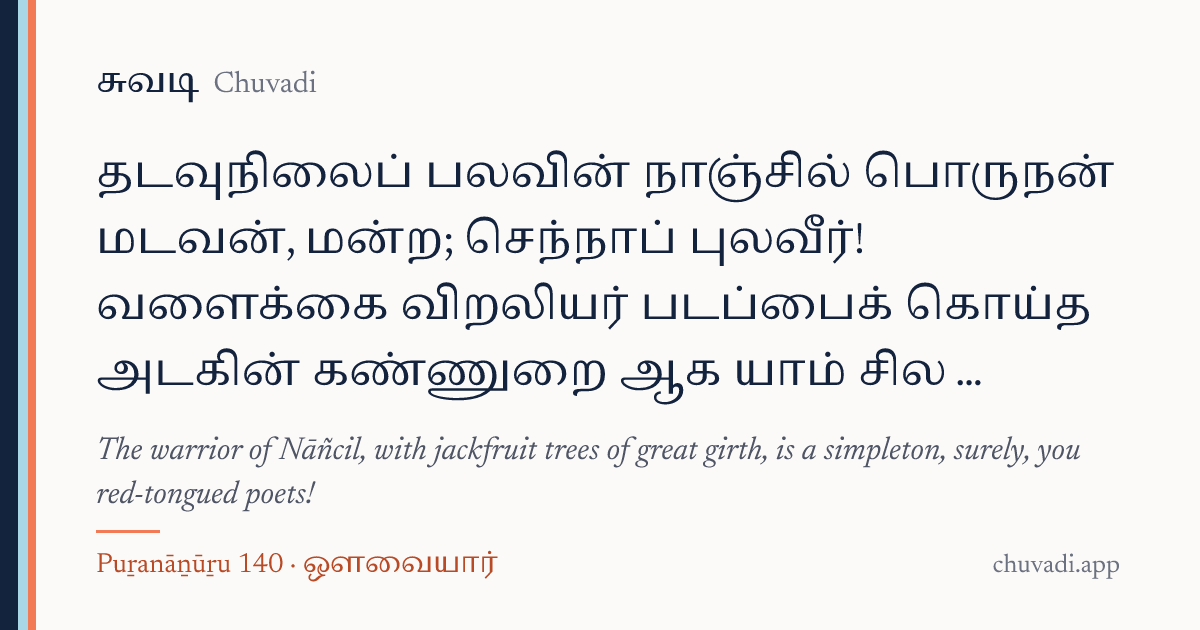
புறநானூறு 140
பாடல் · The poem
Tap a word to see where else it occurs.
பொருள் · Meaning in TamilAI
செந்நாப் புலவர்களே! பருத்த அடிமரங்களை உடைய பலாமரங்கள் நிறைந்த நாஞ்சில் நாட்டு வீரன் உறுதியாக ஒரு அறிவிலிதான். வளையல் அணிந்த விறலியர் தோட்டத்தில் கொய்து வந்த கீரையோடு சேர்த்துச் சமைக்கச் சிறிது அரிசி மட்டுமே நாங்கள் கேட்டோம். அவனோ வேறுவிதமான தகுதியின் அளவை அறிந்தவன் ஆதலால், தன் பெருமையையும் எடைபோட்டு, அடர்ந்த கரிய காடு சூழ்ந்த குன்றைப் போன்ற ஒரு பெரிய ஆண் யானையைக் கொடுத்தான். இப்படி அறிவில்லாத கொடையும் உலகில் உண்டோ? பெரியவர்கள் தமக்கு உரிய கடமையைப் பேணுவதில்லையோ?
பாடாண் திணை; துறை பரிசில் விடை, அதாவது பரிசிலனை அனுப்பும்போது கொடுக்கும் கொடை. பாடியவர் ஔவையார். பாடப்பட்டவன் ஆய் அண்டிரன் என்று குறிப்பு சொன்னாலும், பாடல் அவனை நாஞ்சில் பொருநன் என்றே குறிக்கிறது. 'மடவன்' என்று இகழ்வது போலச் சொல்லிப் புகழ்வது இப்பாடலின் நயம்.
ஆங்கிலம் · English translationAI
Translation
- The warrior of Nāñcil, with jackfruit trees of great girth,
- is a simpleton, surely, you red-tongued poets!
- To season the greens that the viṟalis with bangled arms
- had plucked in the garden, when we asked him for
- a little rice, he — since he knows ranks of another kind —
- weighing his own standing too,
- like a hill ringed round by dense dark forest,
- gave us one great bull elephant! Such
- senseless giving — can there be any like it?
- Do the great, then, not care what is fitting for them to do?
What the poem says
Auvaiyār tells a story against herself, in praise of the lord of Nāñcil. Her viṟalis had gathered some greens from a garden, and she asked the chieftain only for a little rice to cook with them. Instead, measuring the gift by his own greatness rather than by the request, he gave her a huge elephant, as large as a hill circled by forest. She calls him a fool, maṭavaṉ, and asks the other poets whether such senseless giving has ever been seen.
The tiṇai is pāṭāṇ, praise of a patron, and the turai paricil viṭai, the gift given at a suppliant's departure. The metadata names the patron as Āy Aṇṭiraṉ, but the poem itself calls him only the lord of Nāñcil.
The mock-scolding is a form of praise: the patron is a 'fool' only by the standard of ordinary prudence. The key idea, as in puram.121, is varicai, rank or due measure; here the patron judges by his own rank, not the poet's need. The last line is ironic, asking whether the great have no sense of their proper duty, when the point is that they follow a duty larger than common sense.