



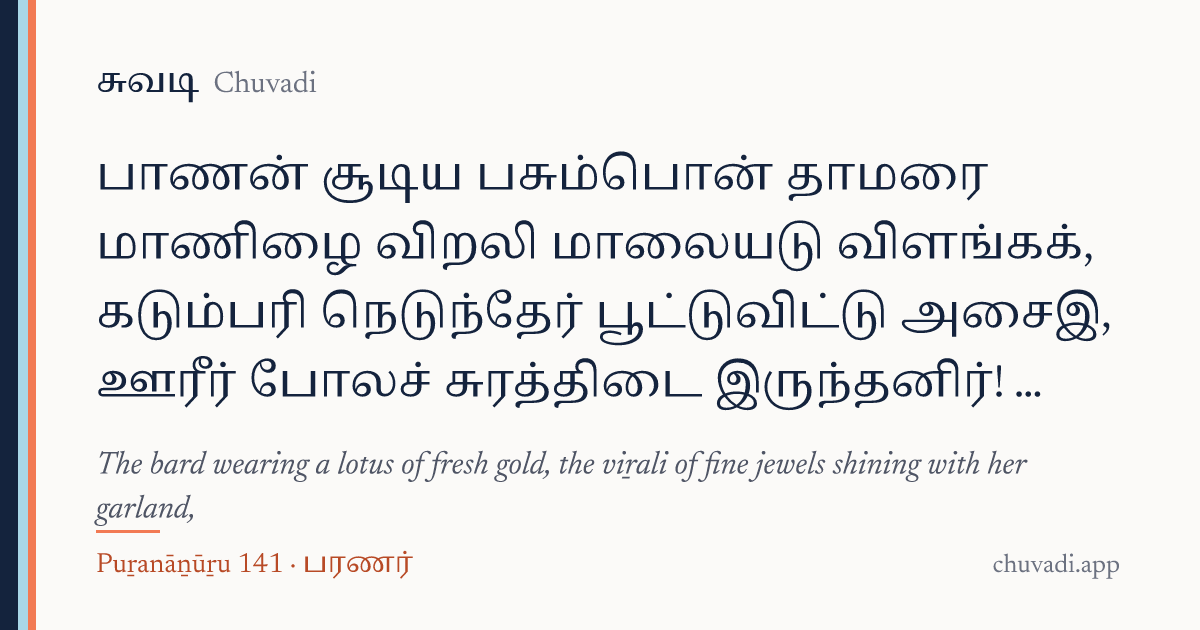
புறநானூறு 141
பாடல் · The poem
Tap a word to see where else it occurs.
பொருள் · Meaning in TamilAI
பசும்பொன்னால் ஆன தாமரையைச் சூடிய பாணனும், சிறந்த அணிகளை அணிந்து மாலையோடு விளங்கும் விறலியும், விரைந்து ஓடும் குதிரைகள் பூட்டிய நெடிய தேரை அவிழ்த்துவிட்டு இளைப்பாறி, நகரத்தில் வாழ்பவர்களைப் போலப் பாலை வழியில் அமர்ந்திருக்கிறீர்களே! நீங்கள் யார்? என்று ஓயாமல் கேட்கும், மெலிந்த சுற்றமும் கடும் பசியும் உடைய இரவலனே! வெற்றி தரும் வேலை உடைய தலைவனைக் காண்பதற்கு முன் நாங்கள் உன்னைவிட வறியவர்களாக இருந்தோம்; இப்போது இப்படி ஆகியிருக்கிறோம். மயில் ஒருநாளும் போர்வையை உடுக்கவோ போர்த்தவோ செய்யாது என்று அறிந்திருந்தும் அதற்குப் போர்வை கொடுத்தவன் எங்கள் அரசன், மதம் பொழியும் யானைகளும் துள்ளும் குதிரைகளும் உடைய பேகன். 'எவ்வளவு ஆனாலும் கொடுப்பது நல்லது' என்று மறுமையை நோக்குவதன்று அவனுடைய கைவண்மை; பிறருடைய வறுமையை நோக்குவதே அது.
பாடாண் திணை; துறை பாணாற்றுப்படை, புலவராற்றுப்படை என்றும் கொள்ளலாம். பாடியவர் பரணர்; பாடப்பட்டவன் வையாவிக் கோப்பெரும் பேகன். மயிலுக்குப் போர்வை கொடுத்த செய்தியைப் பாடலே சொல்கிறது. ஐந்தாம் அடியில் 'வனவல்' என்பது 'வினவல்' என்பதன் அச்சுப் பிழை; 'காரென் ஒக்கல்' என்பதன் பொருள் உறுதியாகத் தெரியவில்லை.
ஆங்கிலம் · English translationAI
Translation
- The bard wearing a lotus of fresh gold,
- the viṟali of fine jewels shining with her garland,
- unyoking the tall chariot with swift horses and resting,
- you sit in the wasteland as if you were townsfolk!
- 'Who are you?' — you keep asking and asking,
- suppliant, with your gaunt kin and your fierce hunger!
- Before we saw the lord of the victorious spear,
- we were poorer than you, once; and now
- we have become as you see. Though he knew
- that it would never wear it or wrap itself in it,
- he gave a mantle to the peacock — our king,
- Pēkaṉ of musth elephants and prancing horses.
- 'However much it is, giving is good' —
- it does not look in that way to the next world;
- it looks to others' want, his open-handedness.
What the poem says
Paraṇar imagines a scene on the road. A bard and a viṟali, wearing gold lotus and garlands, have unyoked their fast chariot and are resting in the wasteland as comfortably as townspeople. A hungry suppliant with his family keeps asking them who they are. The speaker answers: before we met Pēkaṉ we were poorer than you; now, thanks to him, we are like this.
He then describes the patron, Vaiyāvik Kōpperumpēkaṉ. Pēkaṉ once gave a mantle to a peacock, though he knew it could never wear it; and his giving is not done with an eye on rewards in the next life but with an eye on the want of others.
The tiṇai is pāṭāṇ, praise of a patron, and the turai pāṇāṟṟuppaṭai, guiding a bard to a patron, or alternatively pulavarāṟṟuppaṭai, guiding a poet. The peacock story is told by the poem itself and is the best-known image of Pēkaṉ. Line 5 has a misprint, vaṉaval for viṉaval, 'asking'. The phrase kāreṉ okkal in line 6 is unclear; it is taken as 'dark' or 'gaunt kin', worn by hunger, but the sense is uncertain.