



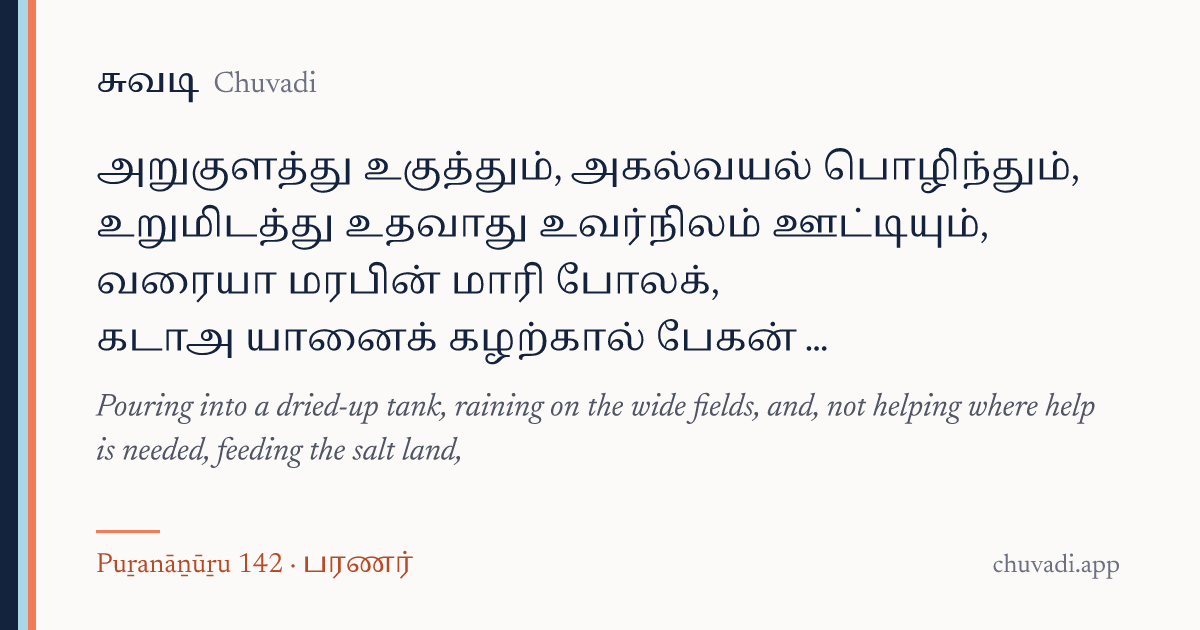
புறநானூறு 142
பாடல் · The poem
Tap a word to see where else it occurs.
பொருள் · Meaning in TamilAI
வறண்ட குளத்தில் பொழிந்தும், அகன்ற வயல்களில் பெய்தும், தேவைப்படும் இடத்தில் உதவாமல் உப்பு நிலத்திலும் பெய்து நனைத்தும், எல்லை வகுக்காத இயல்புடைய மழையைப் போல, மதம் பொழியும் யானைகளும் வீரக்கழல் அணிந்த கால்களும் உடைய பேகன் கொடுப்பதில் அறியாமை உடையவனாக இருக்கலாம்; ஆனால் பிறருடைய படைகள் அவனோடு மோதும்போது போரில் அவன் அறியாமை உடையவன் அல்லன்.
பாடாண் திணை, இயன்மொழித் துறை. பாடியவர் பரணர்; பாடப்பட்டவன் வையாவிக் கோப்பெரும் பேகன். 'கொடைமடம்', 'படைமடம்' என்ற இரண்டு சொற்களை எதிர் வைத்து, கொடையில் கணக்குப் பார்க்காதவன் போரில் தெளிவானவன் என்று புகழ்கிறார்.
ஆங்கிலம் · English translationAI
Translation
- Pouring into a dried-up tank, raining on the wide fields,
- and, not helping where help is needed, feeding the salt land,
- like the rain whose way is to know no limits,
- Pēkaṉ of the musth elephants and the anklet-wearing legs
- may be foolish in giving; but
- foolish in war he is not, when other armies close with him.
What the poem says
In six lines Paraṇar defends Pēkaṉ against a charge of folly. His giving, like the rain, has no bounds: it falls into the dried-up tank and on the broad fields, and even soaks the barren salt land where it does no good. So Pēkaṉ may be 'foolish in giving' (koṭai maṭam), but never 'foolish in war' (paṭai maṭam) when he meets the armies of others.
The tiṇai is pāṭāṇ, praise of a patron, and the turai iyaṉmoḻi, praise of the patron's nature.
The two compounds koṭaimaṭam and paṭaimaṭam turn on one word, maṭam, 'simplicity, foolishness': the patron's lack of calculation in giving is set against his sharp judgement in battle. The rain image echoes the peacock story of the previous poem, where Pēkaṉ gave without asking whether the gift could be used.