



புறநானூறு 143
பாடல் · The poem
Tap a word to see where else it occurs.
பொருள் · Meaning in TamilAI
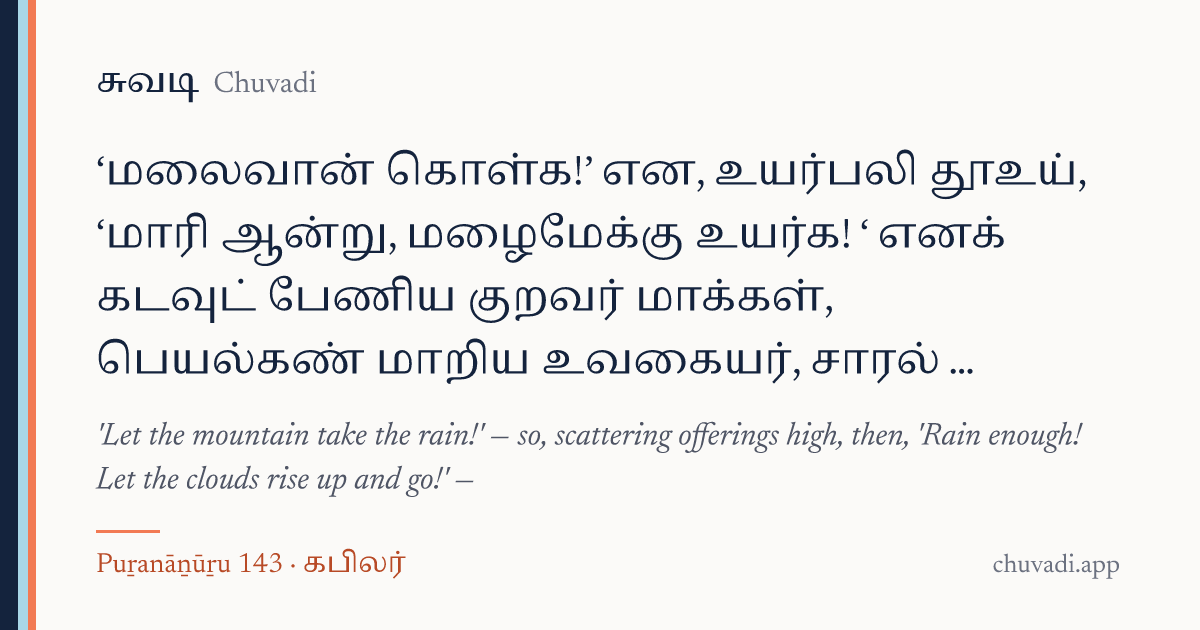
'மலை மழையைப் பெறட்டும்!' என்று உயர்த்திப் பலிப் பொருள்களைத் தூவி, பிறகு 'மழை போதும்; மேகங்கள் மேலே எழுந்து செல்லட்டும்!' என்று தெய்வத்தை வழிபடும் குறவர்கள், மழை நின்றதால் மகிழ்ந்து, மலைச்சாரலில் விளைவித்த தினையை உண்ணும் நாட்டின் தலைவனே! கடும் போரில் வல்லவனே! கை நிறைய வழங்குபவனே! விரைந்து செல்லும் குதிரையை உடைய பேகனே! இரங்கத் தக்க அவள் யாரோ? நேற்று, பாலை வழியில் அலைந்து களைத்த என் சுற்றம் பசித்ததால், குறுந்தடியால் அடிக்கப்படும் முரசு போல முழங்கும் அருவிகளை உடைய அடர்ந்த கரிய மலைச்சாரலில் உள்ள சிற்றூரில், ஒரு வீட்டு வாயிலில் சென்று நின்று வாழ்த்தி, உன்னையும் உன் மலையையும் பாடினேன். அப்போது அவள் துன்பத்தோடு பெருகிய கண்ணீரை நிறுத்த முடியாமல், மார்பு நனையும்படி விம்மி, குழல் புலம்புவது போலப் பெரிதும் அழுதாள்.
பெருந்திணை; துறை குறுங்கலி, அதாவது மனைவியைப் பிரிந்த தலைவனை அவளிடம் திரும்புமாறு வேண்டுவது; தாபதநிலை என்றும் கொள்வர். பாடியவர் கபிலர்; பாடப்பட்டவன் வையாவிக் கோப்பெரும் பேகன். அழுத பெண் பேகனின் மனைவி என்பது மரபு; பாடல் அவள் பெயரைச் சொல்லவில்லை.
ஆங்கிலம் · English translationAI
Translation
- 'Let the mountain take the rain!' — so, scattering offerings high,
- then, 'Rain enough! Let the clouds rise up and go!' —
- so the Kuṟava people, worshipping their god,
- glad that the downpour has turned away, on the slopes
- eat the millet they have grown: lord of such a land! In fierce war
- open-handed giver, Pēka with the swift horse!
- Who is she, I wonder, so pitiable? Yesterday,
- when my family, worn out by the wasteland, grew hungry,
- with waterfalls that roar like a drum struck with sticks
- on the dense dark slopes, in the little village there,
- I appeared at the gate, stood offering blessings,
- and sang of you and your mountain; in grief
- she could not stop the tears that she let fall;
- wetting her breast, sobbing,
- like a flute that mourns, she wept and wept.
What the poem says
Kapilar tells Pēkaṉ of something he saw the day before. Hungry after crossing the wasteland, he and his family came to a small village among the waterfalls of Pēkaṉ's hills. He stood at a gate, blessed the house, and sang of Pēkaṉ and his mountain. A woman there, hearing the song, could not hold back her tears; she sobbed until her breast was wet, weeping like a mournful flute. Kapilar asks, 'Who is she, so pitiable?' The question is pointed: the poem implies that she is someone Pēkaṉ has neglected.
The tiṇai is peruntiṇai, a puṟam setting for love that is unequal or unhappy, and the turai kuṟuṅkali, a poem urging a man to return to a wife he has abandoned; tāpatanilai, the state of a woman living in austerity, is offered as an alternative. Tradition identifies the woman as Pēkaṉ's wife, whom he had left; the poem does not name her.
The opening scene sets the tone: the Kuṟavar pray to their god first for rain, then for the rain to stop, and then eat their millet in content. Their prayer answered stands in contrast to the woman whose grief has not been answered.