



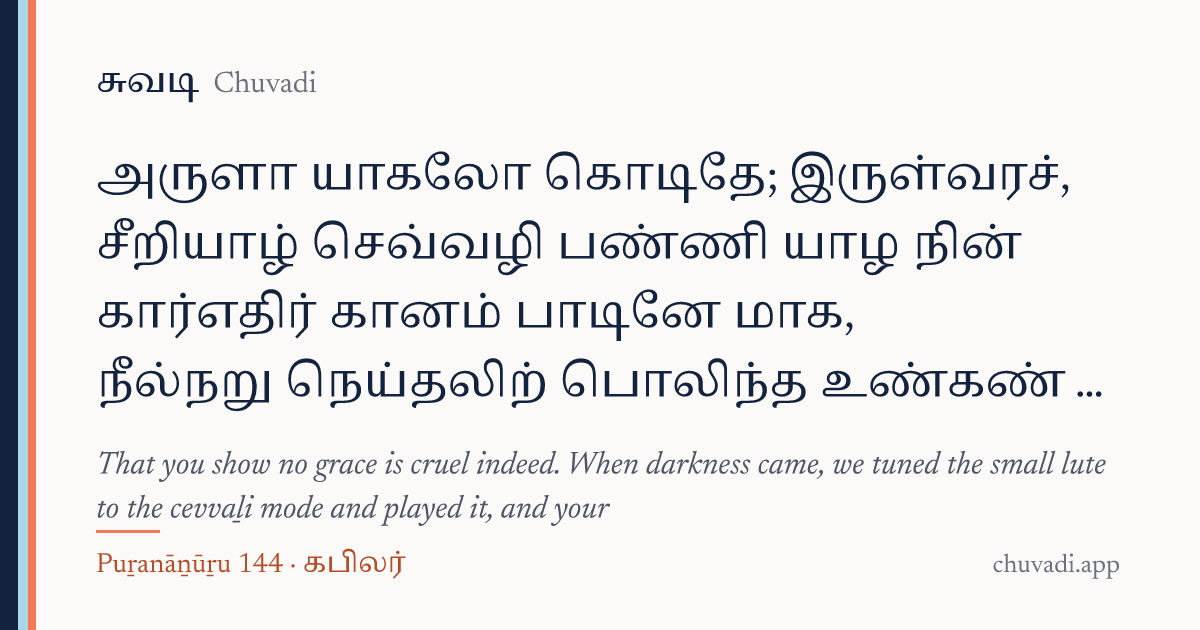
புறநானூறு 144
பாடல் · The poem
Tap a word to see where else it occurs.
பொருள் · Meaning in TamilAI
நீ அருள் காட்டாமல் இருப்பது கொடுமையானது. இருள் சூழ்ந்த மாலை நேரத்தில், சிறிய யாழில் செவ்வழிப் பண்ணை அமைத்து இசைத்து, கார் காலத்தை எதிர்கொள்ளும் உன் காட்டைப் பாடினோம். அப்போது மணமுள்ள நீல நெய்தல் மலரைவிட அழகிய, மை தீட்டிய அவள் கண்கள் கலங்கி, நீண்ட வரியாக வழிந்த கண்ணீர் அணிகலன்கள் கிடக்கும் மார்பை நனைக்க, அவள் வருந்துவதை நிறுத்தவில்லை. 'இளம்பெண்ணே! சுற்றத்தை விரும்பும் எங்கள் தலைவனுக்கு நீ உறவினளோ?' என்று நாங்கள் வணங்கிக் கேட்டோம். காந்தள் மொட்டுப் போன்ற விரல்களால் கண்ணீரைத் துடைத்துக்கொண்டு அவள் சொன்னாள்: 'நாங்கள் அவனுக்கு உறவினர் அல்லர்; இப்போது கேளுங்கள்: விளங்கும் புகழ் உடைய பேகன், என்னைப் போன்ற ஒருத்தியின் அழகை விரும்பி, ஒல்லென்று ஒலிக்கும் தேரோடு முல்லை வேலி சூழ்ந்த நல்ல ஊருக்கு எப்போதும் வருவான் என்று சொல்கிறார்கள்.'
பெருந்திணை, குறுங்கலித் துறை. பாடியவர் கபிலர்; பாடப்பட்டவன் வையாவிக் கோப்பெரும் பேகன். அழுபவள் பேகனின் மனைவி என்பது மரபு. 'நல்லூர்' என்பது ஊரின் பெயரா, நல்ல ஊர் என்ற பொருளா என்பது உறுதியாகத் தெரியவில்லை. செவ்வழி என்பது மாலைக்கு உரிய பண்.
ஆங்கிலம் · English translationAI
Translation
- That you show no grace is cruel indeed. When darkness came,
- we tuned the small lute to the cevvaḻi mode and played it, and your
- forest that welcomes the monsoon we sang; then
- her kohl-lined eyes, lovelier than the fragrant blue neytal,
- clouded, and long-streaked tears wet the place of her ornaments;
- she could not stop grieving. 'Young lady,
- are you a kinswoman of our lord, who loves his kin?'
- so we asked her, bowing; and with fingers like kāntaḷ
- buds she wiped away her tears:
- 'We are not his kin; listen now:
- longing for the beauty of another woman like me, always
- he comes, they say — Pēkaṉ of shining fame —
- with his chariot that rumbles loudly,
- to the good town with its hedge of jasmine.'
What the poem says
Kapilar again pleads with Pēkaṉ on behalf of a grieving woman. At dusk the poets played the small lute in the cevvaḻi mode and sang of Pēkaṉ's forest, which welcomes the rains. A woman listening began to cry, her tears running down onto her ornaments. Bowing, they asked whether she was a relative of their lord. Wiping her tears with fingers like kāntaḷ buds, she replied that she was no kin of his: Pēkaṉ, they say, comes always in his rumbling chariot to a town fenced with jasmine, drawn by the beauty of another woman like her.
The tiṇai is peruntiṇai, love that has gone wrong, and the turai kuṟuṅkali, urging a man to return to the wife he has left. Tradition takes the speaker to be Pēkaṉ's wife, though the poem does not name her.
Her answer is full of bitter irony: by denying that she is his 'kin', she shows how far he has left her. The phrase kēḷveyyōṉ in line 7 is taken as 'one who loves his kin'. Nallūr in the last line may be a place name or simply 'the good town'; the translation takes the second. Cevvaḻi is a named melodic mode, associated with the evening.