



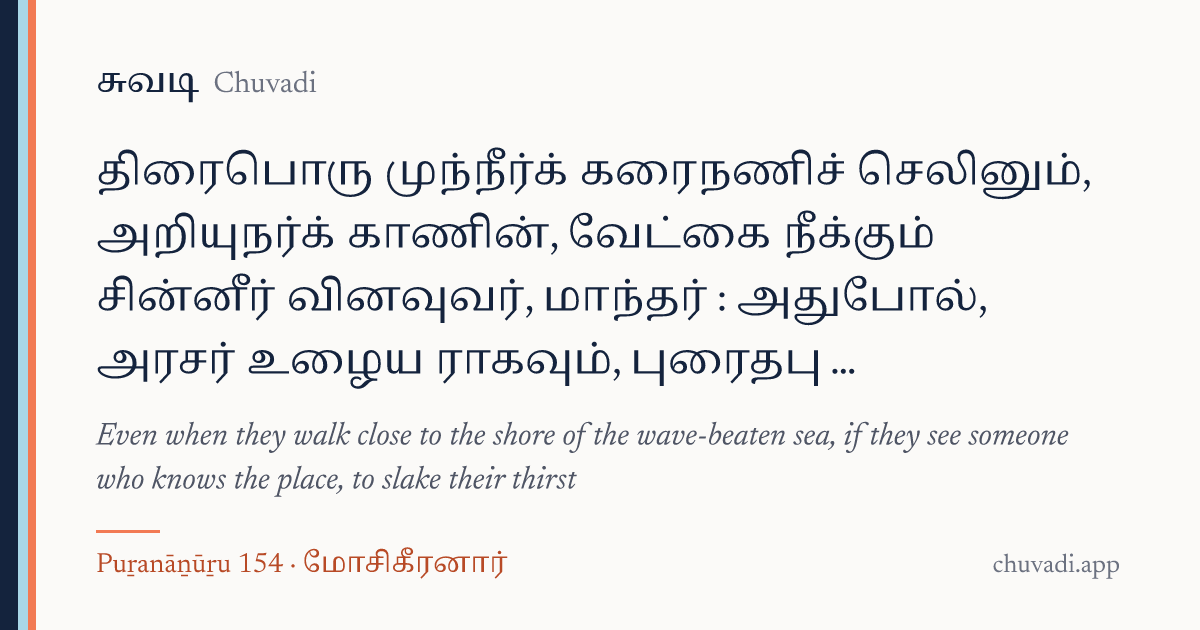
புறநானூறு 154
பாடல் · The poem
Tap a word to see where else it occurs.
பொருள் · Meaning in TamilAI
அலைகள் மோதும் கடற்கரையின் அருகே நடந்தாலும், அந்த இடத்தை அறிந்தவர்களைக் கண்டால், தாகம் தீர்க்கச் சிறிது நல்ல நீரைக் கேட்பார்கள் மக்கள். அதுபோல அருகிலேயே அரசர்கள் இருந்தாலும், புலவர்கள் குற்றமற்ற வள்ளல்களையே நாடிச் செல்வார்கள். ஆகவே நானும் 'கிடைத்ததே ஊதியம்; பெறுவது என்ன?' என்று கணக்குப் பேச மாட்டேன். நான் வறுமையுற்றதால் உன்னை நினைத்து வந்தேன். 'கொடு' என்று இரப்பது கடினமானதுதான். நீ கொடுத்தாலும் கொடுக்காவிட்டாலும், வெற்றி தரும் போரில் எறியப்படும் படைக்கலங்களுக்கு அஞ்சி ஓடாத உன் ஆண்மையையும், தூய வெண்மையான ஆடையை விரித்தது போல உச்சியிலிருந்து நெருங்கி இறங்கும் பல குளிர்ந்த அருவிகளை உடைய உன் கொண்பெருங்கானத்தையும் பாடுவது எனக்கு எளிது.
பாடாண் திணை, பரிசில் துறை. பாடியவர் மோசிகீரனார்; பாடப்பட்டவன் கொண்கானங் கிழான். ஆறாம் அடியின் பொருள் உறுதியாகத் தெரியவில்லை. பதின்மூன்றாம் அடியில் 'கொண்டுபெருங்கானம்' என்பது 'கொண்பெருங்கானம்' என்பதன் பிழையாகத் தெரிகிறது.
ஆங்கிலம் · English translationAI
Translation
- Even when they walk close to the shore of the wave-beaten sea,
- if they see someone who knows the place, to slake their thirst
- people will ask for a little water; just so,
- though there are kings close at hand, to the flawless
- generous ones poets will go; and so
- I do not say, 'What I get is the gain; what is there to win?'
- since I am in need, I have come with you in mind;
- to beg, saying 'Give!', is hard indeed! Whether you
- give it or whether you do not give, — your manliness that never runs
- from hurled weapons in victorious war, and, like the spread
- of pure white cloth, crowding down from on high,
- the many cool waterfalls that flow — your
- Koṇperuṅkāṉam: to sing of these is easy for me.
What the poem says
Mōcikīraṉār addresses Koṇkāṉaṅkiḻāṉ, lord of Koṇperuṅkāṉam, with a simile from everyday life. A traveller walking beside the sea still asks a local for a little drinking water, since sea water will not quench thirst. In the same way, poets may have kings close at hand, but they go to the truly generous. The poet admits he has come because he is in need, and that begging is hard; but whether the patron gives or not, singing of his courage in battle and of the cool waterfalls of his land, white as spread cloth, comes easily.
The tiṇai is pāṭāṇ, praise of a patron, and the turai paricil, a poem connected with a gift.
The poem's dignity lies in the last turn: the praise is offered freely, not as a bargain. Line 6 is difficult and the translation is tentative; it seems to mean that the poet does not calculate gain. The name of the patron's land appears in the edition as koṇṭuperuṅkāṉam in line 13, probably a misprint for koṇperuṅkāṉam, the form found in puram.156.