



புறநானூறு 155
பாடல் · The poem
Tap a word to see where else it occurs.
பொருள் · Meaning in TamilAI
வளைந்த தண்டை உடைய சிறிய யாழை மெலிந்த விலாப்பக்கத்தில் அணைத்துக்கொண்டு, 'என் துன்பத்தைத் தீர்க்க யாரேனும் உணர்ந்துகொள்வாரோ?' என்று சொல்லும் பாணனே! இனி அன்போடு கேள். பாழடைந்த ஊரில் உள்ள நெருஞ்சியின் வெளிர்ந்த மலர்கள் எழுகின்ற கதிரவனை எதிர்நோக்கி நிற்பது போல, வறுமையுற்ற புலவர்களின் கிண்ணங்கள் விளங்கும் புகழ் உடைய கொண்பெருங்கானத்துத் தலைவனின் குளிர்ந்த மாலை அணிந்த மார்பை நோக்கி மலர்ந்து நிற்கும்.
பாடாண் திணை, பாணாற்றுப்படைத் துறை. பாடியவர் மோசிகீரனார்; பாடப்பட்டவன் கொண்கானங் கிழான். நெருஞ்சிப் பூ கதிரவனை நோக்கித் திரும்பும் என்பது மரபான நம்பிக்கை. ஏழாம் அடியில் 'கொண்பெருங்காலத்து' என்பது 'கொண்பெருங்கானத்து' என்பதன் அச்சுப் பிழை.
ஆங்கிலம் · English translationAI
Translation
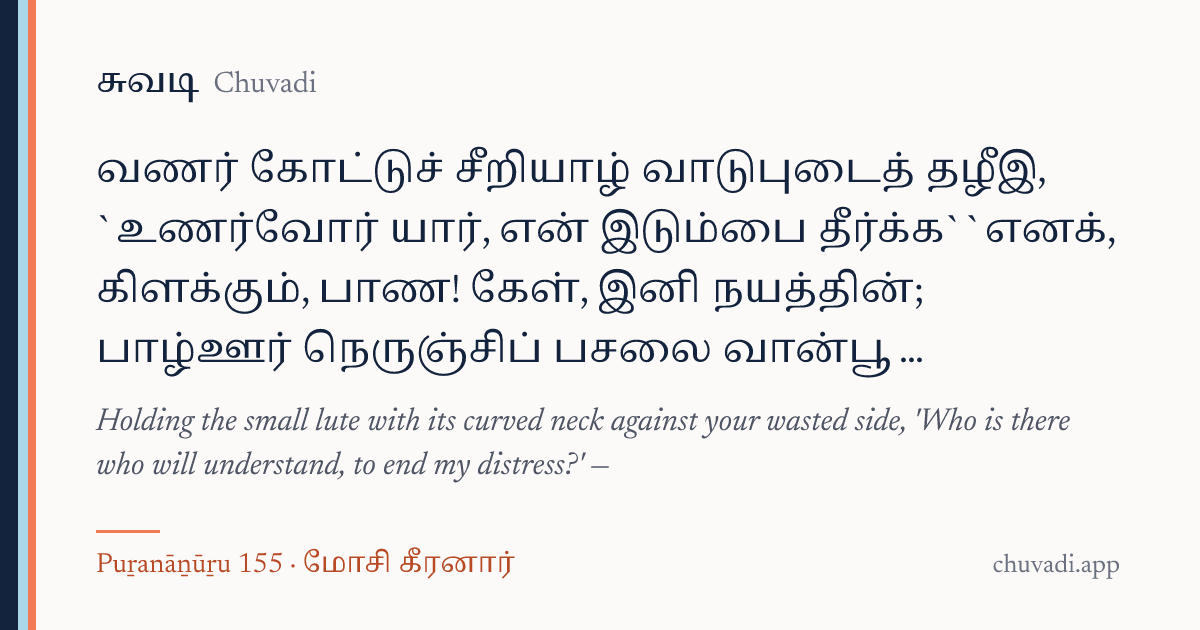
- Holding the small lute with its curved neck against your wasted side,
- 'Who is there who will understand, to end my distress?' —
- so you cry, bard! Listen now, with care:
- as the pale white flowers of neruñci in a deserted village
- turn to face the rising sun,
- the bowls of poets in want — the one of shining fame,
- the lord of Koṇperuṅkāṉam —
- look to his chest with its cool garland, and they open.
What the poem says
A short guide-poem by Mōcikīraṉār. A thin and hungry bard, clutching his small lute, asks who will understand his trouble and end it. The poet tells him to listen: the begging bowls of needy poets turn towards the lord of Koṇperuṅkāṉam just as the pale neruñci flowers of an abandoned village turn to face the rising sun, and when they look on his garlanded chest, they open.
The tiṇai is pāṭāṇ, praise of a patron, and the turai pāṇāṟṟuppaṭai, guiding a bard to a patron.
The neruñci is a small plant of waste ground whose flowers were believed to turn towards the sun; the image is apt because the bard, like the flower, belongs to a place of poverty. The bowls 'opening' like flowers means that they are filled. The edition prints koṇperuṅkālattu in line 7, evidently a misprint for koṇperuṅkāṉattu, the patron's land.