



புறநானூறு 172
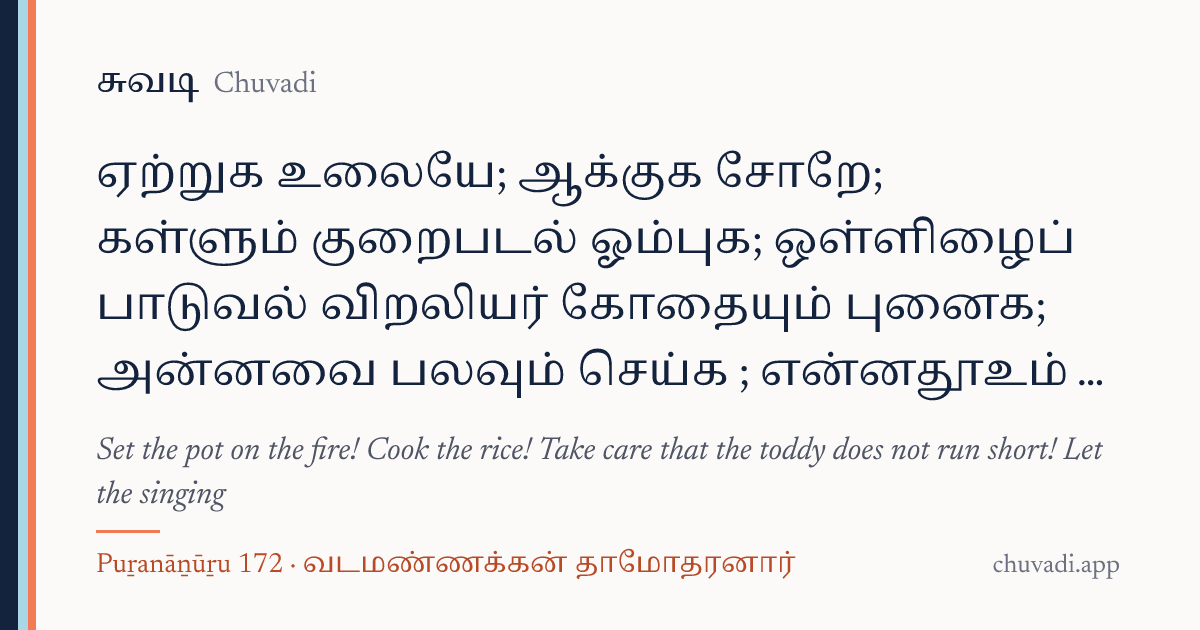
பாடல் · The poem
Tap a word to see where else it occurs.
பொருள் · Meaning in TamilAI
உலையை ஏற்றுங்கள்; சோற்றைச் சமையுங்கள்; கள்ளும் குறையாமல் பார்த்துக்கொள்ளுங்கள்; ஒளிரும் அணிகலன்களையுடைய பாடும் விறலியர் மாலைகளையும் அணிந்துகொள்ளட்டும்; அவை போன்ற பலவற்றையும் செய்யுங்கள்; எதைப் பற்றியும் கவலைப்பட வேண்டாம். மலைநெல்லைக் காப்பதற்காக மூட்டிய தீ அணையும் நேரத்தில், ஒளிவீசும் அழகிய மணிகள் அடர்ந்த இருளை அகற்றும் வன்புல நாட்டின் தலைவன், வலிய குதிரையையுடைய பிட்டன். அவனுடைய அரிய போர்களை வெல்லும் வேலும், அவனுடைய அரசனாகிய பெருங்கொடையாளன் கோதையும், அவனோடு பகைகொண்ட மன்னர்களும் நீண்ட காலம் வாழ்வார்களாக!
இது பாடாண் திணை, இயன்மொழித் துறை. பாடியவர் வடமண்ணக்கன் தாமோதரனார்; பாடப்பட்டவன் பிட்டங்கொற்றன். ஐந்தாம், ஆறாம் அடிகளின் தொடர் அமைப்பு உறுதியாகத் தெரியவில்லை; பகைமன்னரையும் வாழ்த்துவதன் காரணம் பாடலில் சொல்லப்படவில்லை.
ஆங்கிலம் · English translationAI
Translation
- Set the pot on the fire! Cook the rice!
- Take care that the toddy does not run short! Let the singing
- viṟaliyar with bright jewels put on their garlands too!
- Do all these many things! About anything at all
- there is no need to worry; looking for the right moment,
- when the fire set to guard the hill rice dies down,
- bright, well-cut gems drive away the thick darkness
- in the country of hard land of Piṭṭaṉ with strong horses;
- may the spear that wins through hard battles, and his king,
- Kōtai, of great and generous giving,
- and the hostile kings as well, all live long!
What the poem says
Vaṭamaṇṇakkaṉ Tāmōtaraṉār opens with a string of cheerful orders to his household or company: put the pot on, cook the rice, don't let the toddy run out, let the dancing women (viṟaliyar) put on their garlands. There is nothing to worry about, because they are on their way to Piṭṭaṉ. The tiṇai is pāṭāṇ and the turai iyaṉmoḻi, a plain statement of the patron's nature.
Piṭṭaṉ's "hard country" (vaṉpulam, rocky upland) is described in a single image: when the fires lit at night to guard the hill rice from animals die down, shining gems lying on the ground light up the darkness. The blessing at the end is surprising. The poet wishes long life to Piṭṭaṉ's spear, to his overlord Kōtai, who is himself praised as a great giver, and also to the kings who are Piṭṭaṉ's enemies. Presumably as long as they live the hero has battles to win and fame to earn, though the poem does not say why.
Lines 5–6 are compressed and their syntax is uncertain. Varupatam nāṭi ("looking for the coming moment") and nantiṉ ("if it goes out") are read here as describing the night-fires in the fields. Kōtai is named only as "his king", Piṭṭaṉ's lord.