



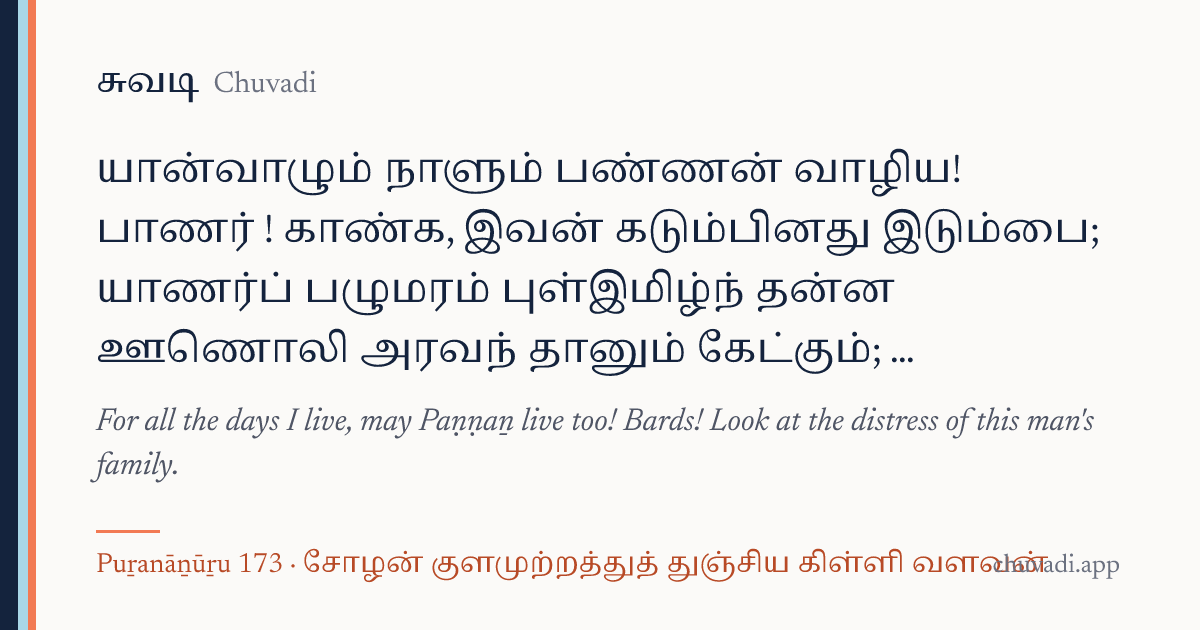
புறநானூறு 173
பாடல் · The poem
Tap a word to see where else it occurs.
பொருள் · Meaning in TamilAI
நான் வாழும் நாள்களிலும் பண்ணன் வாழ்வானாக! பாணர்களே, இவனுடைய குடும்பத்தின் துன்பத்தைப் பாருங்கள். புதுவளம் நிறைந்த பழமரத்தில் பறவைகள் ஆரவாரிப்பது போல உணவு உண்ணும் ஆரவாரம் கேட்கிறது. பொய்க்காத மேகம் மழை பெய்யும் இடத்தை அறிந்து, தம் முட்டைகளைச் சுமந்துகொண்டு மேட்டுநிலத்துக்குச் செல்லும் சிறிய நுண்ணிய எறும்புகளின் வரிசை போல, கையில் சோற்றோடு பெருமிதமாக அணிவகுத்துச் செல்லும் பெரிய குடும்பத்துச் சிறுவர்களைக் காண்கிறோம். கண்டும், மீண்டும் மீண்டும் தெளிவாகக் கேட்கிறோம்: “பசி என்னும் நோயைத் தீர்க்கும் மருத்துவனின் வீடு அருகிலா இருக்கிறது? தொலைவிலா இருக்கிறது? எங்களுக்குச் சொல்லுங்கள்!”
இது பாடாண் திணை, இயன்மொழித் துறை. பாடியவன் சோழன் குளமுற்றத்துத் துஞ்சிய கிள்ளிவளவன்; பாடப்பட்டவன் சிறுகுடி கிழான் பண்ணன். மூன்றாம் அடி முதல் பேசுபவர் அரசனா, பசித்த பாணனா என்பது உறுதியாகத் தெரியவில்லை.
ஆங்கிலம் · English translationAI
Translation
- For all the days I live, may Paṇṇaṉ live too!
- Bards! Look at the distress of this man's family.
- Like birds clamouring in a fruit-laden tree in the season of plenty,
- the noise of feasting can be heard;
- like, watching where the unfailing cloud will rain,
- carrying their eggs to dry ground,
- the thin, tiny ants moving in a narrow line,
- with rice in their hands, going proudly one after another,
- we see the children of large families; and seeing them,
- again and again we ask, to be sure:
- 'The house of the doctor who cures the disease of hunger —
- is it near? is it far? Tell us!'
What the poem says
This poem is attributed to a king, the Cōḻa Kiḷḷivaḷavaṉ "who died at Kuḷamuṟṟam", and it praises Paṇṇaṉ, lord of Ciṟukuṭi (pāṭāṇ tiṇai, iyaṉmoḻi turai, stating a patron's nature). It opens with a striking wish: may Paṇṇaṉ live as long as the king himself does, as if the king would share his own lifespan.
The king then turns to bards and points to the distress of "this man's family", apparently a hungry minstrel's. The rest of the poem gives what such hungry people see and hear near Paṇṇaṉ's house: a noise of feasting like birds in a fruiting tree, and children from large families walking along with rice in their hands, as proudly as a line of ants carrying their eggs to high ground before the rain. Seeing this, "we" keep asking: where is the house of the doctor of hunger?
Who exactly speaks lines 3–12 is not certain. They may be the king voicing the hungry bard, or the bard's company itself. "Doctor of the disease of hunger" (pacippiṇi maruttuvaṉ) is the poem's memorable name for a generous patron, and here it means Paṇṇaṉ.