



புறநானூறு 174
பாடல் · The poem
Tap a word to see where else it occurs.
பொருள் · Meaning in TamilAI
அச்சம் தரும் அவுணர்கள் கூட்டமாகச் சேர்ந்து கதிரவனை ஒளித்து வைத்ததால், தொலைவரை ஒளிவீசும் சிறப்புடைய ஞாயிற்றைக் காண முடியாமல், இருள் கண்களைக் குருடாக்கிய உலகத்தின் துன்பம் தீரும்படி, பெருவலிமையுடைய கரிய நிறத்தோன் அதைக் கொண்டுவந்து நிலைநிறுத்தியது போல, அரசனை இழந்து இருந்த துயரக் காலத்தில், முரசு முழங்கும் முற்றங்களையும், கரையை மோதி ஒலிக்கும் வெள்ளத்தையும் உடைய பெரிய காவிரியின் வளமான நல்ல நாட்டின் துன்பம் தீரும்படி, பொய்யாத நாவுடைய கபிலன் பாடிய, மேகம் தவழும் நெடிய மலையாகிய, போர்விரும்பும் வீரர்கள் புறமுதுகிட்டு ஓடியதைக் கண்ட, குற்றமற்ற சிறப்புடைய முள்ளூர் மலையின் உச்சியில், அரிய இடத்தில் தங்கியிருந்த பெருவெற்றியுடைய வளவனின் நிலவுபோன்ற வெண்குடையைக் காட்டி, அந்தக் குடையை மீண்டும் புதிதாக நிலைநிறுத்திய புகழ்மிக்கவனே! மலைப்பிளவில் வாழும் புலி பொறிக்கப்பட்ட கோட்டையும், ஒளிரும் அணிகலனும், வண்டு மொய்க்கும் மாலையும் உடைய பெரும்புகழ் பெற்ற உன் முன்னோன், இங்கே செய்த நல்வினைப் பயனை அங்கே சென்று நுகர்வதற்காக மேலோர் உலகத்துக்குச் சென்றுவிட்டான். ஆகவே வழிகளின் பக்கமெல்லாம் திசைதோறும் தேடிக் கவலைப்படும் நெஞ்சங்களின் துயரம் தீரும்படி, நீ தோன்றினாய், வரிசையான மாலையுடைய தலைவனே! கற்கள் பொடியாகவும், காடு வெந்து போகவும், நீர் நிறைந்த நாட்டில் குளங்கள் பல வறளவும், நீண்ட கோடையால் ஈரமற்றுப்போன காலத்தில், பெரிய நிலம் வளையும்படி திரண்டு, இடி முழங்கும் மேகம் மழை பொழிந்தது போல!
இது வாகைத் திணை, அரச வாகைத் துறை. பாடியவர் மாறோக்கத்து நப்பசலையார்; பாடப்பட்டவன் மலையமான் சோழிய வேனாதி திருக்கண்ணன். “நும்முன்” என்பவன் யார், பாடப்பட்டவனுக்கு என்ன உறவு என்பது பாடலில் தெளிவாக இல்லை.
ஆங்கிலம் · English translationAI
Translation
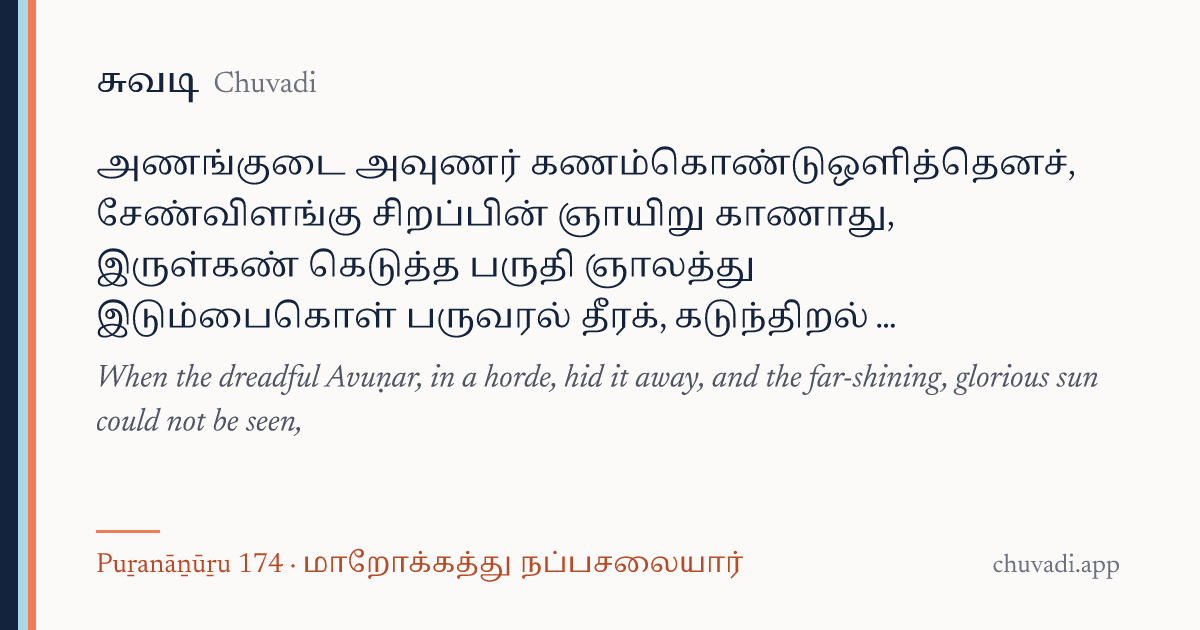
- When the dreadful Avuṇar, in a horde, hid it away,
- and the far-shining, glorious sun could not be seen,
- in the round world where darkness had blinded every eye,
- so that the anguish of that suffering might end, the mighty
- one of collyrium hue brought it back and set it in place — just so,
- in the time of distress when the land had lost its king,
- with courtyards where drums rise and resound, beating at its banks,
- its rumbling flood pressing on, of the great Kāviri's
- rich, good country — so that its distress might end,
- on that place which Kapilaṉ of unfailing tongue has sung,
- the tall dark-clouded mountain, where swiftly
- the backs of battle-loving warriors were seen in flight,
- on the summit of Muḷḷūr of flawless excellence,
- the very victorious Vaḷavaṉ who was staying in that hard place —
- you showed his moon-like white umbrella, and that umbrella
- you set up anew, you who excel in fame!
- With the fort marked with the tiger of the rock-cleft, with shining jewels,
- with a garland swarming with bees, your elder of great name,
- to go there and enjoy the good deeds he had done here,
- has departed to the world of the exalted; and so,
- searching through the regions along the roads,
- so that the grief of anxious hearts might end,
- you appeared — lord with a garland of rows of flowers! —
- as when the rocks crack to powder, the forest burns,
- in the land of brimming waters many pools dry up,
- in the parched time when summer has lasted long,
- so that the wide earth bends beneath it, massing,
- the cloud full of roaring thunder pours down its rain!
What the poem says
Māṟōkkattu Nappacalaiyār praises Malaiyamāṉ Cōḻiya Vēṉāti Tirukkaṇṇaṉ (vākai tiṇai, arasa vākai: the excellence of a ruler). The poem is built around two large comparisons.
The first is mythical. When demons (Avuṇar) hid the sun and the world was blind with darkness, the god "of collyrium hue", the dark-bodied one, brought it back. In the same way, when the rich Kāviri country had lost its king and was in distress, the patron went to Muḷḷūr, a mountain the poem says Kapilaṉ had sung, where a Cōḻa (Vaḷavaṉ) was staying in a hard place, and he brought out that king's white umbrella, the symbol of royal rule, and set it up again. The poem gives no details beyond this: no names of rivals, no date.
The second part speaks of "your elder of great name", whose fort is marked with the tiger, and who has gone to the world of the exalted to enjoy the fruit of his good deeds. When grieving hearts were searching every road, the patron appeared like rain after a long drought, when rocks crack and pools dry up. Who this elder was, and how he was related to the patron, the poem does not make clear; nummuṉ can mean "your elder brother" or simply "the one before you". Aruvaḻi in line 14, "hard place", may mean a refuge or a difficult pass.