



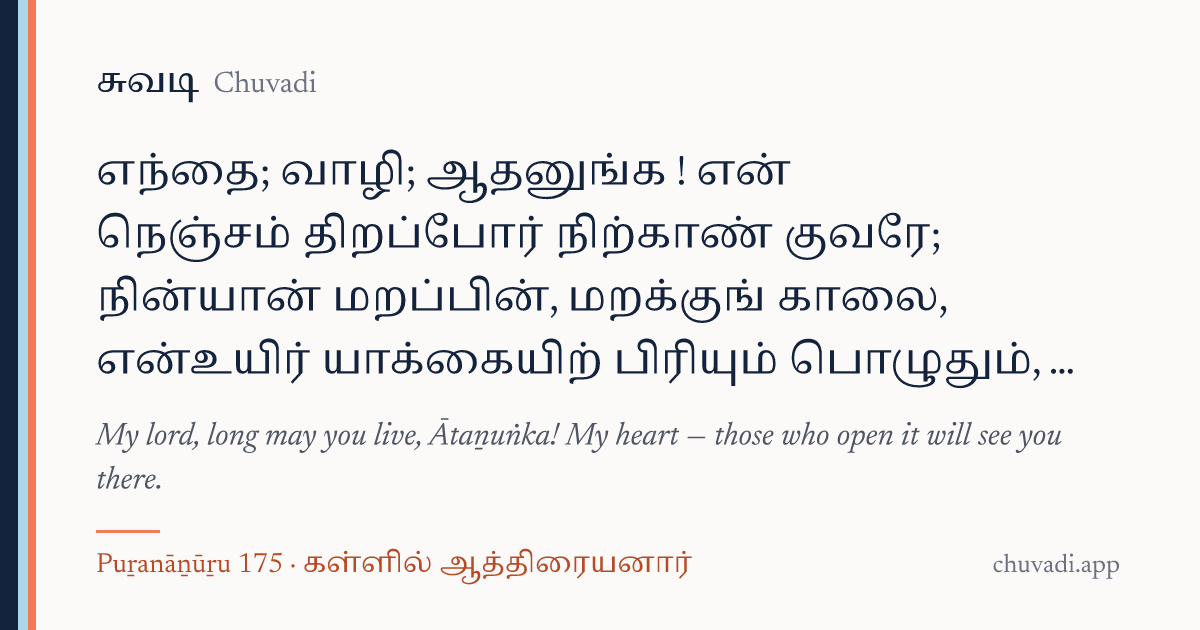
புறநானூறு 175
பாடல் · The poem
Tap a word to see where else it occurs.
பொருள் · Meaning in TamilAI
என் தலைவனே, ஆதனுங்கனே, வாழ்வாயாக! என் நெஞ்சைத் திறந்து பார்ப்பவர்கள் அங்கே உன்னைக் காண்பார்கள். நான் உன்னை மறப்பதென்றால், அது என் உயிர் என் உடலைவிட்டுப் பிரியும் நேரத்தில்தான்; என்னை நான் மறந்தால்தான் உன்னை மறப்பேன். வெற்றி வேலும், வானைத் தொடும் உயர்ந்த குடையும், கொடியுடைய தேரும் கொண்ட மோரியர், வலிய விளிம்புடைய தம் தேர்ச்சக்கரம் உருண்டு செல்லும்படி வெட்டிய, உலகின் வழியில் உள்ள பாறைப்பிளவில் நிலைத்திருக்கும், அகன்று திறந்த வட்டத்தைப் போல, நாள்தோறும் பலரையும் காக்கும் பொறுப்பை ஏற்று அறவழியில் நிற்பவன் நீ.
இது பாடாண் திணை, இயன்மொழித் துறை. பாடியவர் கள்ளில் ஆத்திரையனார்; பாடப்பட்டவன் ஆதனுங்கன். எட்டாம், ஒன்பதாம் அடிகளில் உள்ள “மண்டிலம்” கதிரவனைக் குறிக்கிறதா, பாறைவழியின் வட்டத் திறப்பைக் குறிக்கிறதா என்பது உறுதியாகத் தெரியவில்லை.
ஆங்கிலம் · English translationAI
Translation
- My lord, long may you live, Ātaṉuṅka! My
- heart — those who open it will see you there.
- If I forget you, the time when I shall forget
- is when my life departs from my body;
- only if I forget myself shall I forget you. With victorious spears,
- the Mōriyar of sky-touching tall umbrellas and bannered chariots,
- so that the wheel with its strong rim might roll on, cut through
- the rock face in the passage of the world, which stands there still —
- like that broad, open-mouthed orb, every day
- you stand on the path of virtue, taking on the care of many.
What the poem says
Kaḷḷil Āttiraiyaṉār speaks to his patron Ātaṉuṅkaṉ with unusual intimacy (pāṭāṇ tiṇai, iyaṉmoḻi: stating the patron's nature). If anyone opened the poet's heart, they would find Ātaṉuṅkaṉ inside; he will forget him only when his life leaves his body, and that is when he forgets himself.
The second half is a difficult comparison. The Mōriyar, with tall umbrellas, bannered chariots and victorious spears, cut through a rock face in a "passage of the world" so that their chariot wheels could roll on. Something stands there still (nilaiiya), and the patron is "like that broad, open-mouthed orb (maṇṭilam)", taking on the protection of many every day. Maṇṭilam may mean the sun's disc seen through that cut, or the round opening of the pass itself; the line is genuinely uncertain, and the English keeps to the words.
The Mōriyar are generally taken to be the Mauryas. The poem itself says only that they cut a way through rock for their wheels. Entai, "my father, my lord", is the poet's affectionate title for his patron.