



புறநானூறு 176
பாடல் · The poem
Tap a word to see where else it occurs.
பொருள் · Meaning in TamilAI
விளையாட்டுக் கூட்டத்தில் இருக்கும் ஒளிரும் வளையல் அணிந்த சிறுமிகள், பன்றி உழுத கரிய சேற்றைக் கிளறும்போது, ஆமை இட்ட புலால் நாறும் முட்டைகளைத் தேன் மணக்கும் ஆம்பல் கிழங்கோடு சேர்த்துப் பெறுகிறார்கள். நீர் இரைந்து ஒலிக்கும் மதகுகளையுடைய பெரிய மாவிலங்கை நாட்டின் தலைவன், சிறிய யாழை மட்டும் உடைய வறியவர்களுக்கு அடைக்கலமான மலை போன்றவன் நல்லியக்கோடன். அவனை எனக்குத் தந்த ஊழே, நீ வாழ்வாயாக! பாரியின் பறம்பு மலையிலுள்ள குளிர்ந்த சுனையின் தெளிந்த நீரை, அதே ஊரில் இருப்பதால் மதிக்காமல் இருப்பவர்களைப் போல, அவனைக் காணாமல் கழிந்த நாள்களை எண்ணி, பின்வந்த நாள்களில் என் நெஞ்சம் வருந்துகிறது; அவனுடைய நிறைந்த மென்மையான பண்பைக் காணும்தோறும் அவற்றை நினைத்து வருந்துகிறது.
இது பாடாண் திணை, இயன்மொழித் துறை. பாடியவர் புறத்திணை நன்னாகனார்; பாடப்பட்டவன் ஓய்மான் நல்லியக்கோடன். “சொன்மலை” என்ற சொல்லின் பொருள் உறுதியாகத் தெரியவில்லை; இங்கே அடைக்கலம் தரும் மலை எனக் கொள்ளப்பட்டது.
ஆங்கிலம் · English translationAI
Translation
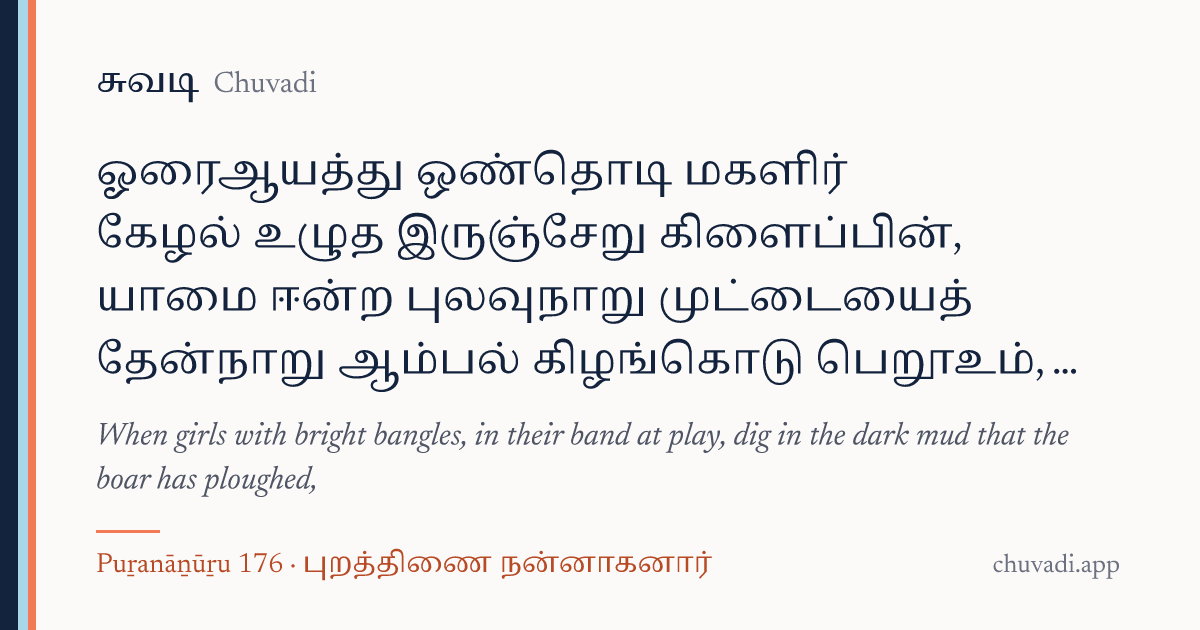
- When girls with bright bangles, in their band at play,
- dig in the dark mud that the boar has ploughed,
- they find the flesh-smelling eggs the tortoise has laid
- along with the honey-scented tubers of the āmpal —
- by the sluice gates where the water rushes with a gurgling sound,
- is the lord of great Māvilaṅkai, to the destitute with their small lutes
- a mountain of refuge — Nalliyakkōṭaṉ:
- you have given him to me, long may you live, O fate that joined us!
- Like those who think little of the clear water of the cool spring
- on Pāri's Paṟampu because they live in the same town,
- the days that passed without my seeing him — in the days that came after,
- my heart grieves for them; his
- gentle, abundant grace, each time I see it, makes me think of them.
What the poem says
Puṟattiṇai Naṉṉākaṉār speaks of his patron Ōymāṉ Nalliyakkōṭaṉ, lord of Māvilaṅkai (pāṭāṇ tiṇai, iyaṉmoḻi). The poem begins with a picture of the patron's fertile, watery land: girls playing in the mud a boar has turned up find tortoise eggs together with the sweet-smelling tubers of the āmpal (water lily), beside sluices full of rushing water.
The poet does not praise the patron directly. He thanks the fate (pāl) that brought them together, and then he regrets something. Like people who live in the same town as the famous cool spring on Pāri's hill Paṟampu and so never value its water, he once lived near this generous man without seeking him out. Now, each time he sees Nalliyakkōṭaṉ's gentle kindness, he grieves for all the days he wasted without seeing him.
The phrase colmalai in line 6 is unusual; it is taken here as "mountain of refuge" for poor bards, those with nothing but a small lute, but the exact sense is uncertain. Lines 11–12 can also be read as grief for the days to come without him; the reading adopted here follows the regret in the comparison.