



புறநானூறு 183
பாடல் · The poem
Tap a word to see where else it occurs.
பொருள் · Meaning in TamilAI
ஆசிரியருக்குத் தேவைப்படும்போது உதவி செய்தும், மிகுந்த பொருளைக் கொடுத்தும், பணிந்து பின்னே நிற்கும் நிலையை வெறுக்காமலும் கற்பது நல்லது! ஒரே வயிற்றில் ஒன்றுபோலப் பிறந்த பிள்ளைகளுக்குள்ளும், கல்விச் சிறப்பால் தாயின் மனமும் ஒருவன் பக்கம் சாயும். ஒரே குடியில் பிறந்த பலருக்குள்ளும், “மூத்தவன் வரட்டும்” என்று சொல்லாமல், அவர்களுள் அறிவுடையவன் காட்டும் வழியிலேயே அரசனும் செல்வான். வேறுபாடுகளால் அறியப்படும் நான்கு பிரிவுகளுக்குள்ளும், கீழ்ப்பிரிவைச் சேர்ந்த ஒருவன் கற்றவனானால், மேல்பிரிவைச் சேர்ந்த ஒருவனும் அவனிடம் கற்க வந்து பணிவான்.
இது பொதுவியல் திணை, பொருண்மொழிக் காஞ்சித் துறை; உலக உண்மைகளைச் சொல்வது. பாடியவன் ஆரியப்படை கடந்த நெடுஞ்செழியன் என்னும் பாண்டிய அரசன். பிறப்பைவிடக் கல்வியே உயர்வு தரும் என்பது பாடலின் கருத்து.
ஆங்கிலம் · English translationAI
Translation
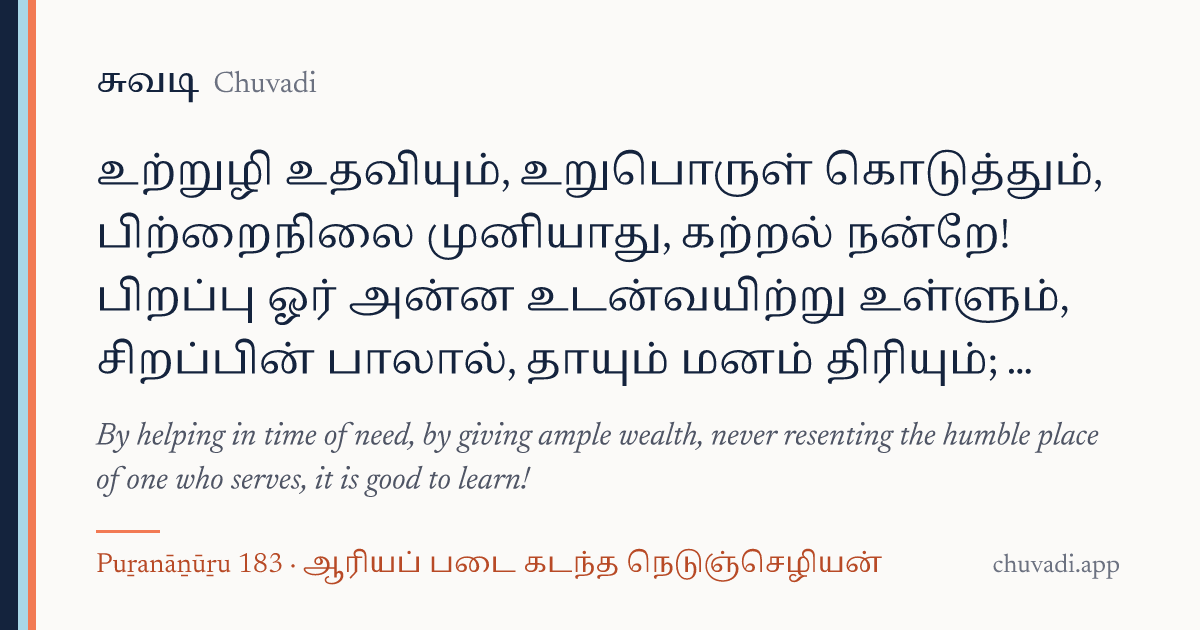
- By helping in time of need, by giving ample wealth,
- never resenting the humble place of one who serves, it is good to learn!
- Even among those born alike from the same womb,
- for the sake of excellence, a mother's heart will turn;
- among the many born in one family,
- not saying, 'Let the eldest come forward,' among them
- the path of the one with knowledge is what even the king will follow;
- among the four classes that are known by their differences,
- if a man of the lower class becomes learned,
- a man of the higher class too will come under him to learn.
What the poem says
This poem is ascribed to a Pāṇṭiya king, Neṭuñceḻiyaṉ "who defeated the Āriya army". It belongs to poruṇmoḻik kāñci, the theme of general truths about life (tiṇai potuviyal, of general application), and its subject is the value of learning.
The opening tells how to learn: by helping the teacher when he needs it, by giving him wealth, and by not minding the lowly position of a student who waits on him. Then come three proofs of learning's worth. Even a mother, among children born from the same womb, favours the one who excels. In a family the king does not call on the eldest but follows the counsel of the wisest. Among the four divisions of society, if a man of the lower group becomes learned, one of the higher group will come to him as a pupil.
The poem takes the four-fold division (nāṟpāl) as a given fact of its world, but its point is that learning outweighs birth. Piṟṟai nilai in line 2 is understood as the position of one who stands behind and serves.