



புறநானூறு 184
பாடல் · The poem
Tap a word to see where else it occurs.
பொருள் · Meaning in TamilAI
முற்றிய நெல்லை அறுத்துக் கவளமாக்கி யானைக்கு ஊட்டினால், ஒரு மா அளவுக்கும் குறைந்த நிலத்தின் விளைச்சலும் பல நாள்களுக்கு உணவாகும். நூறு வயல்களானாலும், யானை தானே தனியாகப் புகுந்து உண்டால், அதன் வாய்க்குள் போவதைவிடக் கால்களால் மிதிபட்டு அழிவதே மிகுதியாக இருக்கும். அறிவுடைய அரசன் முறை அறிந்து வரி கொண்டால், கோடிக்கணக்கில் செல்வம் சேர்ந்து நாடும் பெரிதும் செழிக்கும். அரசன் அறிவில் மெலிந்தவனாகி, நாள்தோறும் முறைமை அறியாத ஆரவாரமான சுற்றத்தாரோடு சேர்ந்து, மக்களின் அன்பு கெடும்படி வரியை வலிந்து பெற விரும்பினால், யானை புகுந்த வயல் போல, அவனும் பயன் பெறமாட்டான்; நாடும் கெட்டுவிடும்.
இது பாடாண் திணை, செவியறிவுறூஉத் துறை; அரசனுக்கு நன்மை தரும் அறிவுரையை அவன் செவியில் படும்படி சொல்வது. பாடியவர் பிசிராந்தையார்; பாடப்பட்டவன் பாண்டியன் அறிவுடை நம்பி. முதல் அடிகளில் சொல்லப்படாமல் இருக்கும் யானை, பத்தாம் அடியில்தான் வெளிப்படையாகக் குறிப்பிடப்படுகிறது.
ஆங்கிலம் · English translationAI
Translation
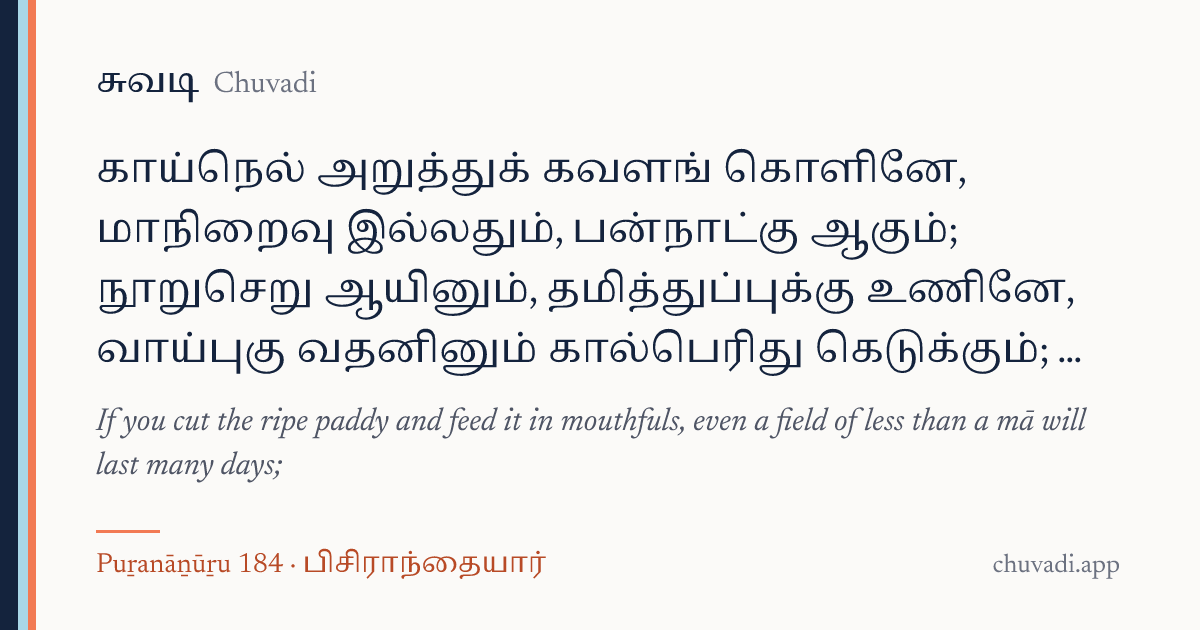
- If you cut the ripe paddy and feed it in mouthfuls,
- even a field of less than a mā will last many days;
- though there be a hundred fields, if it goes in alone and eats,
- far more than enters its mouth its feet will ruin.
- If a wise king takes his due knowing the right way,
- gathering in millions, the country will greatly flourish;
- if the ruler is weak, and day after day,
- with a noisy retinue that knows no measure,
- he covets a portion seized so that goodwill fails,
- like a field that an elephant has entered,
- he will not eat himself, and the world too will be ruined.
What the poem says
Picirāntaiyār gives advice to the Pāṇṭiya king Aṟivuṭai Nampi, whose name means "Nampi who has wisdom". The tiṇai is pāṭāṇ and the turai ceviyaṟivuṟūu, "making known to the ear": counsel spoken to a ruler for his own good.
The argument is one extended comparison, and the elephant of lines 10–11 is already the unnamed subject of lines 1–4. Cut the paddy and feed it to an elephant in balls, and even a tiny field (less than a mā, a small measure of land) will feed it for many days. Let the elephant loose in a hundred fields and its feet will trample far more than it eats. Taxation works the same way. A wise king who takes his share in the proper way gathers vast sums and the country prospers. A weak ruler, surrounded every day by a noisy, greedy court, who grabs tribute in a way that destroys the people's goodwill, is like the elephant in the field: he gains nothing for himself and ruins the land.
The poem is often quoted as a plain statement of fair taxation, and its images are drawn entirely from the farmer's field.