



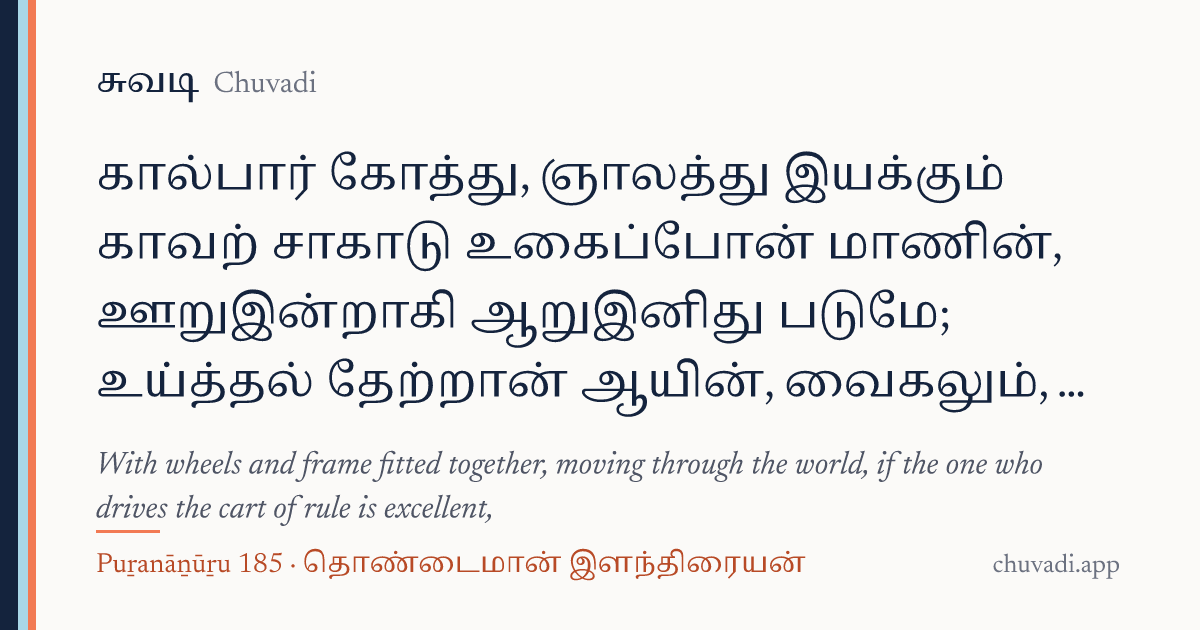
புறநானூறு 185
பாடல் · The poem
Tap a word to see where else it occurs.
பொருள் · Meaning in TamilAI
சக்கரங்களும் சட்டமும் நன்கு பொருத்தப்பட்டு உலகில் ஓடும் ஆட்சி என்னும் வண்டியை ஓட்டுபவன் திறமையுடையவனாக இருந்தால், அந்த வண்டி எந்தக் கேடும் இல்லாமல் வழியில் இனிதாகச் செல்லும். அதை ஓட்டத் தெரியாதவனாக இருந்தால், நாள்தோறும் பகை என்னும் சேற்றில் சிக்கி, மிகப் பல தீய துன்பங்களை ஒன்றன்பின் ஒன்றாகக் கொண்டுவரும்.
இது பொதுவியல் திணை, பொருண்மொழிக் காஞ்சித் துறை; உலக உண்மையைச் சொல்வது. பாடியவன் தொண்டைமான் இளந்திரையன் என்னும் அரசன். நாட்டை வண்டியாகவும் அரசனை அதை ஓட்டுபவனாகவும் உருவகிக்கிறது இப்பாடல். ஆள்பவனின் திறமையைப் பொறுத்தே நாட்டின் நலமும் கேடும் அமையும் என்பதை, அரசனாகிய புலவரே சொல்வது இதன் சிறப்பு.
ஆங்கிலம் · English translationAI
Translation
- With wheels and frame fitted together, moving through the world,
- if the one who drives the cart of rule is excellent,
- free from harm, its road will run smoothly;
- if he does not know how to drive it, then every day
- it sinks into the mire of enmity
- and brings a great many terrible ills, one upon another.
What the poem says
A six-line poem attributed to Toṇṭaimāṉ Iḷantiraiyaṉ, himself a ruler, in the theme of general truths (poruṇmoḻik kāñci, tiṇai potuviyal). It compares the state to a cart, kāvaṟ cākāṭu, literally "the cart of protection".
If the driver knows his work, the cart, with its wheels and frame well joined, rolls along the road without harm. If he does not, it sticks every day in the mud of enmity (pakaik kūḻ aḷḷal, "the swamp of hostile mire") and brings disaster after disaster. The image is simple, but the poem says something important: a kingdom is a working machine, and whether it runs well depends on the skill of the one who guides it.
The verb ukaippōṉ, "the one who drives", is the ordinary word for driving draught animals, so the ruler is pictured as a carter on a working road rather than a warrior in a chariot. Coming from a poet who was himself a ruler, the warning reads as advice to his own kind.