



புறநானூறு 186
பாடல் · The poem
Tap a word to see where else it occurs.
பொருள் · Meaning in TamilAI
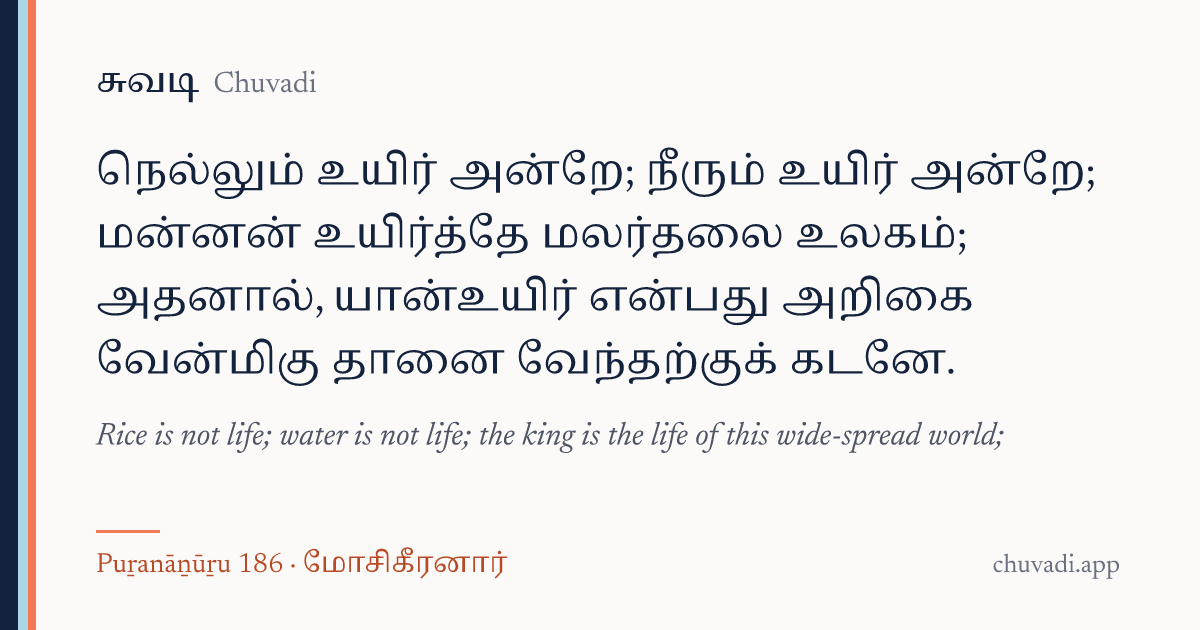
நெல்லும் உயிர் அன்று; நீரும் உயிர் அன்று; அகன்று பரந்த இந்த உலகத்துக்கு அரசனே உயிர். ஆகவே, “நானே மக்களின் உயிர்” என்பதை உணர்ந்து நடப்பது, வேல் நிறைந்த படையையுடைய அரசனின் கடமை.
இது பொதுவியல் திணை, பொருண்மொழிக் காஞ்சித் துறை. பாடியவர் மோசிகீரனார். அரசனே மக்களின் உயிர் என்பதால், அவன் பெருமை கொள்வதற்காக அன்று, தன் பொறுப்பை உணர்ந்து நடப்பதற்காகவே இது சொல்லப்படுகிறது. எந்த அரசனின் பெயரும் பாடலில் இல்லை; எல்லா அரசர்க்கும் பொருந்தும் பொது அறிவுரை இது.
ஆங்கிலம் · English translationAI
Translation
- Rice is not life; water is not life;
- the king is the life of this wide-spread world;
- and so, to know 'I am that life'
- is the duty of a king with an army strong in spears.
What the poem says
Mōcikīraṉār's four lines are a compact statement of royal duty (poruṇmoḻik kāñci, tiṇai potuviyal). Food and water keep a body alive, but a whole people lives through its king.
The point of the last two lines is not that the king should be proud of this. It is that he must understand it: if the people's life depends on him, he is responsible for it. The phrase "with an army strong in spears" reminds the king of his power just as the poem reminds him what that power is for.
No particular king is named. Like the other poems in this group, it is a general maxim, and its blunt contrast between the basic needs of life and the person of the ruler is meant to make any king feel how much depends on him.