



புறநானூறு 187
பாடல் · The poem
Tap a word to see where else it occurs.
பொருள் · Meaning in TamilAI
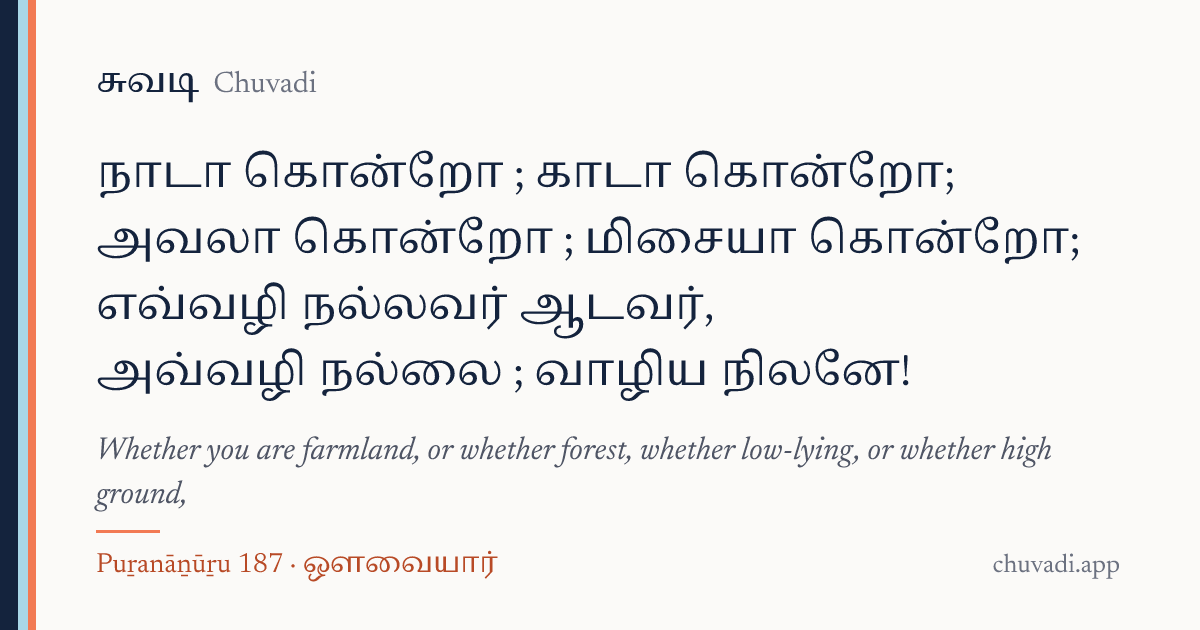
நிலமே! நீ நாடாக இருந்தாலும், காடாக இருந்தாலும், பள்ளமாக இருந்தாலும், மேடாக இருந்தாலும், எங்கே ஆடவர் நல்லவர்களாக இருக்கிறார்களோ, அங்கே நீயும் நல்லதாக இருக்கிறாய். நீ வாழ்வாயாக!
இது பொதுவியல் திணை, பொருண்மொழிக் காஞ்சித் துறை. பாடியவர் ஔவையார். ஒரு நிலத்தின் சிறப்பு அதன் மண்ணால் அன்று, அங்கே வாழும் மக்களின் நல்லொழுக்கத்தால்தான் என்பது பாடலின் கருத்து. நாடு, காடு, பள்ளம், மேடு என்னும் நான்கும் எல்லா நிலத்தையும் உள்ளடக்குவதால், இக்கருத்து விதிவிலக்கு இல்லாமல் சொல்லப்படுகிறது.
ஆங்கிலம் · English translationAI
Translation
- Whether you are farmland, or whether forest,
- whether low-lying, or whether high ground,
- in whatever place the men are good,
- in that place you are good; long may you live, O land!
What the poem says
Auvaiyār's best-known short poem (poruṇmoḻik kāñci, tiṇai potuviyal) speaks directly to the land itself. It runs through the kinds of country the Tamil poets knew: cultivated farmland, forest, low-lying ground and high ground. None of them, the poem says, is good or bad in itself.
A land is good where its people are good. The word used is āṭavar, "men", the active adults of a place, and the poem's point is that a country's worth lies in the conduct of the people who live in it, not in its soil. The closing blessing, "long may you live, O land", is warm and simple.
Lines 1–2 repeat the same ending (-ā koṉṟō, "whether it be ... or") four times, and the repetition gives the poem the sound of a proverb. The four kinds of ground cover the whole land, so the claim is meant without exception.