



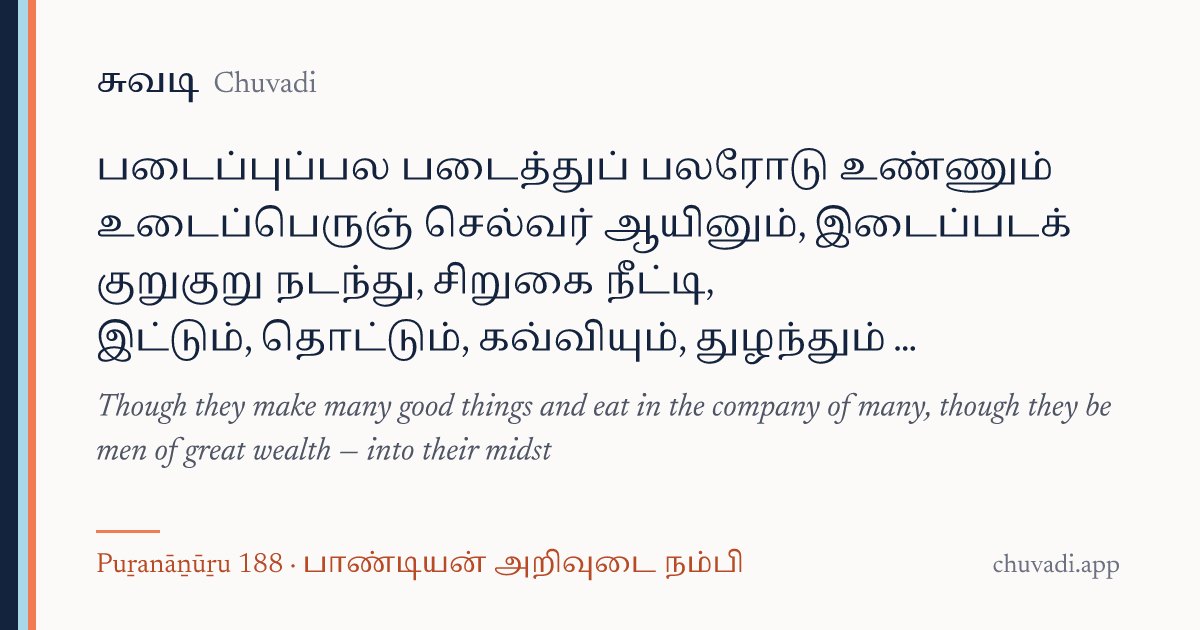
புறநானூறு 188
பாடல் · The poem
Tap a word to see where else it occurs.
பொருள் · Meaning in TamilAI
பலவகை உணவுகளைச் சமைத்துப் பலரோடு சேர்ந்து உண்ணும் பெருஞ்செல்வர்களாக இருந்தாலும், உண்ணும் இடையே குறுகுறுவென்று நடந்து வந்து, சிறிய கைகளை நீட்டி, உணவில் இட்டும், தொட்டும், கவ்வியும், கையால் துழாவியும், நெய் கலந்த சோற்றை உடம்பெல்லாம் சிதறியும், பெற்றோரை மகிழ்ச்சியில் மயக்கும் குழந்தைகள் இல்லாதவர்களுக்கு, அவர்கள் வாழும் நாள்களால் அடையும் பயன் எதுவும் இல்லை.
இது பொதுவியல் திணை, பொருண்மொழிக் காஞ்சித் துறை. பாடியவன் பாண்டியன் அறிவுடை நம்பி என்னும் அரசன். குழந்தைகளின் மழலைச் செயல்களே வாழ்க்கைக்குப் பயன் தருகின்றன என்பது பாடலின் கருத்து.
ஆங்கிலம் · English translationAI
Translation
- Though they make many good things and eat in the company of many,
- though they be men of great wealth — into their midst
- toddling with little steps, stretching out small hands,
- putting in, touching, biting, stirring about,
- scattering the rice with ghee all over their bodies,
- children who fill them with bewildering delight — for those who have none,
- no purpose is fulfilled in all the days they live.
What the poem says
A poem on the joy of children, attributed to the Pāṇṭiya king Aṟivuṭai Nampi (poruṇmoḻik kāñci, tiṇai potuviyal). However rich a man may be, and however many feasts he gives, his life has no fulfilment without children.
The heart of the poem is the picture of a small child at mealtime in lines 3–5: toddling into the middle of the meal, reaching out with tiny hands, putting them in the food, touching it, biting at it, stirring it about, and getting rice and ghee all over its body. The word mayakkuṟu, "bewildering", in line 6 sums up the effect on the parents: they are enchanted, carried away by the mess and the delight of it.
The Tamil ends with "the days they live", so the life without children is measured as a span of days with nothing achieved in them. The poem's simple pleasure in a child's messy eating is unusual in a book dominated by war and patronage.