



புறநானூறு 189
பாடல் · The poem
Tap a word to see where else it occurs.
பொருள் · Meaning in TamilAI
தெளிந்த கடல் சூழ்ந்த உலகத்தை யாருக்கும் பொதுவாக்காமல், தன் வெண்குடையின் நிழலில் தனியாக ஆளும் அரசனுக்கும், நள்ளிரவிலும் பகலிலும் உறங்காமல் கொடிய விலங்குகளைக் கவனித்துக் காத்திருக்கும் கல்வியறிவில்லாத ஒருவனுக்கும், உண்பது ஒரு நாழி அளவு உணவுதான்; உடுப்பது இரண்டு ஆடைகள்தான்; மற்றவை எல்லாமும் இருவருக்கும் ஒன்றுபோலவே. ஆகவே செல்வத்தின் பயன் பிறருக்குக் கொடுப்பதே; “நாமே அனுபவிப்போம்” என்று எண்ணினால், தவறிப்போவன பல.
இது பொதுவியல் திணை, பொருண்மொழிக் காஞ்சித் துறை. பாடியவர் மதுரைக் கணக்காயனார் மகனார் நக்கீரனார். அரசனுக்கும் எளியவனுக்கும் உண்மையான தேவை ஒன்றே என்பதால், கொடுப்பதே செல்வத்தின் பயன் என்பது பாடலின் கருத்து.
ஆங்கிலம் · English translationAI
Translation
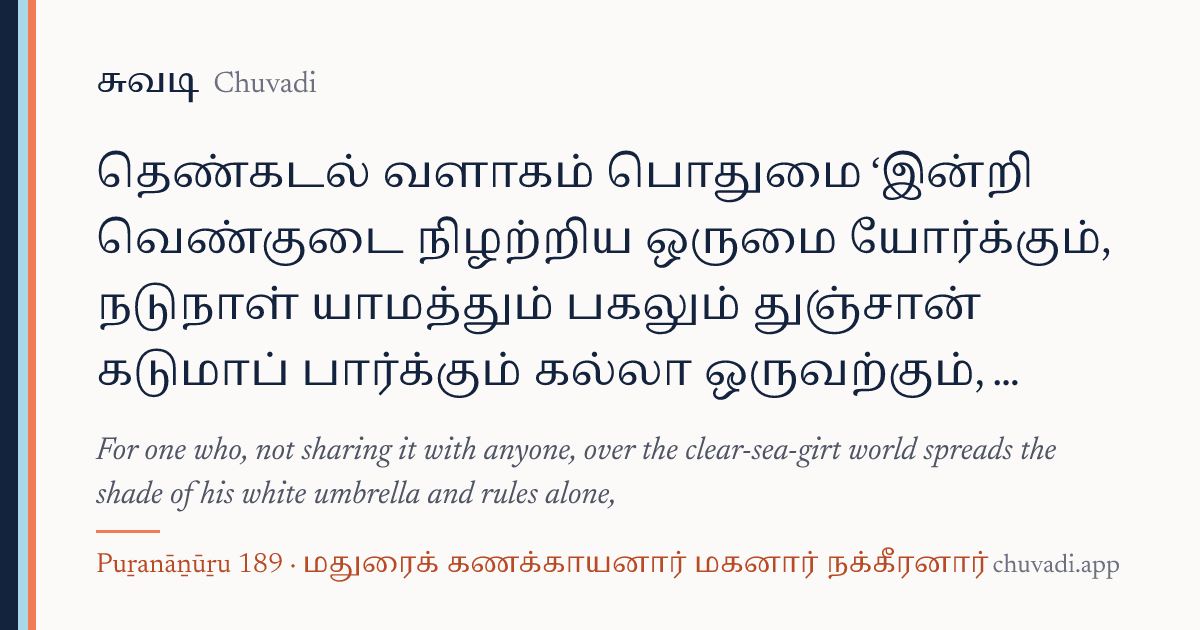
- For one who, not sharing it with anyone, over the clear-sea-girt world
- spreads the shade of his white umbrella and rules alone,
- and for an unlettered man who sleeps neither at midnight nor by day
- as he watches for the fierce beasts,
- what each eats is one measure; what each wears is two cloths;
- and all other things are just the same for both.
- And so the fruit of wealth is giving;
- if we say, 'We shall enjoy it ourselves,' much goes astray.
What the poem says
Nakkīraṉār, son of the Maturai teacher Kaṇakkāyaṉār, sets a king who rules the whole sea-bounded earth alone beside an uneducated man who stays awake day and night watching for wild animals, probably a hunter or a field-watchman. The tiṇai is potuviyal and the turai poruṇmoḻik kāñci, a statement of general truth.
The comparison removes every difference between them. Each eats one nāḻi (a measure of grain) a day and wears two pieces of cloth, and everything else in their lives is the same. From this the poem draws its conclusion: the only real use of wealth is to give it away. Anyone who plans to keep it and enjoy it himself will find that "many things go wrong" (tappuna palavē), because wealth kept is wealth lost.