



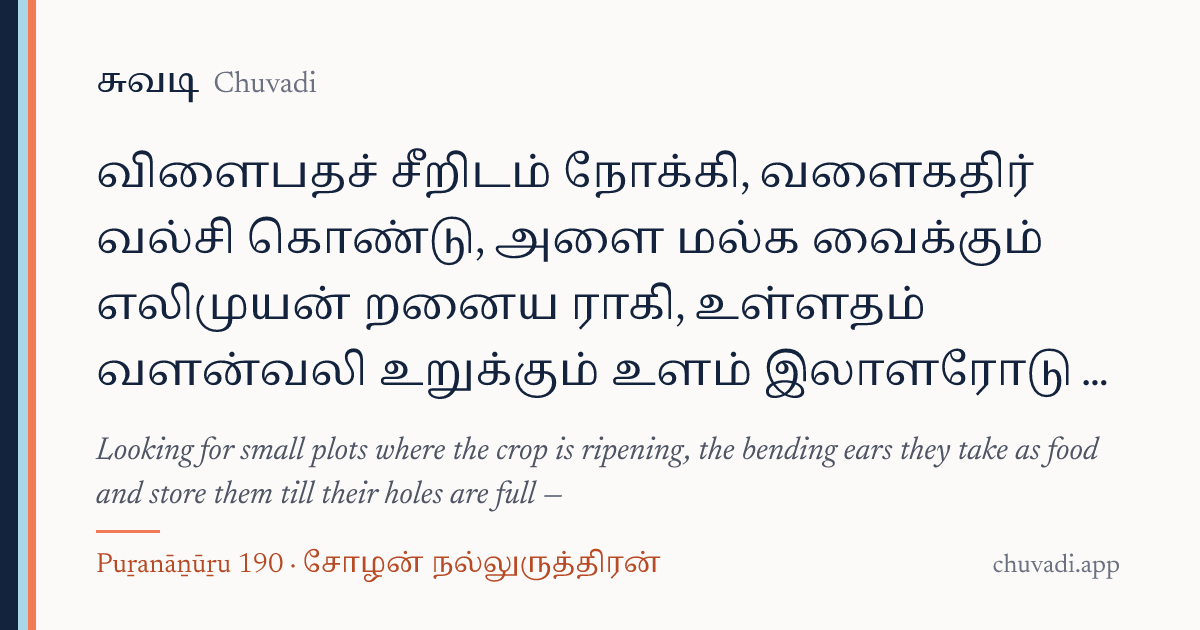
புறநானூறு 190
பாடல் · The poem
Tap a word to see where else it occurs.
பொருள் · Meaning in TamilAI
விளைந்திருக்கும் சிறிய நிலப்பகுதிகளைத் தேடிப் பார்த்து, வளைந்த கதிர்களை உணவாகக் கொண்டுபோய் வளை நிறையும்படி சேர்த்து வைக்கும் எலியின் முயற்சியைப் போல, தம்மிடம் உள்ள செல்வத்தை இறுகப் பற்றிக்கொள்ளும் உள்ளமில்லாதவர்களோடு நெருங்கிய நட்பு இல்லாமல் இருப்பதாக! தான் அடித்த கடுங்கண் பன்றி இடப்பக்கமாக விழுந்ததால், அன்று அதை அங்கே உண்ணாமல், மறுநாள் பெரிய மலைக்குகைகள் தனிமையில் எதிரொலிக்கும்படி வேட்டைக்கு எழுந்து, பெரிய களிற்று யானையை நல்ல வலப்பக்கமாக விழும்படி வீழ்த்தும் பசித்த புலியைப் போல, தளராத உள்ளமுடைய மனவலிமையாளரோடு நட்புக்கொண்டு கூடியிருக்கும் நாள்கள் உண்டாவனவாக!
இது பொதுவியல் திணை, பொருண்மொழிக் காஞ்சித் துறை. பாடியவன் சோழன் நல்லுருத்திரன் என்னும் அரசன். இடப்பக்கம் விழுந்த இரையைப் புலி உண்ணாது என்பது பழைய நம்பிக்கை.
ஆங்கிலம் · English translationAI
Translation
- Looking for small plots where the crop is ripening, the bending ears
- they take as food and store them till their holes are full —
- like rats in their striving, those who, with all they have,
- hold their wealth in a tight grip, the men without heart:
- may there be no close friendship with such men!
- When the fierce-eyed boar it has struck falls on its left side,
- it will not eat it there that day, but the next day,
- so that the caves of the great mountain echo forlorn, it rises in hunger
- and brings down a huge bull elephant to fall on its good right side —
- like the hungry tiger, men of unwavering heart,
- men of real strength — with friendship with them,
- may there be days spent in close company!
What the poem says
This poem is attributed to the Cōḻa king Nalluruttiraṉ (potuviyal tiṇai, poruṇmoḻik kāñci). It contrasts two kinds of men, each with an animal comparison, and asks to be kept from the first and joined to the second.
The first are like field rats. They search out small patches of ripening grain, carry off the bent ears and stuff their holes full; in the same way small-hearted men cling to the wealth they already have. The second are like a hungry tiger. If the boar it has killed falls on its left side, the tiger will not eat it; it goes hungry that day and the next day kills a bull elephant that falls on its right side. Men of unwavering spirit are like that, keeping to their standard even in need.
The tiger's refusal to eat prey that falls to the left is an old belief that the poem takes for granted. The two wishes (may there be no friendship, may there be days of friendship) are balanced at the end of each half.