



புறநானூறு 195
பாடல் · The poem
Tap a word to see where else it occurs.
பொருள் · Meaning in TamilAI
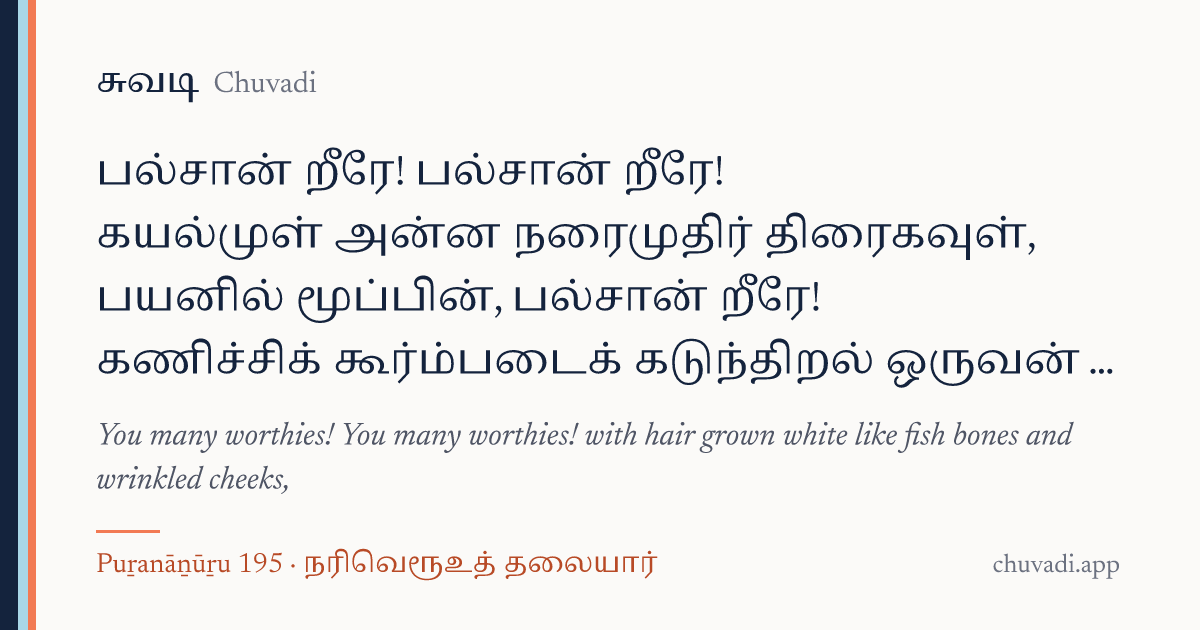
பல சான்றோர்களே! பல சான்றோர்களே! கயல்மீனின் முள் போல நரைத்து முதிர்ந்த முடியும், சுருக்கம் விழுந்த கன்னங்களும் கொண்ட பயனற்ற முதுமையையுடைய பல சான்றோர்களே! கூர்மையான கணிச்சி என்னும் படைக்கலத்தையுடைய கொடிய வலிமையுள்ள கூற்றுவன் உங்களைப் பிணித்துக் கொண்டுபோகும்போது வருந்துவீர்கள். நல்லது செய்ய உங்களால் முடியாவிட்டாலும், தீயது செய்யாமல் காத்துக்கொள்ளுங்கள். அதுவே எல்லாரும் மகிழ்வது; அதுமட்டுமன்றி, நல்வழியில் கொண்டுசேர்க்கும் நெறியும் அதுவே.
இது பொதுவியல் திணை, பொருண்மொழிக் காஞ்சித் துறை. பாடியவர் நரிவெரூஉத் தலையார். “சான்றோர்” என்று முதியவர்களை அழைப்பது கேலியாகச் சொல்லப்பட்டதாகத் தோன்றுகிறது.
ஆங்கிலம் · English translationAI
Translation
- You many worthies! You many worthies!
- with hair grown white like fish bones and wrinkled cheeks,
- in your useless old age, you many worthies!
- When the one of fierce power, armed with the sharp axe,
- binds you fast, you will grieve indeed.
- Even if you cannot bring yourselves to do good,
- take care not to do what is not good; that
- is what everyone rejoices in; and more than that,
- it is also the road that leads to the good path.
What the poem says
Nariverūut Talaiyār speaks to a crowd of old men with sharp irony (potuviyal tiṇai, poruṇmoḻik kāñci). He calls them pal cāṉṟīr, "you many worthies", three times, but the descriptions between the repetitions undercut the title: their hair is white and thin like the bones of a kayal fish, their cheeks are wrinkled, and their old age is "useless".
He reminds them that death, "the one of fierce power with the sharp axe" (kaṇicci, an axe or goad), will come and bind them, and then they will grieve. His advice is modest. If they cannot manage to do good, they should at least avoid doing harm. That pleases everyone, and it is also the way that leads toward the good.
The poem is short and practical. It does not ask for great virtue, only for the restraint of not causing harm.