



புறநானூறு 196
பாடல் · The poem
Tap a word to see where else it occurs.
பொருள் · Meaning in TamilAI
முடிவதை முடியும் என்று சொல்வதும், முடியாததை யாருக்கும் இல்லை என்று மறுப்பதும் ஆகிய இரண்டும் செயல்முறையில் நட்புக்குரிய பண்புகள். முடியாததை முடியும் என்று சொல்வதும், முடிவதை இல்லை என்று மறுப்பதும் ஆகிய இரண்டும், இரப்பவர்களை வாடச் செய்வதோடு, கொடுப்பவர்களின் புகழ் குறைவதற்கும் வாயிலாகிவிடும். இனி அது அப்படியே ஆகட்டும். இதுவரை தொலைவில்கூடக் காணாத இதை இப்போது கண்டோம். ஆகவே உன் புதல்வர்கள் நோயில்லாமல் வாழ்வார்களாக! நானும், வெயில் என்று வெறுக்காமல், பனி என்று சோம்பாமல், கல்லைக் குடைந்தது போன்ற என் வறிய குடிசைக்கு, நாணத்தைத் தவிர வேறொன்றும் அறியாத கற்பும் ஒளிரும் நெற்றியும் மென்மையான இயல்பும் கொண்ட என் இளம் மனைவியை நினைத்துக்கொண்டு போகிறேன். உன் வாழ்நாள் சிறப்பதாக!
இது பாடாண் திணை, பரிசில் கடாநிலைத் துறை; பரிசில் கிடைக்காமல் காக்கவைக்கப்பட்ட புலவர் வருத்தத்துடன் விடைபெறுவது. பாடியவர் ஆவூர் மூலங்கிழார்; பாடப்பட்டவன் பாண்டியன் இலவந்திகைப் பள்ளித் துஞ்சிய நன்மாறன். “கல்குயின் றன்ன” என்பது குடிசையைக் குறிக்கிறதா, மனைவியின் உறுதியான கற்பைக் குறிக்கிறதா என்பது உறுதியாகத் தெரியவில்லை.
ஆங்கிலம் · English translationAI
Translation
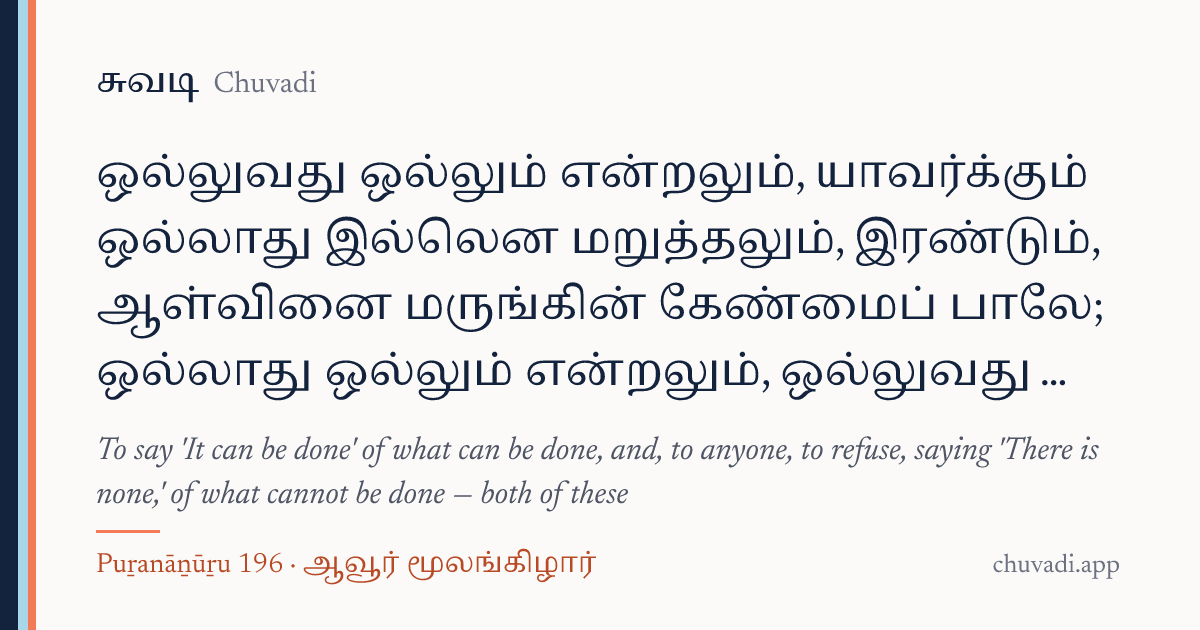
- To say 'It can be done' of what can be done, and, to anyone,
- to refuse, saying 'There is none,' of what cannot be done — both of these
- belong to the way of friendship in the conduct of affairs;
- to say 'It can be done' of what cannot be, and of what can be,
- to refuse, saying 'There is none' — both of these, surely,
- besides making those who beg wither away, for patrons
- are a door through which their fame is diminished.
- Let it be so, then. This, which we had never once
- seen even from far away, we have now seen; and so,
- may your sons be free from illness! As for me,
- not shrinking from the sun as too hot, nor idling in the cold as too wet,
- to my poor shelter from the wind, like a hollow cut in rock,
- with a virtue that knows nothing but modesty, with a bright forehead,
- my gentle young wife — thinking of her,
- I am going. May your days be splendid!
What the poem says
Āvūr Mūlaṅkiḻār addresses the Pāṇṭiya Naṉmāṟaṉ "who died at Ilavantikaippaḷḷi" in the mode called paricil kaṭā nilai (pāṭāṇ tiṇai), but this is a request that has already failed. The poet has been kept waiting and given nothing, and the poem is his dignified rebuke as he leaves.
He begins with a principle. To promise what you can give, and to refuse plainly what you cannot, both belong to honest dealing. But to promise what you cannot give, or to say "there is none" when you can, both hurt the suppliant and also open a door through which a patron's fame leaks away. "Let it be so," he says: he has now seen with his own eyes something he had never seen before, a patron who behaves like this.
Then, with careful courtesy, he blesses the king's sons and takes his leave. He will go home through sun and cold to his poor hut and his modest young wife, and he wishes the king's days to be splendid. Line 12 is not certain: kal kuyiṉṟaṉṉa, "as if carved in rock", is taken here with the poor shelter (a bare hollow of a home), though it may describe the wife's firm virtue in the next lines.