



புறநானூறு 197
பாடல் · The poem
Tap a word to see where else it occurs.
பொருள் · Meaning in TamilAI
“காற்று நடந்து வருவது போல நேராக விரைந்து செல்லும் குதிரைகளோடு, மேலே கொடி அசையும் தேர்களை உடையவர்கள்” என்றும், “கடலைக் கண்டது போன்ற ஒளிரும் படைக்கலங்களையுடைய படையோடு, மலையையே எதிர்த்துப் போரிடும் யானைகளை உடையவர்கள்” என்றும், “இடி சீறியது போல அச்சம் தரும் முரசோடு, போரில் மேம்படும் வெற்றிகளை உடையவர்கள்” என்றும் சொல்லப்படும், நிலத்தை ஆளும் படையும் ஒளிரும் அணிகலன்களும் கொண்ட வேந்தர்களின் வெண்குடைச் செல்வத்தை நாங்கள் வியப்பதில்லை. நாங்கள் வியப்பவர்கள் யார் என்றால், முள்வேலியிட்ட தோட்டத்தில் ஆட்டுக்குட்டிகள் மேய்ந்து விட்டுச்சென்ற குட்டையான மணமுள்ள முஞ்ஞைச் செடியின் கொழுமையான சிறிய கீரையை, புன்செய் நிலத்தில் விளைந்த வரகுச் சோற்றோடு உண்ணும் சிற்றூர்த் தலைவர்களானாலும், எங்கள் பெருமையை அறிந்து நடந்துகொள்ளும் பண்புடையவர்களையே. மிகப் பெரிய துன்பம் வந்தாலும், உணர்வில்லாதவர்களின் செல்வத்தைச் சிறிதும் நினைக்கமாட்டோம்; நல்லறிவுடையவர்களின் வறுமையையே, பெருமானே, மிகவும் மகிழ்ந்து நினைப்போம்!
இது பாடாண் திணை, பரிசில் கடாநிலைத் துறை. பாடியவர் கோனாட்டு எறிச்சலூர் மாடலன் மதுரைக் குமரனார்; பாடப்பட்டவன் சோழன் குராப்பள்ளித் துஞ்சிய பெருந்திருமாவளவன். பரிசில் வேண்டுவதைவிடப் புலவர் தம் மதிப்பீட்டை அரசனுக்கு உணர்த்துவதே பாடலின் மையம்.
ஆங்கிலம் · English translationAI
Translation
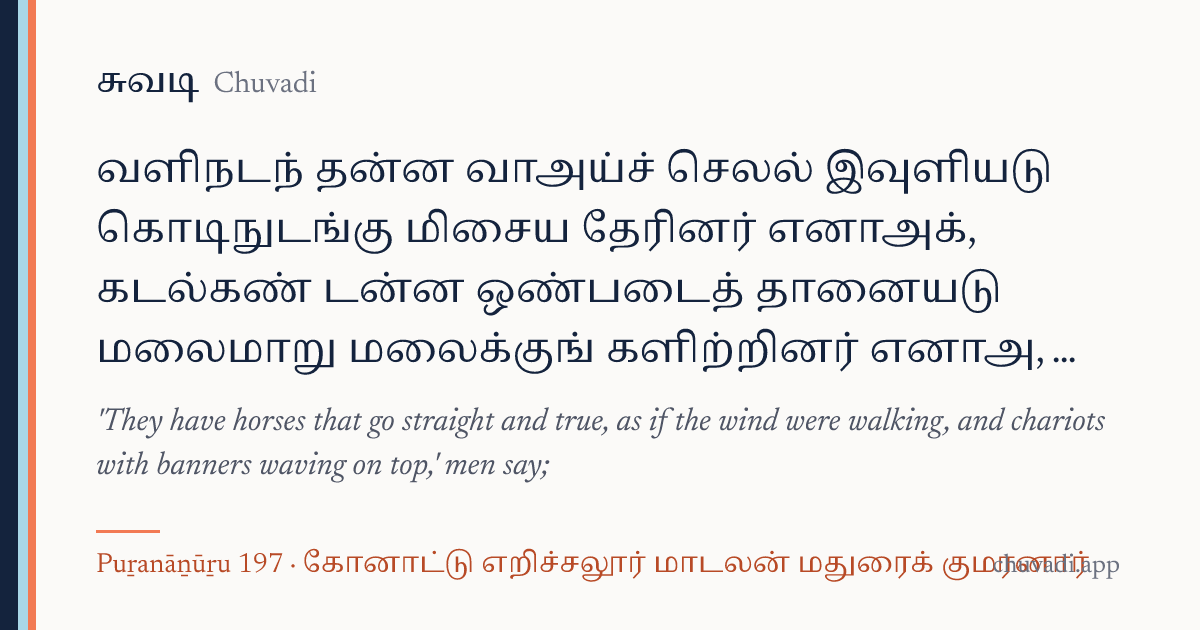
- 'They have horses that go straight and true, as if the wind were walking,
- and chariots with banners waving on top,' men say;
- 'with an army of bright weapons that looks like the sea,
- they have elephants that would fight against mountains,' men say;
- 'with drums that strike fear like thunder in its rage,
- they have victories that make them supreme in war,' men say —
- of such kings, with armies that rule the earth and bright jewels,
- the wealth beneath the white umbrella we do not marvel at.
- The ones who are marvelled at by us,
- in the plot fenced with thorns, where lambs have grazed and gone,
- the short, fragrant muññai's rich, small-eyed greens
- with cooked varaku from the poor dry land, they get to eat —
- even if they are kings of small villages — those who toward us
- behave knowing our worth: those are the people of good nature.
- Even if we suffer very great distress, not at all
- do we think of the possessions of men without understanding;
- the poverty of men of good understanding
- we think of, lord, with joy, and very greatly!
What the poem says
Māṭalaṉ Maturaik Kumaraṉār of Eṟiccalūr addresses the Cōḻa Perun Tirumāvaḷavaṉ "who died at Kurāppaḷḷi". The colophon gives pāṭāṇ tiṇai and paricil kaṭā nilai, pressing for a gift, but the poem asks for nothing outright. It is a statement of the poet's values, aimed at a king.
The first eight lines list what people say of great kings: horses like walking wind, bannered chariots, armies like the sea, elephants that would fight mountains, drums like thunder, victory after victory. The poet says flatly that he does not marvel at such wealth. What he admires is a small-village chieftain who eats only muññai greens from a thorn-fenced plot grazed by lambs, with coarse varaku millet from poor dry land, if that man treats poets with proper regard (pāṭaṟintu oḻukum).
The last four lines put this as a rule. However great his own distress, the poet will not think of the wealth of men without understanding, and he is glad to remember the poverty of men who have it. Addressed to a king, the poem is also a warning: royal power alone will not win a poet's respect.