



புறநானூறு 201
பாடல் · The poem
Tap a word to see where else it occurs.
பொருள் · Meaning in TamilAI
‘இவர்கள் யார்?’ என்று கேட்பாயானால், இவர்கள் ஊர்களையும் அருளோடு இரவலர்க்கு வழங்கி, தேரையும் முல்லைக் கொடிக்குக் கொடுத்த, அழியாத நல்ல புகழையுடைய, ஒலிக்கும் மணிகளைக் கொண்ட யானைகளையுடைய பறம்பு மலையின் தலைவனான, பெருமைமிக்க பாரியின் மகள்கள். நானோ இவர்களுடைய தந்தையின் தோழன்; இவர்கள் என் மகள்கள்; அந்தணனும் புலவனுமாகிய நான் இவர்களை அழைத்து வந்துள்ளேன். நீயோ வடதிசை முனிவனின் வேள்விக் குழியில் தோன்றி, செம்பால் கட்டிய உயர்ந்த நீண்ட மதிலையும் குறையாத கொடையையும் உடைய துவரையை ஆண்டு, நாற்பத்தொன்பது தலைமுறையாக வழிவழி வந்த வேளிருள் சிறந்த வேளே! வெற்றிப் போர் புரியும் தலைவனே! மாலை அணிந்த யானைகளையுடைய பெருமைமிக்க இருங்கோவே! ஆண்மகனுக்குரிய கடமை உடையவன் ஆதலால் பாணர்களுக்குச் செய்யவேண்டியதைச் செய்த, தழைத்த மாலையணிந்த புலிகடிமாலே! நான் தர, இவர்களை ஏற்றுக்கொள்வாயாக! வானம் கவிந்து, கரிய கடலை ஆடையாக உடுத்த இந்த உலகத்தில், அரிய வலிமையுடைய, பொன் விளையும் பெரிய மலைக்கு உரியவனே! வெற்றி வேலையும் பகைவர் அஞ்சும் படையையும் உடைய, அழிவில்லாத வளமுடைய நாட்டின் தலைவனே!
இது பாடாண் திணை; துறை பரிசில். பாடியவர் கபிலர்; பாடப்பட்டவன் இருங்கோவேள். பாரியின் மகள்களை மணம் செய்துகொள்ளும்படி கபிலர் வேண்டுவதாகப் பாடல் அமைந்துள்ளது; பாரியின் இறப்புக்குப் பின் நடந்தது என்பது மரபுவழிச் செய்தி. இறுதி அடியில் உள்ள ‘கெடலருங் குறைய’ என்ற தொடரின் பொருள் உறுதியாகத் தெரியவில்லை.
ஆங்கிலம் · English translationAI
Translation
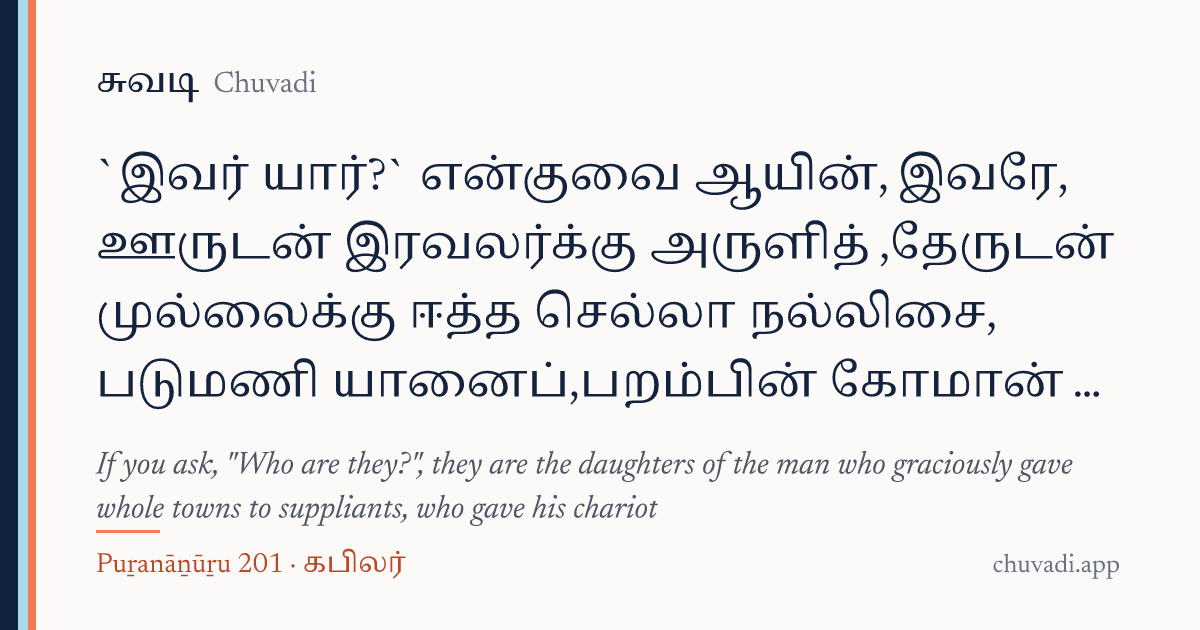
- If you ask, "Who are they?", they are
- the daughters of the man who graciously gave whole towns to suppliants, who gave his chariot
- to a jasmine creeper, whose good name will never pass,
- the lord of Paṟampu with elephants of ringing bells,
- great Pāri; and I
- am their father's friend; they are my daughters;
- a brahmin, a poet, I have brought them here.
- You, who sprang from the fire-pit of the northern sage,
- who ruled Tuvarai, with its lofty long walls built
- of copper and its never-wearying giving,
- you who come down in forty-nine generations,
- Vēḷ among the Vēḷir! Lord of victorious battles!
- Great Iruṅkō of elephants hung with garlands!
- Because a man has his duty, you have done your duty by the bards,
- Pulikaṭimāl with your lush garland!
- As I give them, take them! On this earth over which the sky is vaulted
- and which wears the dark sea as its garment, O mighty
- lord of the great mountain that yields gold! With your conquering spear,
- with an army that foes dread,
- lord of a land whose riches are hard to ruin!
What the poem says
Kapilar speaks to Iruṅkōvēḷ, bringing two young women before him. The poem itself says who they are: the daughters of Pāri, lord of Paṟampu, famous for giving towns to suppliants and his chariot to a jasmine creeper that had no support. Kapilar calls himself their father's friend, and says they are now his own daughters; he names himself a brahmin and a poet. The poem's request is plain: "As I give them, take them." Tradition connects this with the time after Pāri's death, when Kapilar sought husbands for the daughters; the poem itself does not mention the death.
The tiṇai is pāṭāṇ, praise of a patron, and the turai paricil, the gift: here the "gift" sought is not wealth but acceptance of the daughters. Most of the poem is a praise-genealogy of the Vēḷ: born from the fire-pit of a northern sage, ruler of Tuvarai with walls of copper, forty-nine generations of Vēḷir behind him, "Pulikaṭimāl", the great one who drove off a tiger, and lord of a gold-bearing mountain. These are given as the poem gives them, without explanation of who the sage was or where Tuvarai lay.
The last line is not certain; keṭal aruṅ kuṟaiya, read here as "whose riches are hard to ruin", could be taken in other ways. The edition's comma in line 2 (",தேருடன்") is misplaced and has been disregarded.