



புறநானூறு 203
பாடல் · The poem
Tap a word to see where else it occurs.
பொருள் · Meaning in TamilAI
‘முன்பே பொழிந்துவிட்டேன்’ என்று வானம் மழை தர மறுத்தாலும், ‘முன்பே விளைந்துவிட்டது’ என்று நிலம் தன் வளத்தை மறைத்தாலும், எந்த உயிருக்கும் வாழ்க்கை இல்லை. ‘இன்னும் தாருங்கள்’ என்று எம்மைப் போன்றவர் இரந்தால், ‘முன்பே பெற்றுக்கொண்டீர்களே’ என்று உம்மைப் போன்றவர் மறுப்பது கொடியது, நன்கு செய்த தேரையுடைய தலைவனே! இல்லாதவர்களின் குறையை நிரப்ப இயலாதவர்களைவிட, நம்பி வருபவர்களின் ஆசையைக் கெடுப்பவர்கள் இழிந்தவர்கள். நீ அத்தகையவன் அல்லன். பகைவருடைய அரிய கோட்டைகள் இன்னும் அவர்களிடமே இருக்கும்போதே ‘அவை உங்களுடையவை’ என்று சொல்லிப் பாணர்களுக்குரிய கடனைத் தீர்க்கும் வள்ளலே! எம் தலைவனே, இரவலரைக் காப்பதே நீ ஏற்றுக்கொண்ட கடமை.
இது பாடாண் திணை; துறை பரிசில். பாடியவர் ஊன்பொதி பசுங்குடையார்; பாடப்பட்டவன் பாமுளூரை அழித்த நெய்தலங்கானல் இளஞ்சேட்சென்னி. தலைப்பில் உள்ள ‘சேரமான்’ என்ற சொல் பாமுளூரோடு சேர்ந்ததாகத் தோன்றுகிறது. நான்காம் அடியில் ‘எம்ம்னோர்’ என்பது ‘எம்மனோர்’ என்பதன் அச்சுப்பிழை.
ஆங்கிலம் · English translationAI
Translation
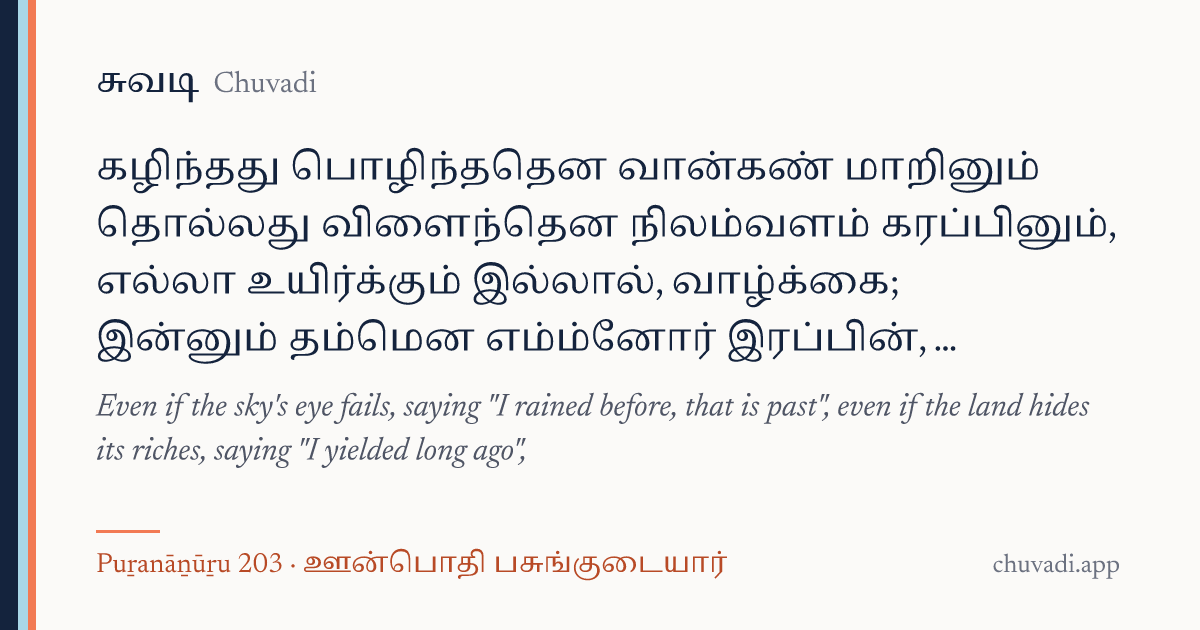
- Even if the sky's eye fails, saying "I rained before, that is past",
- even if the land hides its riches, saying "I yielded long ago",
- there is no living for any creature at all.
- When people like us beg, "Give us still more",
- for people like you to refuse, saying "You took before",
- is cruel indeed, lord of the well-made chariot!
- Worse even than those who cannot fill another's want
- are those who make the hopes of those who come to them fail;
- and you are not of that kind. Even while your enemies'
- strong forts are still in their hands, you say, "They are yours",
- and so pay the bards their due, generous one!
- It is the duty you have taken on, my lord: you are the keeping of suppliants.
What the poem says
Ūṉpoti Pacuṅkuṭaiyār addresses a Chola prince, Iḷañcēṭ Ceṉṉi of Neytalaṅkāṉal. The metadata adds that he "destroyed Pāmuḷūr" and, as printed, begins with "Cēramāṉ", which probably belongs with Pāmuḷūr (the Cēra's Pāmuḷūr) rather than with the Chola prince's own title. The tiṇai is pāṭāṇ, praise of a patron, and the turai paricil, the gift.
The argument starts from nature. If the rain refused to fall because it fell last year, or the earth refused to yield because it yielded before, nothing could live. So when poets come back asking for more, a patron who says "you have already had your share" is cruel. The poet adds that the worst kind is not the one who cannot give, but the one who lets a hopeful suppliant's hope die.
The prince, however, is praised as the opposite: he promises bards the forts of his enemies before he has even taken them, and so pays his debt to them in advance. The last line sums up his role: protecting suppliants is the obligation he wears like an ornament. In line 4 the edition prints எம்ம்னோர், a clear misprint for எம்மனோர் ("people like us").