



புறநானூறு 204
பாடல் · The poem
Tap a word to see where else it occurs.
பொருள் · Meaning in TamilAI
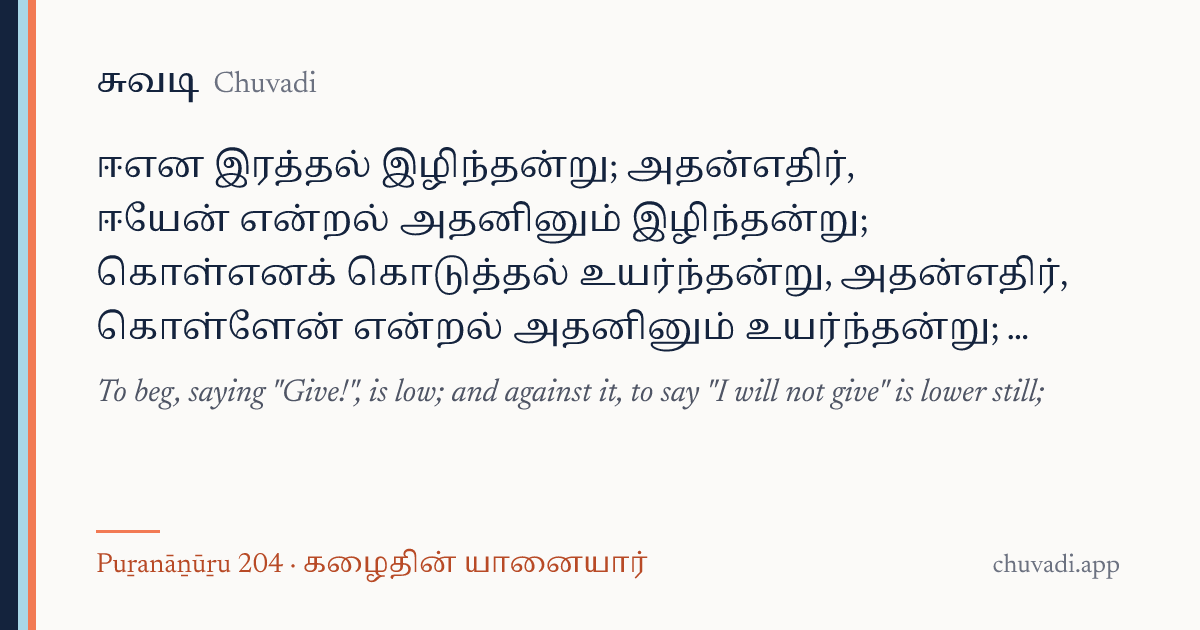
‘கொடு’ என்று இரப்பது இழிவானது; அதற்கு எதிராக ‘கொடுக்கமாட்டேன்’ என்று சொல்வது அதைவிட இழிவானது. ‘பெற்றுக்கொள்’ என்று கொடுப்பது உயர்வானது; அதற்கு எதிராக ‘பெற்றுக்கொள்ளமாட்டேன்’ என்று சொல்வது அதைவிட உயர்வானது. தெளிந்த நீர் பரந்த, அலைகள் முழங்கும் பெருங்கடலில் நீர் வேண்டுபவர்கள் குடிக்கமாட்டார்கள். பசுக்களும் விலங்குகளும் இறங்கிக் குடித்துக் கலங்கி, சேறு படிந்த சிறிய குட்டையாக இருந்தாலும், குடிக்கத் தகுந்த நீர் உள்ள இடத்துக்குப் பல வழிகள் உண்டாகும். நம்பிச் சென்றவர்கள் பரிசில் கிடைக்காவிட்டால், தாம் புறப்பட்ட நேரத்தையும் நிமித்தப் பறவைகளையும் பழிப்பார்களே தவிர, கொடையாளியைப் பழிக்கமாட்டார்கள். ஆகவே நான் உன்மேல் வருந்தமாட்டேன்; ஓரியே, வாழ்வாயாக! வானத்தில் மழை நிறைந்த மேகம் போல அளவில்லாமல் வழங்கும் வள்ளல் நீயே.
இது பாடாண் திணை; துறை பரிசில். பாடியவர் கழைதின் யானையார்; பாடப்பட்டவன் வல்வில் ஓரி. பரிசில் தாமதமான அல்லது கிடைக்காத நிலையில் புலவர் பழிக்காமல் அறிவுரையாகப் பேசுவதாகப் பாடல் அமைந்துள்ளது.
ஆங்கிலம் · English translationAI
Translation
- To beg, saying "Give!", is low; and against it,
- to say "I will not give" is lower still;
- to give, saying "Take!", is high; and against it,
- to say "I will not take" is higher still.
- From the great sea with its clear expanse and roaring waves
- those who want water will not drink;
- though it be muddied, as cattle and beasts go down to drink,
- a mean little pool full of mire,
- many are the paths to the side of water fit to drink.
- Except to blame the birds of omen and the hour,
- those who set out in hope do not blame the giver; and so
- I will not resent you; long live, Ōri! Like
- the rain-laden clouds of the sky,
- you pour out without limit, generous one, you!
What the poem says
Kaḻaitiṉ Yāṉaiyār speaks to Ōri of the strong bow. The tiṇai is pāṭāṇ, praise of a patron, and the turai paricil, the gift. The situation, read from the poem, is that the poet has not received what he hoped, or not yet, and he answers with a set of maxims rather than complaint.
The opening four lines are a famous ladder of values: begging is low, refusing a beggar is lower; giving is high, and refusing a gift offered is higher still. Then comes an image of water. The vast salt sea is useless to the thirsty, while a small muddy pool, trampled by cattle, has many paths worn to it. The point is that people go where they can actually be satisfied, not where there is merely greatness.
The poet then says that a disappointed suppliant blames only the omens and the hour of his setting out, never the patron. So he will not hold it against Ōri, whom he calls generous like rain clouds that pour without measure. The praise at the end turns the earlier maxims into a courteous reminder.