



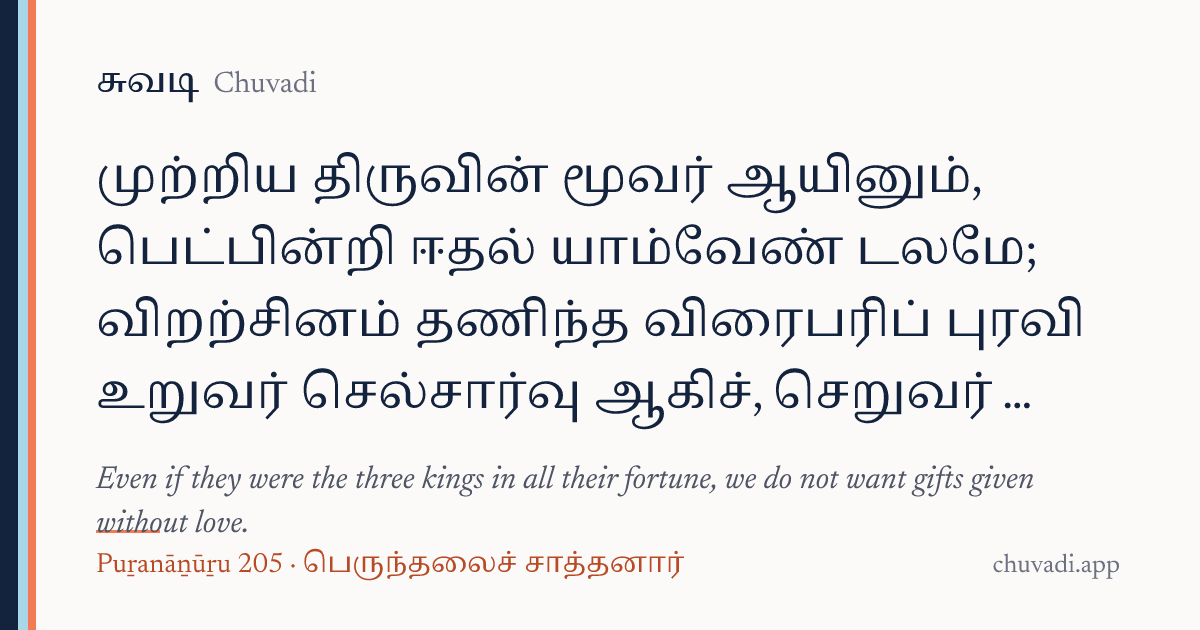
புறநானூறு 205
பாடல் · The poem
Tap a word to see where else it occurs.
பொருள் · Meaning in TamilAI
செல்வம் நிறைந்த மூவேந்தர்களே ஆனாலும், அன்பில்லாமல் கொடுக்கும் பரிசிலை நாங்கள் விரும்பமாட்டோம். கடுஞ்சினம் அடங்கிய விரைந்த நடையுடைய குதிரைகளையுடையவனே! தகுதியுடையோர் சென்று சேரும் புகலிடமாக இருந்து, பகைவரின் கால்வலிமையையும் மனவலிமையையும் அழித்த வாள்வலிமை மிக்க படையையுடைய, வெண்மையான பூக்கள் நிறைந்த வேலியையுடைய கோடை நாட்டுத் தலைவனே! வழிகளை அடைத்து நின்ற சிறியதும் பெரியதுமான மான் கூட்டங்களைக் கொன்ற விரைந்த சினமுள்ள நாய்களையும் வலிய வில்லையும் உடைய வேட்டுவனே! நீ நோயில்லாமல் வாழ்வாயாக! புது வளத்தைக் கொண்டுவருவதற்காக மழைக்கால்களை இறக்கி, ஆரவாரிக்கும் கடலின்மேல் கூடிய பெரிய மேகங்கள் நீர் இல்லாமல் திரும்புவதில்லை. அதுபோல, தேரும் ஒளிரும் கொம்புகளையுடைய சிறந்த களிறும் இல்லாமல் பரிசிலர் சுற்றம் திரும்பிச் செல்லாது.
இது பாடாண் திணை; துறை பரிசில். பாடியவர் பெருந்தலைச் சாத்தனார்; பாடப்பட்டவன் கடிய நெடுவேட்டுவன். ‘உறுவர் செல்சார்வு’ என்பதில் ‘உறுவர்’ என்ற சொல்லின் பொருளும், ‘புழைகெட விலங்கிய’ என்ற தொடரின் பொருளும் உறுதியாகத் தெரியவில்லை.
ஆங்கிலம் · English translationAI
Translation
- Even if they were the three kings in all their fortune,
- we do not want gifts given without love.
- Lord whose swift-paced horses have their fierce rage tamed,
- who are a refuge for the worthy who come, whose army, mighty with swords,
- has crushed the strength of foot and heart of enemies,
- lord of Kōṭai with its hedges of white blossom!
- Your fierce hounds of swift speed, that slew the herds of deer,
- small and large, that crossed and blocked the gaps,
- hunter of the strong bow, may you be free from sickness!
- Bringing fresh plenty, the clouds that let down their legs of rain
- and that gathered over the roaring sea, those grand clouds,
- do not leave without water; just so, without chariots
- and lordly bull elephants with gleaming tusks,
- the families of suppliants do not leave.
What the poem says
Peruntalaic Cāttaṉār addresses Kaṭiya Neṭuvēṭṭuvaṉ, whom he calls lord of Kōṭai and "hunter of the strong bow". The tiṇai is pāṭāṇ, praise of a patron, and the turai paricil, the gift.
The poem begins with the poet's pride: even the three great crowned kings, at the height of their wealth, could not tempt him with a gift given without warmth. Having set that condition, he praises the chieftain: tamed war horses, an army that breaks the enemy, a hedge of white blossom round his country, and hunting hounds that bring down whole herds of deer. The blessing "may you be free from sickness" is a common courteous wish.
The ending explains what the poet expects. Clouds that come down to the sea do not leave without drawing up water; in the same way, the bands of poets and their families do not leave a patron's court without chariots and elephants. The comparison is both a compliment and a demand. Line 4 (uṟuvar celcārvu) is not fully clear: uṟuvar may mean the great, the worthy, or simply those who come; and line 8, about deer that "blocked the gaps", is a guess at puḻai keṭa vilaṅkiya.