



புறநானூறு 206
பாடல் · The poem
Tap a word to see where else it occurs.
பொருள் · Meaning in TamilAI
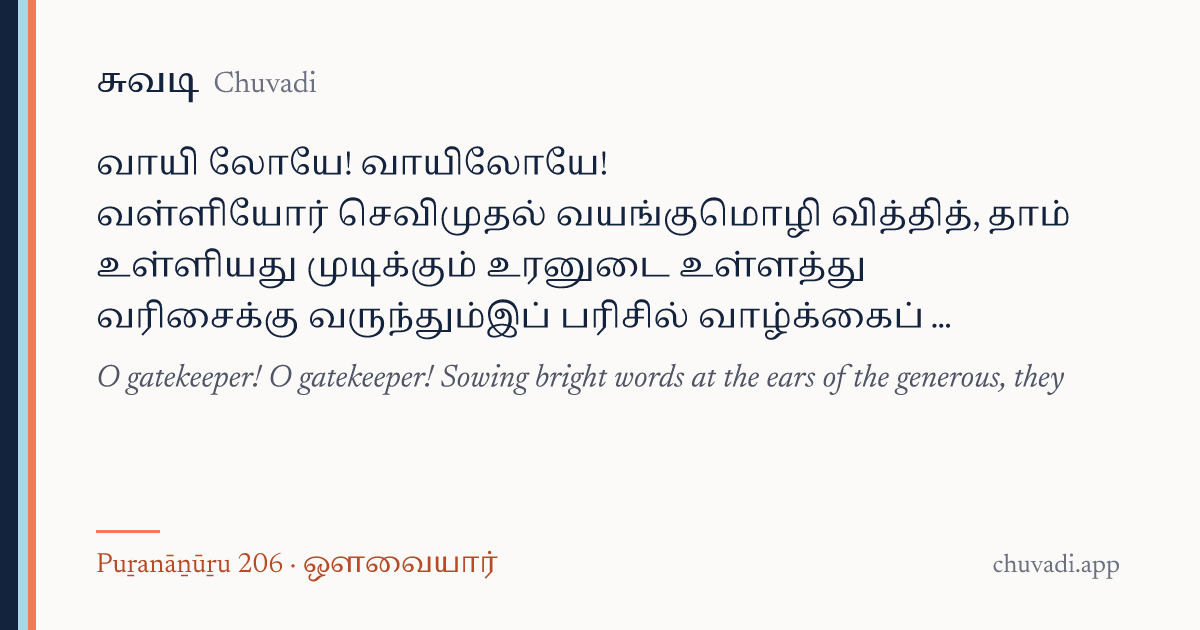
வாயில் காப்போனே! வாயில் காப்போனே! வள்ளல்களின் காதுகளில் விளக்கமான சொற்களை விதைத்து, தாம் நினைத்ததை முடிக்கும் வலிமையான உள்ளத்தோடு, தகுந்த சிறப்பைப் பெறுவதற்காக வருந்தும் இந்தப் பரிசில் வாழ்க்கையை வாழும் பரிசிலர்களுக்குக் கதவை அடைக்காத வாயில் காப்போனே! விரைந்த குதிரைகளையுடைய தலைவனான நெடுமான் அஞ்சி தன்னைத்தான் அறியவில்லையோ? என்னை அறியவில்லையோ? அறிவும் புகழும் உடையவர்கள் இறந்துவிட்டதால் இந்த உலகம் வெறுமையாகிவிடவில்லை. ஆகவே எங்கள் கலங்களைத் தோளில் சுமந்துகொண்டோம்; இசைக்கருவிப் பையைக் கட்டிக்கொண்டோம். மரம் வெட்டும் தச்சனின் திறமையான சிறுவர்கள் கோடரியோடு காட்டுக்குள் சென்றால் எங்கும் மரம் கிடைப்பது போல, நாங்கள் எந்தத் திசைக்குச் சென்றாலும் அந்தத் திசையில் எங்களுக்குச் சோறு கிடைக்கும்.
இது பாடாண் திணை; துறை பரிசில். பாடியவர் ஔவையார்; பாடப்பட்டவன் அதியமான் நெடுமான் அஞ்சி. பரிசில் தராமல் காலம் தாழ்த்திய மன்னனின் வாயிலோனிடம் ஔவையார் விடைபெற்றுச் செல்லும் பாடல் இது. ‘அறியலன்கோல்’ என்பது ‘அறியலன்கொல்’ என்பதன் பிழை; ‘பகழும்’ என்பது ‘புகழும்’ என்பதன் பிழை. ‘மைவல்’ என்ற சொல்லின் பொருள் உறுதியாகத் தெரியவில்லை.
ஆங்கிலம் · English translationAI
Translation
- O gatekeeper! O gatekeeper!
- Sowing bright words at the ears of the generous, they
- carry through what they intend, with hearts of strength;
- they grieve for honour, living this suppliant's life;
- to such suppliants you never shut the gate, O gatekeeper!
- Neṭumāṉ Añci, scion of swift horses:
- does he not know himself? Does he not know me?
- Because the wise and the famous have died,
- the world has not become a barren waste; and so
- we have shouldered our pots; we have packed our bag of instruments;
- like the deft young apprentices of a carpenter who fells trees,
- who go into a forest with their axes,
- whichever way we go, that way there is food.
What the poem says
Auvaiyār speaks not to the king but to his gatekeeper. She has been kept waiting at the court of Atiyamāṉ Neṭumāṉ Añci, and the poem is her proud farewell. The tiṇai is pāṭāṇ and the turai paricil, the gift; but this is a poem about refusing to wait for one.
She begins by praising the gatekeeper ironically: he is famous for never closing the gate on suppliants, the poets who sow fine words in the ears of the generous and who live a hard life seeking honour. Then she asks two sharp questions: does the king not know his own worth, which should make him generous? Does he not know who she is?
The world is not empty, she says, just because the wise and famous are gone; there are other patrons. So she and her company pack up their pots and their bag of instruments. Like carpenter's apprentices going into a forest with axes, sure to find timber wherever they turn, poets will find food wherever they go. Two misprints are clear: line 7 prints அறியலன்கோல் for அறியலன்கொல், and line 8 prints பகழும் for புகழும் ("fame"). In line 11 the word mai val is taken as "deft", but its exact sense is not certain.