



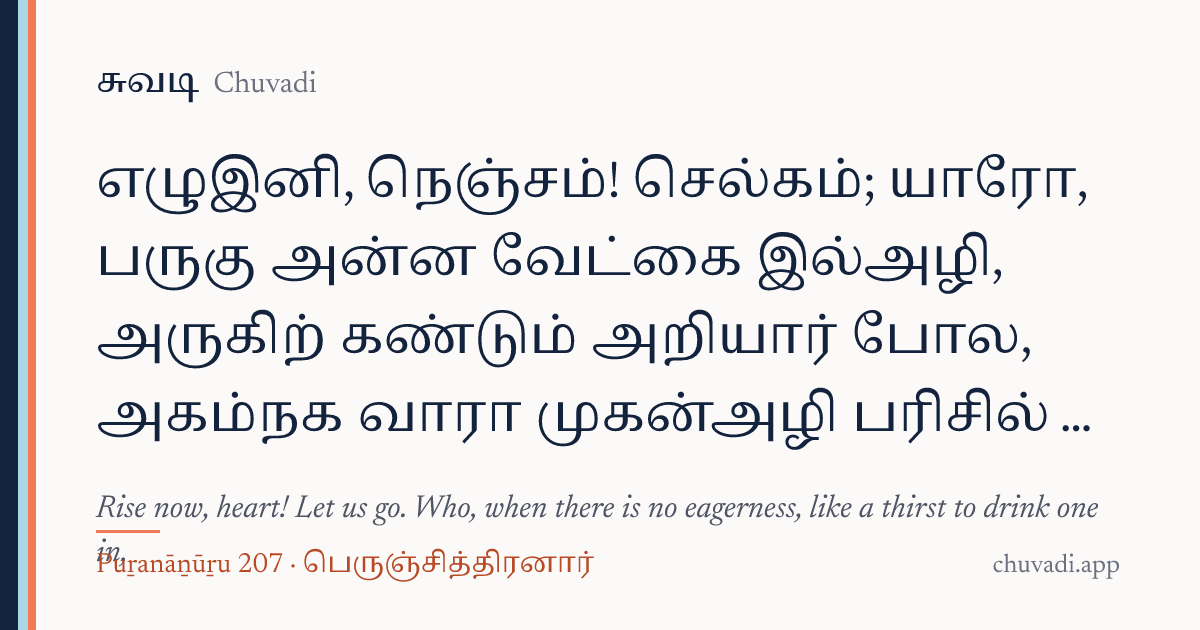
புறநானூறு 207
பாடல் · The poem
Tap a word to see where else it occurs.
பொருள் · Meaning in TamilAI
நெஞ்சமே, இனி எழு; புறப்படுவோம். பருகுவது போன்ற ஆர்வம் இல்லாமல், அருகில் கண்டும் அறியாதவர் போல நடந்து, மனம் மகிழாமல் முகம் வாடிக் கொடுக்கும் பரிசிலை யார் விரும்புவார்? முயற்சியும் மானமும் இல்லாதவர்களே அதை விரும்புவார்கள். ‘வருக’ என்று அழைக்கப்படும் தகுதியுடையவர்களுக்கு உலகம் பெரியது; அவர்களைப் போற்றுபவர்கள் பலர். வலிமை மிக்க யாளியைப் போல, நம் உள்ளம் உள்ளே அவிந்து அடங்கிவிடாது. நம்மைப் பற்றி வருந்தாதவனிடம் வெளிப்படையாக வாடி நிற்பவர்கள், ஒருபோதும் பழுக்காத கடுங்காய்க்காக அலைந்து வருந்துபவர்கள் ஆவார்கள்.
இது பாடாண் திணை; துறை பரிசில். பாடியவர் பெருஞ்சித்திரனார்; பாடப்பட்டவன் இளவெளிமான் என்று குறிப்பு கூறுகிறது, ஆனால் பாடலில் பெயர் இல்லை. மனம் விரும்பாமல் தரப்படும் பரிசிலை மறுத்துப் புலவர் தம் நெஞ்சுக்குச் சொல்வதாக அமைந்துள்ளது. இரண்டாம் அடியில் உள்ள ‘இல்அழி’ என்பது ‘இல்வழி’ என்று கொள்ளப்பட்டது; அடியின் அமைப்பு செறிவானது, பொருள் ஓரளவு உய்த்துணரப்பட்டது.
ஆங்கிலம் · English translationAI
Translation
- Rise now, heart! Let us go. Who,
- when there is no eagerness, like a thirst to drink one in,
- when they see one close by and act as if they did not know,
- would want a gift that comes without a gladdened heart, with a fallen face?
- Only the spineless would not spurn it.
- For those whose worth is such that people beg them to come,
- the world is wide, and those who will cherish them are many.
- Like the yāḷi in its fierce strength,
- our heart is not quenched within, nor cowed; plainly,
- those who wilt beside a man who feels no pain for them
- fret for a hard fruit that will never ripen.
What the poem says
Peruñcittiraṉār speaks to his own heart, telling it to get up and leave. The metadata names the patron as Iḷaveḷimāṉ, though the poem itself names no one; the tiṇai is pāṭāṇ and the turai paricil, the gift. As in Auvaiyār's poem just before, this is a poet's refusal of a grudging gift.
He describes the kind of giving he will not accept: no warmth of welcome, the patron looking at him as if he were a stranger, the gift handed over with a sour face. Only someone without self-respect would want such a thing. Poets who are truly worth inviting have the whole wide world, and many will receive them gladly.
The closing lines compare the poet's heart to the yāḷi, a lion-like beast of legend, which is not subdued. Those who stay on beside an unfeeling patron are like people pining for a hard fruit that will never ripen. Line 2 is printed paruku aṉṉa vēṭkai il aḻi; it is read here as il vaḻi, "where there is no", and the reading "no eagerness, like a thirst to drink one in" is the most natural sense, but the syntax of lines 1 to 5 is loose and the line division of the English is only approximate.