



புறநானூறு 213
பாடல் · The poem
Tap a word to see where else it occurs.
பொருள் · Meaning in TamilAI
நெருக்கமான போரில் பகைவரைக் கொன்ற, செருக்கும் வலிமையுமுடைய கால்களையுடைய, வெண்கொற்றக் குடை ஒளிரும் வெற்றி வேந்தே! பொங்கும் கடலை ஆடையாக உடுத்த இந்த அகன்ற உலகில், உன்னை எதிர்த்து வந்த இருவரையும் நினைத்துப் பார்த்தால், அவர்கள் பழமையான பகைவலிமை உடைய உன் பகைவர்கள் அல்லர்; போர் வெறி கொண்ட பார்வையோடு உன்னை எதிர்த்து எழுந்தவர்கள். ஆராய்ந்தால், நீயும் அவர்களுக்கு அத்தகைய பகைவன் அல்லன், கொல்லும் குதிரைகளையுடைய தலைவனே! பரந்த நல்ல புகழைப் பெற்று நீ மேலுலகம் சென்ற பின், நீ விட்டுச் செல்லும் உரிமைச் செல்வம் அவர்களுக்கே உரியது அல்லவா? அதை அறிந்தவனே! புகழை விரும்புபவனே! இன்னும் நன்கு கேள். உறுதியான வலிமையோடு உன்னை எதிர்த்து எழுந்த, ஆராயாத அறிவுடைய இளையோர் தோற்றால், உன் பெருஞ்செல்வம் யாருக்கு எஞ்சும்? போரை விரும்பும் செல்வனே! நீ அவர்களிடம் தோற்றால், இகழ்பவர்கள் மகிழப் பழியே எஞ்சும். ஆகவே உன் சினம் ஒழியட்டும்! விரைந்து எழுவாயாக; உன் உள்ளம் வாழ்க! அழிந்தவர்களுக்குப் புகலிடமாகும் உன் திருவடி நிழலைத் தயக்கமின்றி அளிக்க வேண்டும். அப்படிச் செய்தால், அரிதில் பெறக்கூடிய தேவர் உலகில் உள்ள பெரியோர் மிகுந்த ஆர்வத்தோடு உன்னை விருந்தினனாக வரவேற்பது நல்லது அல்லவா?
இது வஞ்சித் திணை, அதாவது போருக்குச் செல்லுதல் பற்றியது; துறை துணை வஞ்சி, போரிடும் இருவரைச் சமாதானப்படுத்துவது. பாடியவர் புல்லாற்றூர் எயிற்றியனார்; பாடப்பட்டவன் கோப்பெருஞ்சோழன். எதிர்த்து வந்த இருவர் அவனுடைய மக்கள் என்பது மரபுவழிச் செய்தி; பாடல் பெயர் சொல்லவில்லை. இறுதி வினாவை இருவிதமாகக் கொள்ள இடமுண்டு.
ஆங்கிலம் · English translationAI
Translation
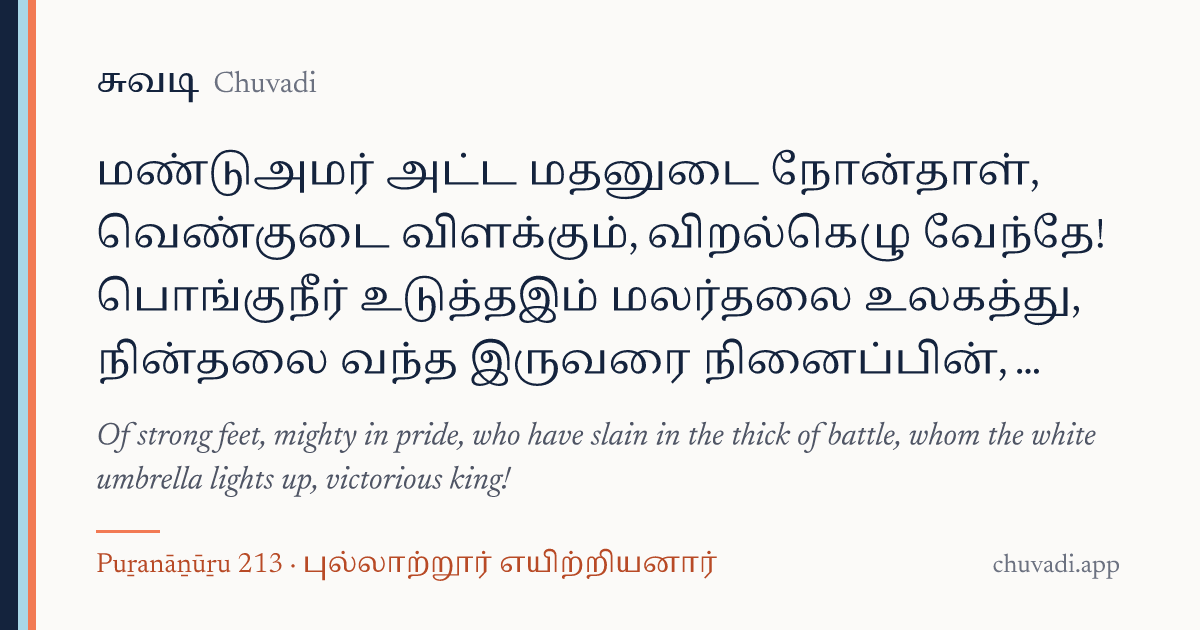
- Of strong feet, mighty in pride, who have slain in the thick of battle,
- whom the white umbrella lights up, victorious king!
- In this wide-spreading world that wears the swelling sea,
- if one thinks of the two who have come against you,
- they are not your enemies of long-standing strength;
- they have risen to oppose you with eyes greedy for war;
- and when one thinks of it, you too, to them,
- are no such enemy, prince of the slaying horses!
- When you have gained far-spreading good fame and then
- gone to the world of the exalted, after that
- is not the inheritance you leave theirs by right?
- So, you who know that it is so, well,
- listen further, lover of fame!
- If, for all their firm strength, those who rose against you,
- the young ones of unweighed judgment, are defeated,
- to whom will your great wealth be left?
- Lover of battle, if you yield to them,
- while scoffers rejoice, only blame will be left.
- So let your fury cease! Very swiftly
- rise; long live your heart! For the ruined
- the shade of your feet, which is a refuge, without wavering
- you must provide. Is it not good, that the noble ones
- in the hard-won world of the gods
- with eager longing should come to receive you as their guest?
What the poem says
Pullāṟṟūr Eyiṟṟiyaṉār speaks to Kōpperuñ Cōḻaṉ as the king prepares to fight two opponents who have risen against him. The tiṇai is vañci, the march to war, and the turai tuṇai vañci, which here is a plea to make peace between the two sides rather than a call to battle.
The poet's argument rests on who the two opponents are. They are not old enemies; the king's inheritance will be theirs after his death. The poem does not name them, but tradition takes them to be his own sons, which fits lines 9 to 11. If they lose, who will inherit the kingdom? If the king loses, his detractors will laugh and blame will be all that remains. Either way the war can only bring loss.
So the poet urges him to put away his anger, rise quickly, and do what a king should: be a shelter for those in ruin. The closing question can be read two ways: as asking whether it is good to seek heaven through such a battle, or, more likely, as a promise that righteous conduct will make the gods eager to receive him. The translation keeps the question form. Line 6 prints காட்சியடு for காட்சியொடு, the recurring misprint.