



புறநானூறு 214
பாடல் · The poem
Tap a word to see where else it occurs.
பொருள் · Meaning in TamilAI
‘நல்வினை செய்வோமா, வேண்டாமா?’ என்று ஐயம் நீங்காமல் இருப்பவர்கள், குற்றம் நிறைந்த பார்வையும் தெளிவில்லாத நெஞ்சமும் உடைய, துணிவில்லாதவர்கள். யானையை வேட்டையாடுபவன் யானையைக்கூடப் பெறுவான்; காடையை வேட்டையாடுபவன் வெறுங்கையோடும் திரும்புவான். ஆகவே, உயர்ந்த குறிக்கோளை நாடி உயர்ந்தவர்களுக்குச் செய்யும் செயலால் பயன் கிடைக்கும் என்றால், செயல் இல்லாத மேலுலகத்தின் இன்பத்தை அனுபவிக்கலாம். அந்த உலகத்தில் இன்பம் இல்லை என்றால், மீண்டும் பிறவாத நிலையும் கிடைக்கலாம். மீண்டும் பிறக்காவிட்டாலும், இமயமலையின் உயர்ந்த சிகரம் போலத் தம் புகழை நிலைநாட்டி, குற்றமில்லாத உடலோடு இறப்பதே மிகவும் சிறந்தது.
இது பொதுவியல் திணை; துறை பொருண்மொழிக் காஞ்சி, அதாவது வாழ்க்கையின் உண்மைகளை எடுத்துரைப்பது. பாடியவன் கோப்பெருஞ்சோழன். அவன் வடக்கிருந்த காலத்தில் பாடியது என்பது மரபு. ‘மாறிப் பிறப்பின் இன்மையும் கூடும்’ என்பதன் பொருள் உறுதியாகத் தெரியவில்லை. பாடல் காற்புள்ளியோடு முடிவதால் பாடம் முழுமையானதா என்பதும் ஐயமே.
ஆங்கிலம் · English translationAI
Translation
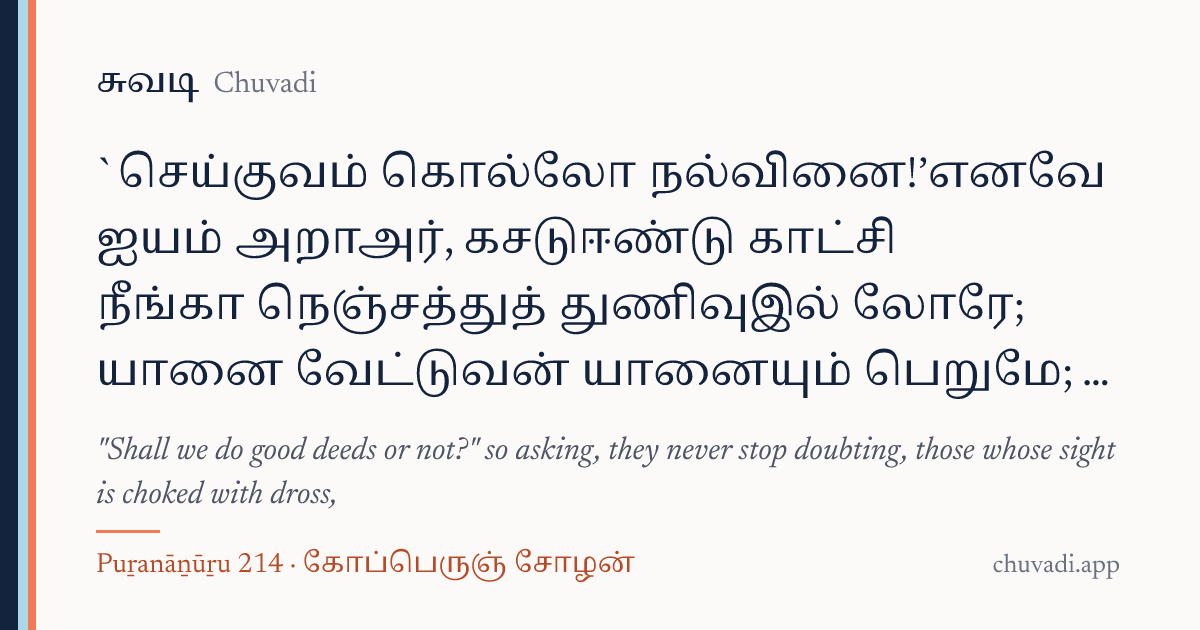
- "Shall we do good deeds or not?" so asking,
- they never stop doubting, those whose sight is choked with dross,
- with hearts that do not let go, the irresolute.
- The hunter of elephants may even bring an elephant home;
- the hunter of quail may come back with empty hands.
- So, for those who have risen high in a lofty pursuit,
- if there is reaching a goal by way of the deeds one does,
- they may enjoy the pleasures of the world where no deeds are done;
- if there is no pleasure in the world where no deeds are done,
- freedom from being born again may also come;
- and even if they are never born again, like the Himalaya's
- lofty peak, planting their fame on high,
- to die with a body free of fault is the highest thing.
What the poem says
This poem is attributed to the king Kōpperuñ Cōḻaṉ himself. Its tiṇai is potuviyal, the general theme, and its turai poruṇmoḻik kāñci, a statement of truths about life and its impermanence. Tradition places it at the time of his fast unto death, but the poem itself speaks only in general terms.
It begins by dismissing people who keep asking whether good deeds are worth doing: their minds are clouded and they cannot decide. Then comes a pair of hunting images. A man who hunts elephants may actually bring one down; a man who hunts quail may return with nothing. So it is better to aim high.
The rest of the poem is a chain of "if" clauses. If deeds bring their reward, the high-minded will enjoy the heavenly world, "the world where no deeds are done". If there is no such world, they may at least be freed from rebirth. And even if neither is true, they will leave behind fame as high as a Himalayan peak and die with an unblemished body, which is reward enough. The poem ends in the edition with a comma, not a full stop; the thought is complete, but it is possible the text is incomplete. Line 10 is not certain: "freedom from being born again" might instead mean the lack of a better rebirth.