



புறநானூறு 22
பாடல் · The poem
Tap a word to see where else it occurs.
பொருள் · Meaning in TamilAI
தொங்கும் கையும் உயர்ந்த நடையும், ஒன்றோடொன்று மோதி ஒலிக்கும் மணிகளும் உயர்ந்த தந்தங்களும், பிறை போன்ற நெற்றியும் சினப் பார்வையும், அகன்ற அடிகளும் பருத்த கழுத்தும் உடைய, தேன்கூடு சிதைந்த மலையைப் போல வண்டுகள் ஆரவாரிக்கும் மணமுள்ள மதநீரும், வழிந்தோடும் கசிவு நிறைந்த பெரிய தலையும் உடைய, வலிமை நிறைந்த இளம் யானைகள் கட்டுத்தறிகளில் நின்று அசைகின்றன. தன் இடத்தில் நின்று கதிர்களைப் பொழியும் வானத்து நிலவைப் போல, மாலை சூடிய உன் வெண்கொற்றக் குடையின் நிழலில், வாள் ஏந்தாதவர்களும் பாதுகாப்போடு உறங்குகின்றனர். அசையும் செந்நெல் கதிர்களாலும் சிறந்த கரும்பாலும் வேய்ந்த, கொடிகள் பறக்கும் கூரைகள், விழாக் கொண்டாடும் இடம் போல வெவ்வேறு அழகோடு தோன்றுகின்றன. ஓயாமல் குற்றும் உலக்கைகளின் ஒலி கேட்கிறது. ஆரவாரம் மிக்க அகன்ற இடத்தில், பொன்னிற இதழ்களுடைய பசுந்தும்பையின் மேல் அசையும் குஞ்சத்தோடு பனங்குருத்தைச் செருகிக்கொண்ட சினமுள்ள வீரர்களின் வெறியாட்டக் குரவைக் கூத்து கடல் அலைநீர் போலப் பொங்கி எழுகிறது. வாயில்களைக் காவல் செய்யாமலே பரந்து கிடக்கும் அகன்ற பாசறையைக் காப்பவனே! பணிந்த வேந்தர்கள் தந்த திறைப் பொருளால் உன்னை அடைந்தவர்களின் சுற்றத்தை உண்பிக்கும், உயர்ந்த கொல்லி மலை மக்களின் வீரனே! யானையைப் போன்ற பார்வையுடைய வெற்றி மிக்க சேயே! பெருமானே, உன் அளவற்ற செல்வம் வாழ்வதாக! உன்னைப் பாடிய ஒளிரும் உண்மை நாக்குகள் இனிமேல் பிறருடைய புகழைப் பாட வேண்டாதபடி தயங்காமல் வழங்கும் ஆற்றல் உடைய எங்கள் அரசனே! 'மாந்தரஞ் சேரல் இரும்பொறை காக்கும் நாடு தேவர் உலகத்தைப் போன்றது' என்று கேள்விப்பட்டு வந்து இனிதாகக் கண்டேன். பெருமானே, நீ சோர்வு இல்லாதவன்; வேற்று நாட்டில் தங்கும் படையோடு சென்று, உணவு மிகுதியாக இருக்கும்படி நடத்துகிறாய்; ஏனெனில் நீ உறங்குவதே இல்லை!
வாகைத் திணை, அதாவது வெற்றியையும் சிறப்பையும் பாடுவது; துறை அரசவாகை, அதாவது அரசனின் சிறப்பைச் சொல்வது. பாடியவர் குறுங்கோழியூர் கிழார்; பாடப்பட்டவன் சேரமான் யானைக்கட்சேய் மாந்தரஞ்சேரல் இரும்பொறை. பதிப்பில் உள்ள 'சோறுயட' என்பதைச் 'சோறுபட' என்று கொண்டோம். 'பாஅல் நின்று' என்ற தொடரின் பொருள் உறுதியாகத் தெரியவில்லை.
ஆங்கிலம் · English translationAI
Translation
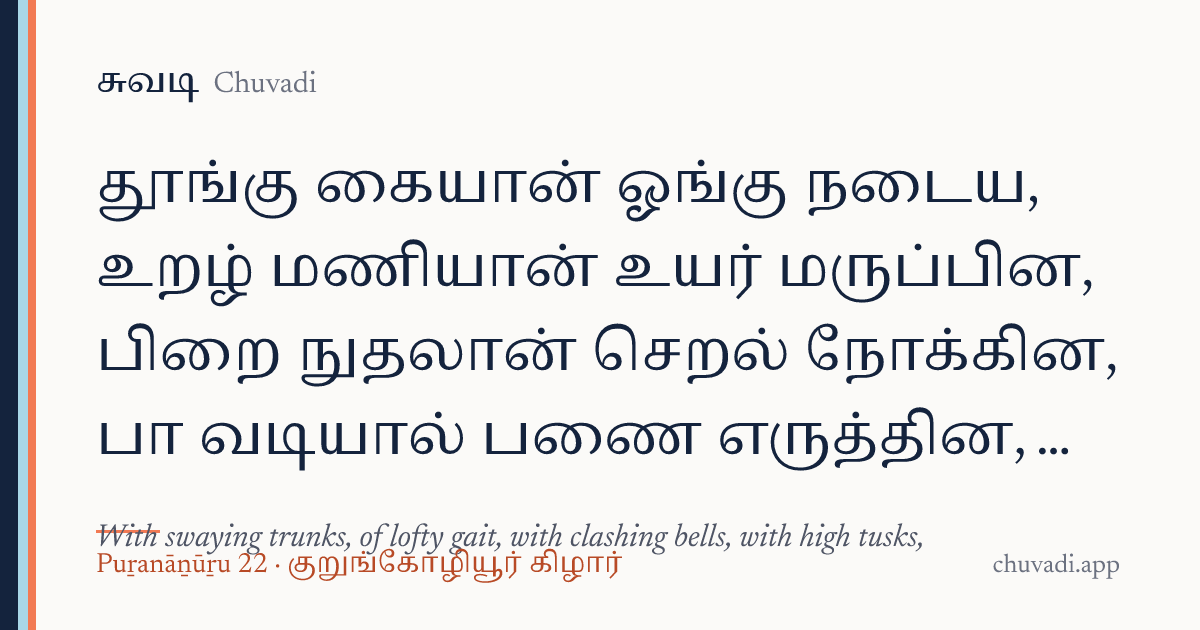
- With swaying trunks, of lofty gait,
- with clashing bells, with high tusks,
- with crescent brows, with fierce glare,
- with broad feet and massive necks,
- like a mountain where the honeycomb has burst,
- with fragrant musth where the bees swarm humming,
- with great heads where the ooze trickles down,
- the young elephants brimming with strength
- stand tethered at their posts and move about;
- standing in its place, shedding its rays,
- like the moon that dwells in the sky,
- under the shade of the garlanded white parasol,
- those with no sword at their side sleep in safety;
- with roofs thatched with swaying ears of red paddy
- and choice sugarcane, with flags flying,
- like a festival ground,
- each showing its own splendour,
- with pestles that never cease to pound;
- in the wide space loud with clamour,
- with green tumpai of golden petals
- topped by tossing tufts, and palmyra strips tucked in,
- the frenzied kuravai of fierce men
- surges like the waters of the tide;
- spread far and wide with no guard at its gates —
- keeper of the broad war camp!
- With the tribute brought by kings who bowed,
- you feed the families of those who come to you,
- slaying warrior of the people of lofty Kolli!
- Fierce, victorious Cēy with the gaze of an elephant!
- Long live, great one, your boundless wealth!
- So that the bright, true tongues that have sung of you
- should never afterwards tell the fame of others,
- you give without holding back — our mighty lord!
- 'The land that Māntarañ Cēral Irumpoṟai has guarded
- is like the world of the gods,' — hearing this, I came
- and have gazed on it with joy: great one, you never weary;
- with an army that camps in foreign lands
- you make food abound — because you never sleep!
What the poem says
Kuṟuṅkōḻiyūr Kiḻār's third poem in this run to the Cēra king Yāṉaikkaṭcēy Māntarañcēral Irumpoṟai, whom the poem names in line 34. The tiṇai is vākai, victory, and the turai is aracavākai, the excellence of a king.
The poem is a picture of the king's war camp. First come the elephants, described feature by feature, standing at their tethering posts; then the king's white parasol, steady as the moon, under whose shade even the unarmed sleep in safety. The camp's huts, thatched with paddy and sugarcane and decked with flags, look like a festival ground; pestles pound ceaselessly, and in the open space warriors wearing tumpai, the battle flower, and palmyra strips dance the frenzied kuravai, surging like the tide. The camp is so secure that its entrances are left unguarded.
The second half praises the king's generosity: he feeds the families of all who come to him with the tribute of defeated kings, and gives so freely that the poets who have sung him will never need to praise anyone else. He is called lord of the people of Kolli and Cēy, a name of Murukaṉ. The poet says he came because he heard that the king's land was like the world of the gods, and has found it so.
In line 38 the edition prints 'cōṟuyaṭa'; it is read as cōṟu paṭa, 'so that food abounds'. Line 10, 'pāal niṉṟu', is taken as 'standing in its place', but the phrase is not certain.