



புறநானூறு 23
பாடல் · The poem
Tap a word to see where else it occurs.
பொருள் · Meaning in TamilAI
கட்டப்பட்டிருந்த, உள்ளீடு உறுதியான வலிய பெரிய தூண்களை வெறுத்து, யானைகள் இறங்கி நீர் குடித்ததால் கலங்கிப் போன நீர்த்துறைகளையும்; கார்காலத்தில் மலரும் மணமுள்ள கடம்பின் பசிய இலை மாலையைச் சூடி, சூரனை அழித்த முருகனின் படையைப் போலத் தோன்றும், கூர்மையான நல்ல அம்புகளும் வளைந்த விற்களும் உடைய உன் கூளியர்கள், எடுக்க வேண்டியதை எடுத்துக்கொண்டு, எடுக்காமல் மீந்ததை யாரும் பயன்படுத்த முடியாதபடி சிதறி எறிந்த வயல்களையும்; கூர்மையான கோடரிகள் பாய்ந்ததால் ஊர்தோறும் காவல் மரங்கள் அசைந்து விழுந்த சோலைகளையும்; நீண்ட நகரத்தில் வேலைப்பாடு மிக்க நல்ல வீடுகளைக் கொடிய தீ அழிக்க, பெருந்தீ முழங்கிய இடங்களையும் கண்டேன். பகைவர்கள் நாணும்படி நாள்தோறும் நீ முன்னே சென்றாய். 'இன்னும் இவன் இதுபோன்ற பலவற்றைச் செய்வான்; யாரும் நெருங்க முடியாத துணிவு உடையவன் இவன்' என்று அவர்கள் சொன்னார்கள். உலகமே வளையும்படி திரண்ட பெரும்படையை ஆலங்கானத்துப் போரில் வென்று அழித்த, கூற்றுவனைப் போன்ற வலிமை உடையவனே! உன்னைக் கண்டுவிட்டு வருகிறேன். ஒடிந்த கொம்புடைய அழகிய ஆண்மான் புலியிடம் அகப்பட்டு இறந்ததால், சிறிய குட்டியைத் தழுவிக்கொண்டு, மருண்டு துள்ளும் நடையுடைய இளம் பெண்மான், பூளைச் செடி உயர்ந்து வளர்ந்த அச்சம் தரும் போர்க்களத்தில், வேளைச் செடியின் வெண்மையான பூக்களைக் கடித்து உண்ணும்; அப்படி மக்கள் இல்லாத பாழ்வழியாக மாறிவிட்டது அந்தக் காடு.
வாகைத் திணை, அதாவது வெற்றியைப் பாடுவது; துறை அரசவாகை, அதாவது அரசனின் சிறப்பைச் சொல்வது; பகைவர் நாட்டை வென்று புகழ் பெறுவதைச் சொல்லும் நல்லிசை வஞ்சி என்றும் கொள்ளலாம். பாடியவர் கல்லாடனார்; பாடப்பட்டவன் பாண்டியன் தலையாலங்கானத்து நெடுஞ்செழியன். இறுதியில் வரும் மானின் காட்சி, போருக்குப் பின் பாழான பகைவர் நாட்டைக் குறிக்கிறது.
ஆங்கிலம் · English translationAI
Translation
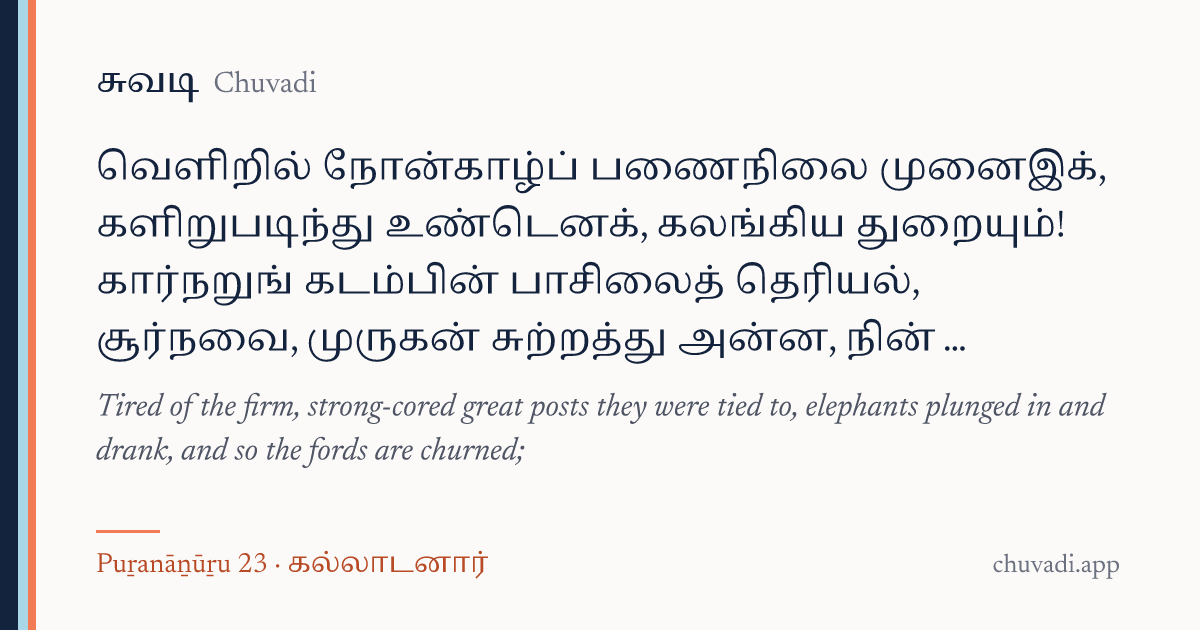
- Tired of the firm, strong-cored great posts they were tied to,
- elephants plunged in and drank, and so the fords are churned;
- with garlands of green-leaved, fragrant kaṭampu of the rains,
- like the host of Murukaṉ who slew Cūr, your
- kūḷiyar with sharp good arrows and curved bows
- took what they would take, and what was left untaken
- they scattered so that none could use it — and so the fields;
- as the well-honed axes struck, in town after town
- the guarded trees shook in the groves; in the tall city
- the finely built good houses fierce fire consumed,
- and the blaze roared in those quarters; seeing these,
- to shame your foes, you went at their head every day;
- 'He will do many more things like these; of daring
- that no one can come near is he,' they said;
- the wide army massed so that the earth buckled
- you overcame and slew in battle at Ālaṅkāṉam,
- you of the strength of Death! I come from having seen you;
- since the fine stag with broken horns fell to a tiger,
- the gentle doe, startled in her gait, hugging her little fawn,
- on the fearful battlefield where the pūḷai grows tall,
- nibbles the white flowers of the vēḷai —
- the forest that has become a wasteland without people.
What the poem says
Kallāṭaṉār sings to the Pāṇṭiya Neṭuñceḻiyaṉ, 'of Talaiyālaṅkāṉam'. The tiṇai is vākai, victory, and the turai is aracavākai, the excellence of a king, with nallicai vañci, the fame won by invading the enemy, as an alternative.
The poem is a tour of the devastation the poet has seen in enemy country, given as a list of places: the bathing-ghats churned up by elephants that broke from their posts to drink; the fields where the king's kūḷiyar, wild troops wearing kaṭampu like the host of Murukaṉ who killed the demon Cūr, took what they wanted and scattered the rest so no one could use it; the groves where guardian trees were felled with axes; and the city quarters where fine houses burned. The enemy, seeing it, says he will do even more.
The king is then praised for defeating, at Ālaṅkāṉam, a vast army massed so that the earth seemed to sag, and is addressed as one with the strength of Death. The poet says he comes from seeing him, and ends on a quiet, desolate image: in a forest that is now empty of people, on the old battlefield overgrown with pūḷai, a doe whose stag has been killed by a tiger stands guarding her fawn and nibbles vēḷai flowers.