



புறநானூறு 220
பாடல் · The poem
Tap a word to see where else it occurs.
பொருள் · Meaning in TamilAI
நிறைய சோறு கொடுத்துப் பல ஆண்டுகள் தன்னைக் காப்பாற்றிய பெரிய களிற்று யானையை இழந்த வருந்தும் பாகன், அது தங்கியிருந்த துயரம் நிறைந்த கூடத்தில் அது கட்டப்பட்டிருந்த தூண் வெறிச்சோடிக் கிடப்பதைக் கண்டு அழுவது போல, பொன்மாலையணிந்த, தேர்களை வழங்கிய கிள்ளி போய்விட்ட, பெரும்புகழுடைய பழைய ஊரின் மன்றங்களைக் கண்டு நான் கலங்கவில்லையா?
இது பொதுவியல் திணை; துறை கையறுநிலை. பாடியவர் பொத்தியார். பாடப்பட்டவர் பெயர் குறிக்கப்படவில்லை; ‘கிள்ளி’ என்பது கோப்பெருஞ்சோழனைக் குறிப்பதாகத் தோன்றுகிறது.
ஆங்கிலம் · English translationAI
Translation
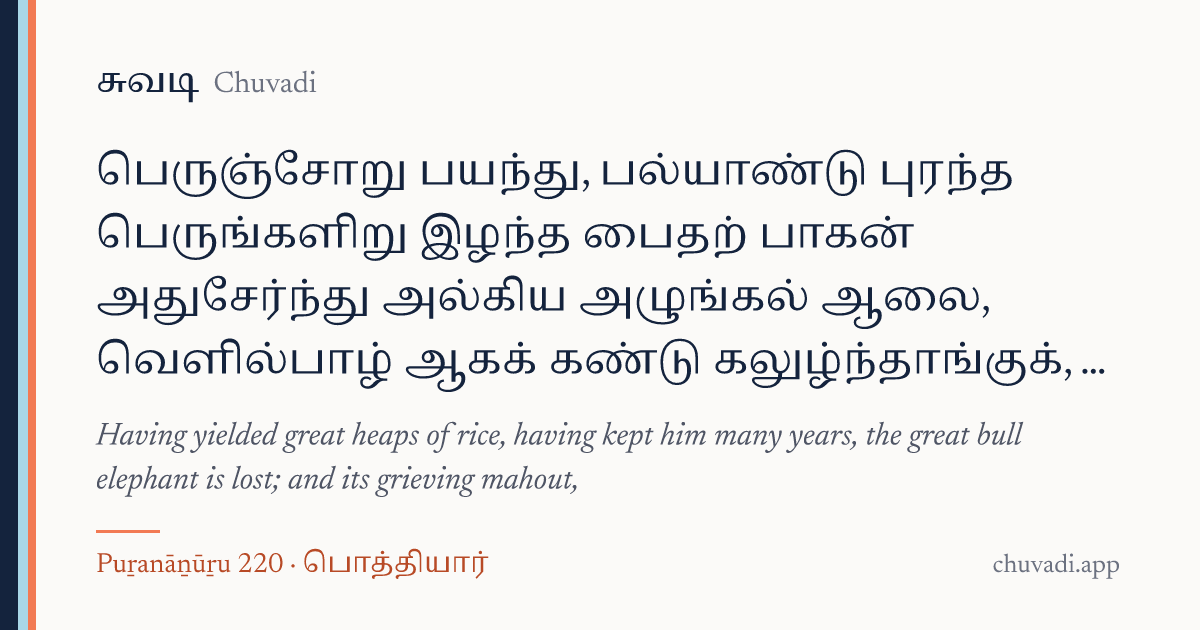
- Having yielded great heaps of rice, having kept him many years,
- the great bull elephant is lost; and its grieving mahout,
- seeing the sorrowing stall where it used to stand and rest
- with its tethering post now desolate, weeps; just so
- was I not shaken, I, when, with Kiḷḷi of the golden garland,
- generous with chariots, now gone,
- I saw the squares of this ancient town of great fame?
What the poem says
Pottiyār mourns his king, whom he calls Kiḷḷi, "of the golden garland, generous with chariots". The metadata names no patron, but the poem's place in the sequence on Kōpperuñ Cōḻaṉ makes it likely that he is meant. The tiṇai is potuviyal and the turai kaiyaṟunilai, helpless grief.
The whole poem is one simile. A mahout has lost the great elephant that earned him his living for many years; he goes back to its stall, sees the empty post where it was tied, and weeps. The poet feels the same when he walks through the public squares of the old city now that the king is gone.
The comparison is not demeaning: the elephant is the source of the mahout's food and pride, as the king was for his poets, and the empty stall becomes the empty city. In line 1, பெருஞ்சோறு is "great rice", food given in plenty.