



புறநானூறு 221
பாடல் · The poem
Tap a word to see where else it occurs.
பொருள் · Meaning in TamilAI
பாடுபவர்களுக்குக் கொடுத்ததால் பெரும்புகழ் பெற்றவன்; ஆடுபவர்களுக்கு மிகுந்த அன்போடு கொடுத்தவன்; அறவோர் புகழ்ந்த நடுநிலையான செங்கோலை உடையவன்; திறமையுடையோர் புகழ்ந்த உறுதியான நட்பை உடையவன்; பெண்களிடம் மென்மையானவன்; ஆண்களிடையே வலிமையானவன்; குற்றமற்ற கல்வியுடைய உயர்ந்தோர்க்குப் புகலிடம் ஆனவன். அத்தகையவன் என்று எண்ணாமல், அந்த அரசனின் இனிய உயிரை எதையும் நினைக்காத கூற்றுவன் கொண்டு சென்றுவிட்டான். உண்மை பேசும் புலவர்களே! வருந்தும் நம் சுற்றத்தாரை அணைத்துக்கொண்டு, அந்தக் கூற்றுவனை வைவோம், வாருங்கள்! ‘அகன்ற உலகம் துயரில் ஆழ, அழியாத நல்ல புகழைச் சூடி, நம் புரவலன் நடுகல் ஆகிவிட்டான்’ என்று சொல்வோம்.
இது பொதுவியல் திணை; துறை கையறுநிலை. பாடியவர் பொத்தியார்; பாடப்பட்டவன் கோப்பெருஞ்சோழன். நடுகல் என்பது இறந்த வீரனின் நினைவாக நடப்படும் கல். எட்டாம் அடியில் ‘உய்த்த்ன்று’ என்பது ‘உய்த்தன்று’ என்பதன் அச்சுப்பிழை.
ஆங்கிலம் · English translationAI
Translation
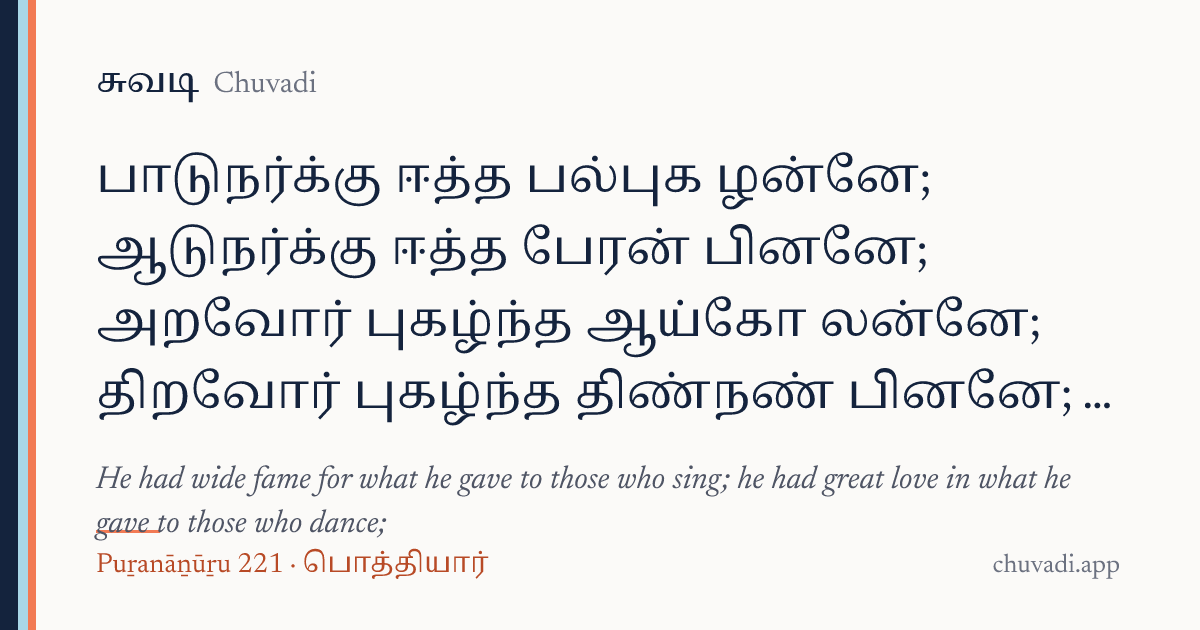
- He had wide fame for what he gave to those who sing;
- he had great love in what he gave to those who dance;
- he had a just sceptre that the righteous praised;
- he had firm friendship that the able praised;
- gentleness to women; strength among men;
- a refuge for the high-minded of flawless learning;
- not thinking that he was such, that king
- thoughtless Death has carried off, his sweet life;
- holding our grieving kin close, that Death
- let us revile, come, poets of true words!
- "While the wide world sinks in sorrow,
- crowned with good fame that cannot perish,
- our patron has become a memorial stone," so let us say.
What the poem says
Pottiyār laments Kōpperuñ Cōḻaṉ. The tiṇai is potuviyal and the turai kaiyaṟunilai, the helpless grief of those who survive their lord.
The first six lines are a catalogue of the king's virtues, each line a short, balanced phrase: generous to singers and dancers, just in rule, firm in friendship, gentle to women and a man among men, a shelter for the learned. Then the turn: Death, which does not think, carried him off without regard for any of this.
The poet calls on his fellow poets, "poets of true words", to gather their grieving families and curse Death together, and to proclaim that their patron has become a naṭukal, the memorial stone set up for a fallen hero, crowned with undying fame while the world is drowned in grief. Line 8 prints உய்த்த்ன்று, a misprint for உய்த்தன்று ("carried off"). The verb vaikam in line 10 is taken as "let us revile", from vai, "to scold"; this is the likeliest sense.