



புறநானூறு 222
பாடல் · The poem
Tap a word to see where else it occurs.
பொருள் · Meaning in TamilAI
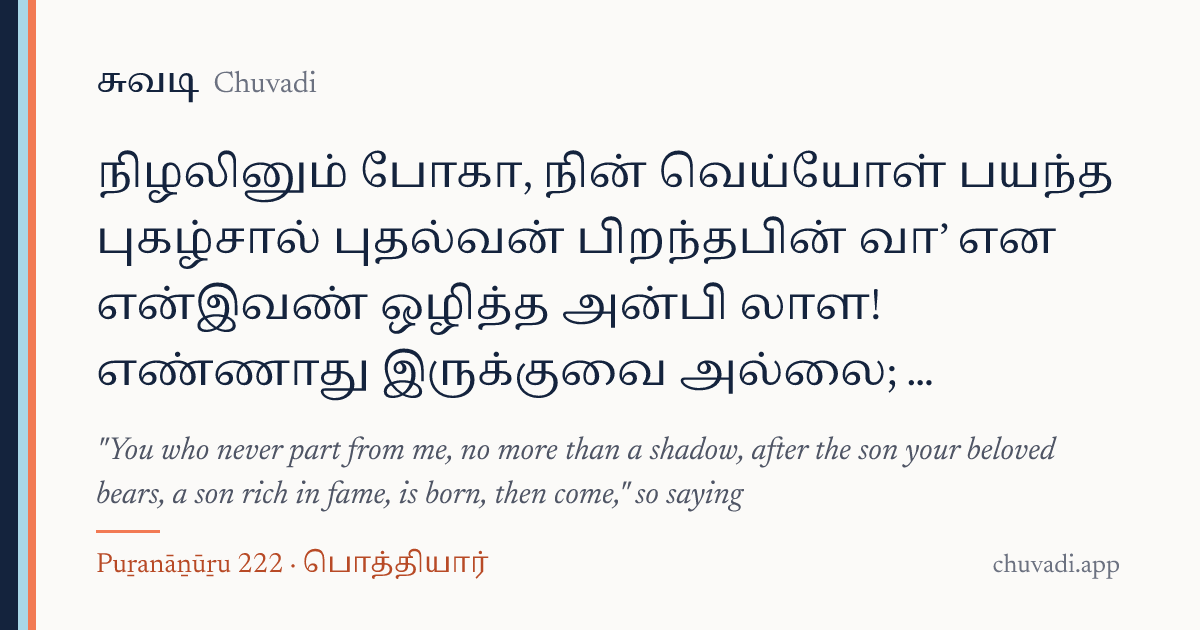
‘நிழலைப் போல என்னை விட்டுப் பிரியாதவனே, உன் அன்பு மனைவி பெறும் புகழ்மிக்க மகன் பிறந்த பின் வா’ என்று சொல்லி என்னை இங்கே விட்டுச் சென்ற அன்பில்லாதவனே! நீ என்னை நினைக்காமல் இருப்பவன் அல்லன். ஆகவே, புகழை விரும்புபவனே, இனி என் இடம் எது?
இது பொதுவியல் திணை; துறை கையறுநிலை. பாடியவர் பொத்தியார்; பாடப்பட்டவன் கோப்பெருஞ்சோழன். மகன் பிறந்த பின் வரும்படி சோழன் சொன்னதால் பின்தங்கிய நண்பர் வருந்திக் கேட்பதாகப் பாடல் அமைந்துள்ளது. முதல் அடியின் அமைப்பு செறிவானது; அதன் தொடக்கத்தில் மேற்கோள் குறி விடுபட்டுள்ளது.
ஆங்கிலம் · English translationAI
Translation
- "You who never part from me, no more than a shadow, after the son your beloved bears,
- a son rich in fame, is born, then come," so saying
- you left me here, you loveless one!
- You are not one who would forget me;
- so where is my place? You lover of fame!
What the poem says
A short poem by Pottiyār to Kōpperuñ Cōḻaṉ. The tiṇai is potuviyal and the turai kaiyaṟunilai, helpless grief. The poem itself tells the situation: the king, when he resolved to die, told Pottiyār, his inseparable companion, to come only after the king's queen had given birth to a son. Pottiyār has been left behind.
He reproaches the king as "loveless" for leaving him, and yet in the next breath says the king is not one who forgets. So he asks where his own place is now: the question is half complaint, half a claim to the place beside the king that he was promised. Tradition connects this with the following poem, in which Pottiyār is given his place at the king's memorial stone.
The first line is compressed, and the edition's opening quotation mark is missing; the words "who never part from me, no more than a shadow" are taken to describe the bond between the two, as the king himself described it.