



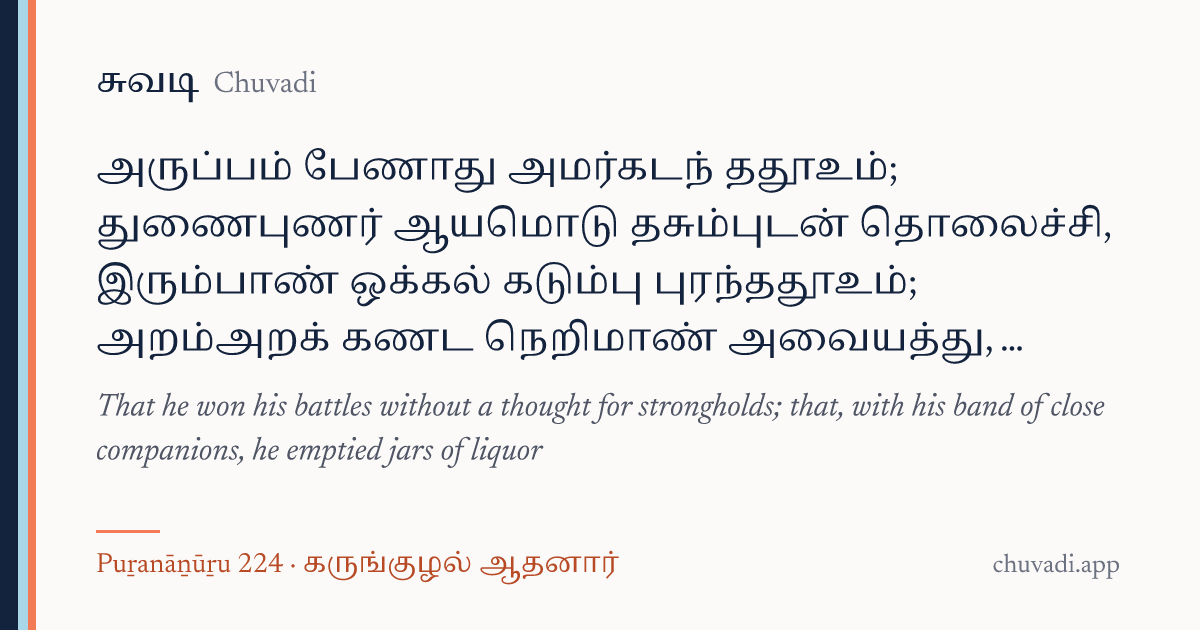
புறநானூறு 224
பாடல் · The poem
Tap a word to see where else it occurs.
பொருள் · Meaning in TamilAI
அரண்களைப் பொருட்படுத்தாமல் போரில் வென்றதும்; துணையாக உடன் இருக்கும் கூட்டத்தோடு கள்குடங்களைத் தீர்த்து, பெரிய பாணர் சுற்றத்தைக் காப்பாற்றியதும்; அறத்தை முழுமையாகக் கண்ட, நெறியில் சிறந்த அவையில், முறைகளை நன்கு அறிந்தவர்கள் முன்னின்று புகழ்ந்த, குற்றமற்ற தூய ஒழுக்கமுடைய மனைவியரோடு, கதிரவன் வடிவிலான பல அடுக்குகளையுடைய வேலியும், பருந்துக்குரிய பங்கும், உயர்ந்த வேள்வித் தூணும் கொண்டு வேத வேள்விச் செயலை முடித்ததும் — இவற்றால் அந்த அறிவுடையவன் உண்மையில் அறிந்தவன் என்பது தெளிவு. அவனே இப்போது இறந்துவிட்டான்; இந்த உலகம் இரங்கத்தக்கது! அருவிகள் வற்றி, அச்சம் தரும்படி கருகி, பெருவறட்சி மிகுந்த வேனில் காலத்தில், பசித்த பசுக்கூட்டத்துக்குத் தீனி தருவதற்காக, இடையர்கள் பூப்போன்ற கூரிய கத்திகளால் பூக்களும் உதிரும்படி வெட்டி அழித்த வேங்கை மரம் போல, மென்மையான இயல்புடைய அவன் மனைவியரும் அணிகலன்களைக் களைந்துவிட்டனர்.
இது பொதுவியல் திணை; துறை கையறுநிலை. பாடியவர் கருங்குழல் ஆதனார்; பாடப்பட்டவன் சோழன் கரிகாற் பெருவளத்தான். ‘பவியல்’ என்ற சொல்லின் பொருள் தெரியவில்லை; பாடம் பிழைபட்டிருக்கலாம். ‘எருவை நுகர்ச்சி’, ‘பருதி உருவின்’ என்பவை வேள்விக்குரிய அமைப்புகளைக் குறிக்கின்றன, ஆனால் அவற்றின் சரியான பொருள் உறுதியாகத் தெரியவில்லை. ‘கணட’ என்பது ‘கண்ட’ என்பதன் அச்சுப்பிழை.
ஆங்கிலம் · English translationAI
Translation
- That he won his battles without a thought for strongholds;
- that, with his band of close companions, he emptied jars of liquor
- and kept the great families of bards;
- that in an assembly excellent in its ways, which saw dharma fully,
- praised before all by those who knew the rules well,
- with his women of faultless, pure conduct,
- with the many-layered enclosure shaped like the sun,
- the kite's portion, and the tall sacrificial post,
- he brought the work of Vedic sacrifice to completion:
- surely he knew, the man of wisdom;
- and now he himself is dead; pitiable is this world!
- As when the waterfalls have stopped, everything scorched and fearful,
- in the summer when the great drought deepens,
- to bring fodder to the hungry herd,
- cowherds with their blossom-like blades lop and strip
- the vēṅkai, its flowers falling with the leaves; like that,
- his gentle women too have taken off their ornaments.
What the poem says
Karuṅkuḻal Ātaṉār mourns the Chola king Karikāl Peruvaḷattāṉ. The tiṇai is potuviyal and the turai kaiyaṟunilai, helpless grief.
The first nine lines list what the king did, each clause ending with the same grammatical ending ("that he..."): he won battles without caring for the enemy's forts, he drank with his companions and fed the bards, and, with his queens, he completed a Vedic sacrifice with its sun-shaped many-layered enclosure, its portion for the kite and its tall sacrificial post. The poet's conclusion is that the king truly knew what was worth doing; and yet he is dead.
The closing simile is pastoral and sharp. In the worst of summer, when even the waterfalls have dried up, cowherds lop a flowering vēṅkai tree to feed their starving cattle, and its blossoms fall with its leaves. So the king's women have taken off their jewels, the sign of widowhood. Several details of the sacrifice are uncertain: paviyal in line 6 is not a clear word and may be corrupt, and "the kite's portion" (eruvai nukarcci) and "shaped like the sun" (paruti uruvin) describe the altar in terms whose exact sense is not secure. Line 4 prints கணட, a misprint for கண்ட.