



புறநானூறு 225
பாடல் · The poem
Tap a word to see where else it occurs.
பொருள் · Meaning in TamilAI
முன்னணியில் சென்றவர்கள் பனைநுங்கின் இனிய சோற்றை உண்ணவும், நடுவில் சென்றவர்கள் பனம்பழத்தின் கனியை உண்ணவும், கடைசியில் சென்றவர்கள் பிளந்த நார்ப்பகுதியோடு சுட்ட கிழங்கை உண்ணவும், நிலம் நிறைந்த உலகத்தை வலமாகச் சுற்றி வந்து, மன்னர்களின் பெருமையை அழித்த, உயர்த்திய வேல்களையுடைய படையோடு இருந்த ‘ஆற்றல்’ என்பதன் தோற்றத்தை இப்போது கேள்: கள்ளி படர்ந்த களர்நிலமான பாழிடத்தில், முள் நிறைந்த அகன்ற காட்டில் அது இருக்கிறது. ‘சேட்சென்னி நலங்கிள்ளி இதைக் கேட்பானோ?’ இனிய ஓசையுடைய பறையோடு வெற்றியை அறிவித்த, தூக்கணாங்குருவியின் தொங்கும் கூட்டைப் போல ஒரு பக்கத்தில் மாட்டப்பட்ட முறுக்கிய வாயுடைய வலம்புரிச் சங்கு, உலகைக் காக்கும் மன்னர்களின் வாயிலில் காலையில் ஒலித்தால், நான் வருந்துவேன்.
இது பொதுவியல் திணை; துறை கையறுநிலை. பாடியவர் ஆலத்தூர் கிழார்; பாடப்பட்டவன் சோழன் நலங்கிள்ளி. ‘நலங்கிள்ளி கேட்குவன்கொல்’ என்பதை யார் சொல்வது என்பது உறுதியாகத் தெரியவில்லை. ‘தானையடு’, ‘பறையடு’ என்பவை ‘ஒடு’ என்பதன் அச்சுப்பிழை.
ஆங்கிலம் · English translationAI
Translation
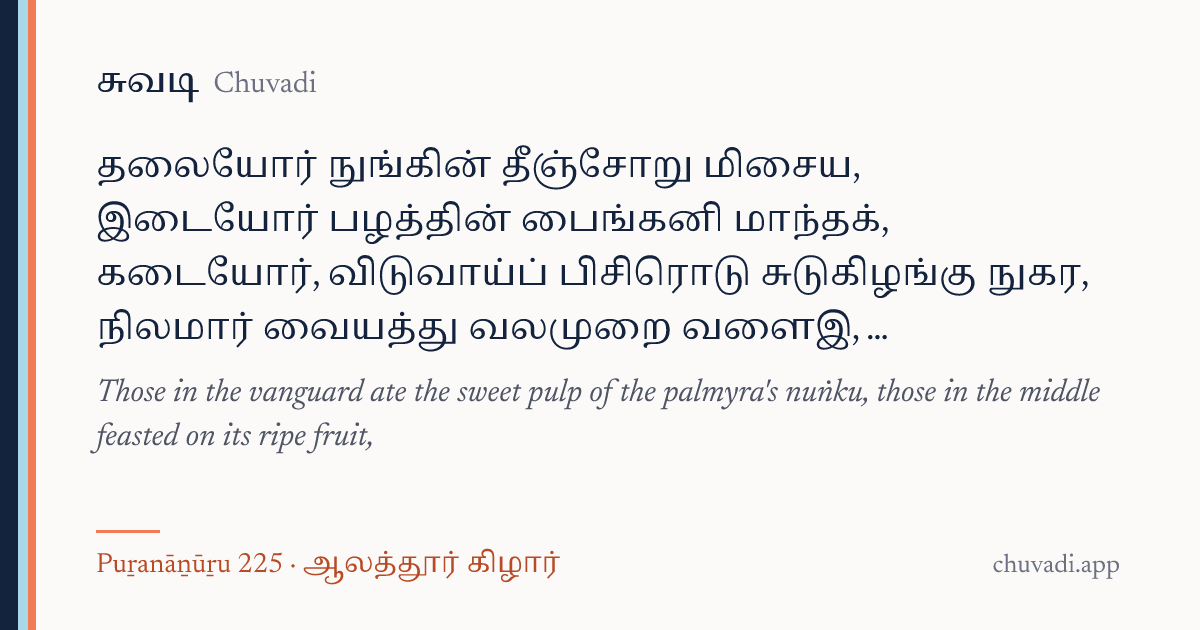
- Those in the vanguard ate the sweet pulp of the palmyra's nuṅku,
- those in the middle feasted on its ripe fruit,
- those at the rear ate roasted tubers with their split, fibrous husks,
- as it circled the land-filled earth, keeping it on the right,
- his army of lifted spears that broke the pride of kings:
- hear now what has become of the thing called strength:
- on the barren battlefield where only kaḷḷi spreads,
- it lies in the wide forest of thorns. "Truly,
- will Cēṭceṉṉi Nalaṅkiḷḷi hear it?"
- The conch that proclaimed victory with sweet-sounding drums,
- like the hanging nest of the weaver bird,
- the valampuri conch with its twisted mouth, hung up on one side,
- if at the gates of kings who guard the earth
- it sounds at daybreak, how I shall grieve!
What the poem says
Ālattūr Kiḻār mourns the Chola king Nalaṅkiḷḷi, here also called Cēṭceṉṉi Nalaṅkiḷḷi. The tiṇai is potuviyal and the turai kaiyaṟunilai, helpless grief.
The poem opens with the king's army on the march round the world: the whole army is fed from the palmyra, the vanguard on the tender nuṅku pulp, the middle ranks on the ripe fruit, the rear on roasted tubers. Then the poet asks the hearer to see what has become of all that strength: it lies in a thorny waste where only cactus-like kaḷḷi grows, which in a lament means the burning ground.
The last lines turn on the conch. The valampuri conch, which once sounded with the drums to announce the king's victories, now hangs idle on one side like a weaver bird's nest. If, at daybreak, it is heard sounding at the gates of other kings, the poet will grieve. The words in lines 8 and 9, "will Cēṭceṉṉi Nalaṅkiḷḷi hear it?", are best taken as the poet's own cry, though who speaks them is not certain. Line 5 prints தானையடு and line 10 பறையடு, the edition's recurring misprint for -oṭu.