



புறநானூறு 226
பாடல் · The poem
Tap a word to see where else it occurs.
பொருள் · Meaning in TamilAI
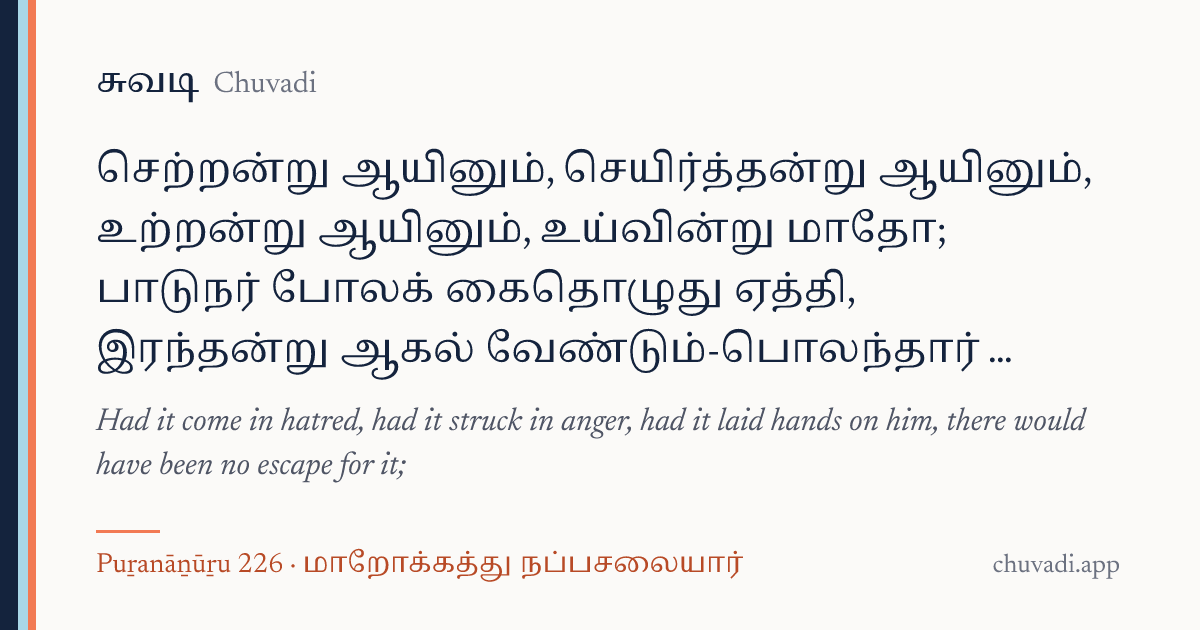
பகைமை கொண்டு வந்திருந்தாலும், சினந்து தாக்கியிருந்தாலும், நேரடியாக அவனைப் பற்றியிருந்தாலும், கூற்றுவன் தப்பிப் பிழைத்திருக்க முடியாது. ஆகவே, பொன்மாலையும், நெருக்கமான போரில் வெல்லும் படையும், உறுதியான தேரும் உடைய வளவனைக் கொண்டு சென்ற கூற்றுவன், பாடுபவர்களைப் போலக் கைகூப்பி வணங்கிப் புகழ்ந்து இரந்துதான் பெற்றிருக்க வேண்டும்.
இது பொதுவியல் திணை; துறை கையறுநிலை. பாடியவர் மாறோக்கத்து நப்பசலையார்; பாடப்பட்டவன் குளுமுற்றத்துத் துஞ்சிய சோழன் கிள்ளிவளவன். இரப்பவர்க்கு மறுக்காத அவன் கொடைத்தன்மையால்தான் கூற்றுவனுக்கும் உயிரைக் கொடுத்தான் என்பது பாடலின் கருத்து.
ஆங்கிலம் · English translationAI
Translation
- Had it come in hatred, had it struck in anger,
- had it laid hands on him, there would have been no escape for it;
- like those who sing, with joined hands, praising,
- it must have come begging: with a golden garland,
- with an army that conquers in the press of battle,
- Vaḷavaṉ of the sturdy chariots, the Death that took him.
What the poem says
Māṟōkkattu Nappacalaiyār laments the Chola king Kiḷḷi Vaḷavaṉ, whom the metadata names as the one "who died at Kuḷumuṟṟam". The tiṇai is potuviyal and the turai kaiyaṟunilai, helpless grief.
The poem is a single bold thought. Death could never have taken this king by force. If it had come as an enemy, in hatred or anger, or tried to seize him, it would not have escaped alive. So it must have come as a suppliant does, hands joined, singing his praises and begging; and the king, who never refused a suppliant, gave it his life.
The praise of the king's generosity is thus folded into the account of his death. The final line names him only as "Vaḷavaṉ of the sturdy chariots", with the Death that took him as the grammatical subject of the whole poem.