



புறநானூறு 228
பாடல் · The poem
Tap a word to see where else it occurs.
பொருள் · Meaning in TamilAI
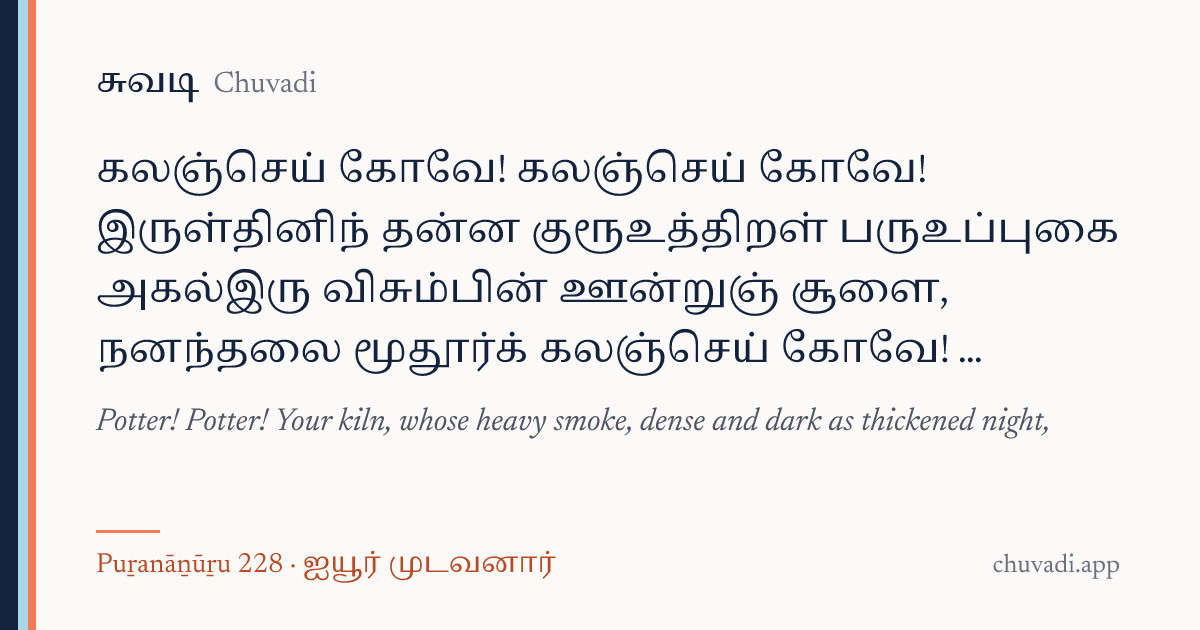
மண்கலம் செய்யும் குயவனே! மண்கலம் செய்யும் குயவனே! இருள் திரண்டது போன்ற கரிய, அடர்ந்த பெரும் புகை அகன்ற வானில் ஊன்றி நிற்கும் சூளையையுடைய, இந்த அகன்ற பழைய ஊரின் குயவனே! நீ இரங்கத்தக்கவன்; நீ என்ன செய்வாய்? நிலத்தின் எல்லைவரை பரவிய நீண்ட பெரும்படையையும், புலவர்கள் புகழ்ந்த பொய்யாத நல்ல புகழையும், விரிந்த கதிர்களையுடைய கதிரவன் வானில் ஏறியது போலத் தொலைவுவரை விளங்கும் சிறப்பையும் உடைய, செம்பியர் மரபில் வந்த, கொடிகள் அசையும் யானைகளையுடைய நெடுமா வளவன் தேவர் உலகம் சென்றுவிட்டான். ஆகவே, அத்தகையவனை மூடுவதற்கான அகன்ற வாயுடைய தாழியைச் செய்ய நீ விரும்பினால், பெரிய நிலத்தையே சக்கரமாகவும், பெரிய மலையையே மண்ணாகவும் கொண்டாலும், உன்னால் அதைச் செய்ய இயலுமா?
இது பொதுவியல் திணை; துறை ஆனந்தப் பையுள், அதாவது இறப்பால் உண்டான பெருந்துயர். பாடியவர் ஐயூர் முடவனார்; பாடப்பட்டவன் குளுமுற்றத்துத் துஞ்சிய சோழன் கிள்ளிவளவன். பதின்மூன்றாம் அடியில் ‘அயின்’ என்பது ‘ஆயின்’ என்பதன் அச்சுப்பிழை.
ஆங்கிலம் · English translationAI
Translation
- Potter! Potter!
- Your kiln, whose heavy smoke, dense and dark as thickened night,
- plants itself in the wide, broad sky,
- potter of this spacious old town!
- You are to be pitied; how will you manage?
- With his long, vast army that crowned the edges of the land,
- of unfailing good fame that poets have praised,
- like the sun with spreading rays climbing the sky,
- of far-shining glory, the descendant of the Cempiyar,
- Neṭumā Vaḷavaṉ of elephants with waving banners,
- has gone to the world of the gods; and so,
- the wide-mouthed urn that is to cover such a one,
- if you mean to shape it, in any way at all,
- with the great earth for your wheel, and the great mountain
- for your clay, could you shape it?
What the poem says
Aiyūr Muṭavaṉār laments Kiḷḷi Vaḷavaṉ, called here Neṭumā Vaḷavaṉ and "descendant of the Cempiyar". The tiṇai is potuviyal and the turai āṉantap paiyuḷ, a term for deep grief at a death; the label fits.
The poet speaks not to the dead king or to Death but to a potter, whose kiln sends up thick black smoke over the old town. The potter has a task: to make the burial urn (tāḻi) for the king. The poet pities him, because the king's greatness was so vast, his army reaching the edges of the earth and his glory like the rising sun, that no ordinary urn could hold him.
The final question is the poem's famous hyperbole: could the potter make such an urn even if he used the whole earth for his wheel and a great mountain for his clay? One misprint is clear: line 13 prints அயின் for ஆயின் ("if").