



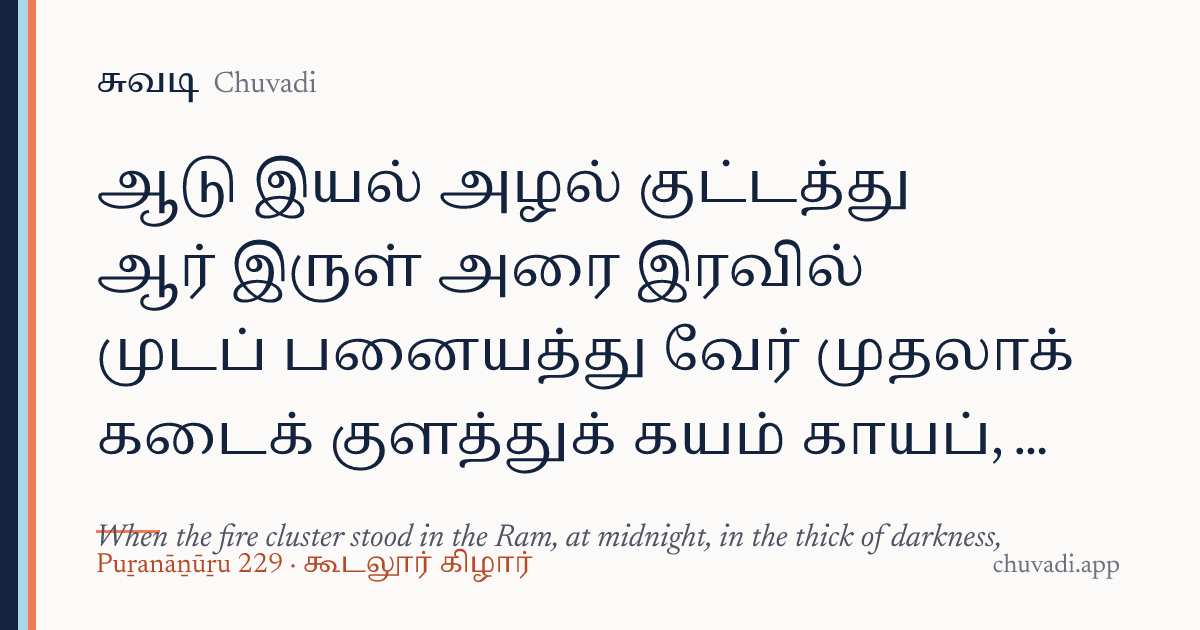
புறநானூறு 229
பாடல் · The poem
Tap a word to see where else it occurs.
பொருள் · Meaning in TamilAI
ஆட்டு ராசியில் தீக் கூட்டம் நின்ற காலத்தில், அடர்ந்த இருள் நிறைந்த நள்ளிரவில், முடப்பனை என்னும் விண்மீன் தொகுதியின் அடி தொடக்கமாக, கடைக்குளம் என்னும் தொகுதியின் நீர்நிலை வற்ற, பங்குனி மாதத்தின் உயர்ந்த வான்பரப்பில், முதல் விண்மீன் தன் நிலையிலிருந்து விலக, நிலையான விண்மீன் அதற்கு எதிரே எழ, பழைய விண்மீன் துறையில் இறங்க, கிழக்கே செல்லாமல், வடக்கே நெருங்காமல், கடல் சூழ்ந்த நிலத்துக்கு விளக்குப் போல, அடர்ந்த நெருப்பைப் பரப்பிக் காற்றுக்கு எதிராகப் பொங்கி, ஒரு விண்மீன் வானத்திலிருந்து விழுந்தது! அதைக் கண்டு நாங்களும் பல்வேறு இரவலர்களும், ‘பறைபோல ஒலிக்கும் அருவிகள் நிறைந்த நல்ல நாட்டுத் தலைவன் நோயில்லாமல் இருந்தால் நல்லது’ என்று, உடைந்த நெஞ்சமும் சோர்ந்த மனமும் கொண்டு அஞ்சினோம். இன்று ஏழாம் நாள் வந்தது. வலிமையுடைய யானை துதிக்கையைக் கீழே வைத்து உறங்கவும், இறுக்கிக் கட்டிய முரசு கண் கிழிந்து உருளவும், காவல் வெண்குடை காம்பு ஒடிந்து உலரவும், காற்றுப் போல விரையும் குதிரைகள் நடையின்றி நிற்கவும், அவன் மேலுலகம் சென்றுவிட்டான். ஆகவே, பகைவரைக் கட்டும் வலிமையும், விரும்பி வந்தவர்களுக்கு அளவிட்டுக் கொடுக்கத் தெரியாத கொடையும் உடைய, நீலமணி மலை போன்ற கரியவன், ஒளிரும் வளையல் அணிந்த மகளிர்க்கு உற்ற துணையாகி, தன் சுற்றத்தாரை மறந்துவிட்டானோ?
இது பொதுவியல் திணை; துறை கையறுநிலை. பாடியவர் கூடலூர் கிழார்; பாடப்பட்டவன் கோச்சேரமான் யானைக்கட்சேய் மாந்தரஞ்சேரல் இரும்பொறை. தொடக்க அடிகளில் உள்ள விண்மீன் பெயர்களும் திசைச் சொற்களும் எவற்றைக் குறிக்கின்றன என்பது உறுதியாகத் தெரியவில்லை; அவை சொல்லுக்குச் சொல் தரப்பட்டுள்ளன.
ஆங்கிலம் · English translationAI
Translation
- When the fire cluster stood in the Ram,
- at midnight, in the thick of darkness,
- with the Crooked Palmyra's root at its start,
- while the pool of the Last Tank lay drying,
- in the high expanse of the month of Paṅkuṉi,
- as the leading star moved from its place,
- and the fixed star rose up opposite it,
- and the ancient star sank down to its ford,
- not going east, not pressing northward,
- as a lamp for the sea-girt land,
- spreading dense fire, flaring up against the wind,
- a single star fell, from the sky!
- Seeing it, we and others, suppliants of many kinds,
- said, "If the lord of the good land of waterfalls that sound like drums
- is free from sickness, how good that would be!";
- with broken hearts, spreading dread through our minds,
- we feared; the seventh day has come, today;
- as his mighty elephant sleeps with its trunk laid down,
- as his tight-strung drum rolls with its face split,
- as his guarding white umbrella withers with its handle broken,
- as his wind-swift spirited horses stand without their pace,
- he has gone to the world above; and so,
- becoming the true partner of women with bright bangles,
- has he forgotten the band of his own companions,
- he who had the strength to bind his enemies, who to those who longed
- gave with a giving that never knew measuring out,
- he, dark as a mountain of sapphire?
What the poem says
Kūṭalūr Kiḻār laments the Cēra king Yāṉaikkaṭcēy Māntarañcēral Irumpoṟai (the metadata prints the name with a stray space, யானைக்கட்சே எய்). The tiṇai is potuviyal and the turai kaiyaṟunilai, helpless grief.
The first twelve lines are a precise description of the night sky in the month of Paṅkuṉi, at midnight, in terms of stars and star groups: a "fire cluster" in the Ram, the "Crooked Palmyra", the "Last Tank", a leading star, a fixed star and an ancient star. Then a meteor falls, blazing against the wind. These are traditional names, and the translation renders them literally without trying to identify them; several, and the directions in line 9 (pāci, ūci), are uncertain.
The poet and the other suppliants take the falling star as an omen and pray for the king's health. On the seventh day he dies. The poem then lists the signs: the elephant lies with its trunk down, the drum's face is split, the umbrella's handle broken, the horses still. The last lines ask, bitterly and tenderly, whether the king has gone to heaven and become the companion of the women there, and forgotten his own people, the king who could bind enemies, gave without measuring, and was dark as a sapphire mountain.