



புறநானூறு 230
பாடல் · The poem
Tap a word to see where else it occurs.
பொருள் · Meaning in TamilAI
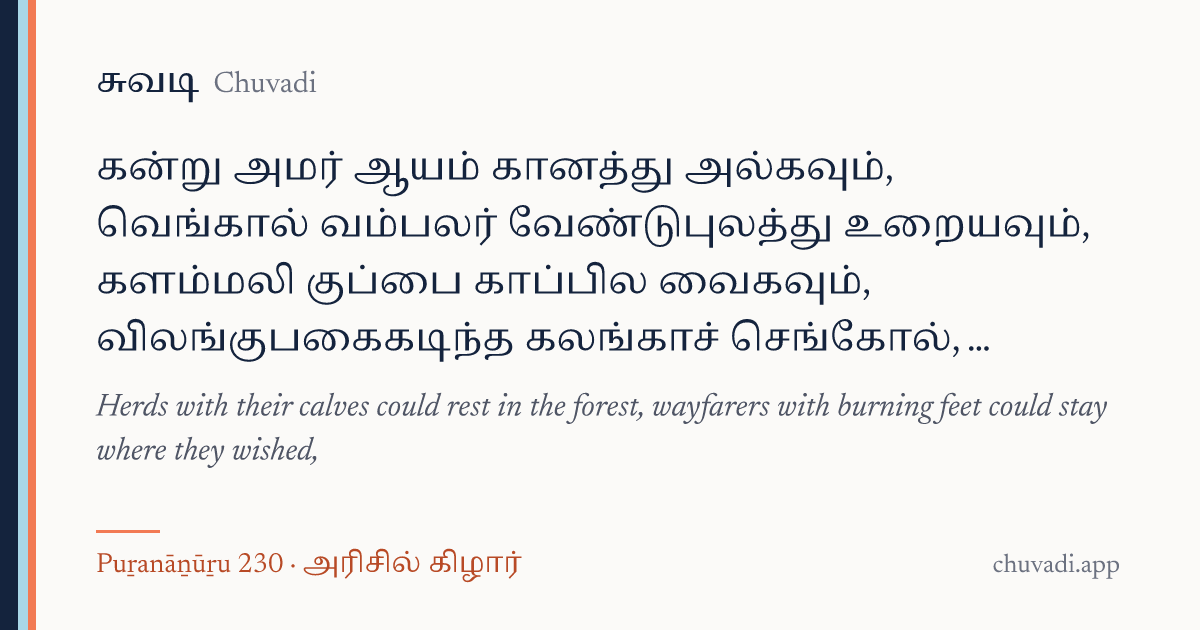
கன்றுகளோடு பசுக்கூட்டங்கள் காட்டில் தங்கவும், சுடும் கால்களையுடைய வழிப்போக்கர்கள் விரும்பிய இடத்தில் தங்கவும், களத்தில் குவிந்த தானியக் குவியல்கள் காவலின்றிக் கிடக்கவும், விலங்குகளையும் பகைவரையும் விரட்டிய கலங்காத செங்கோலும், உலகம் புகழ்ந்த விளக்கமான செயல்களையுடைய ஒளிவாளும் உடைய, பொய்யாத எழினி போரிட்டுக் களத்தில் வீழ்ந்தான். பெற்றவர்கள் கைவிட்ட குழந்தையைப் போல, அவனை விரும்பிய சுற்றத்தார் இடந்தோறும் வருந்தவும், கடும்பசியால் கலங்கிய துன்பம் மிகுந்த நெஞ்சோடு உலகம் வருந்தி இருக்கிறது. ஆனால் அந்த உலகத்தைவிட அறமற்ற கூற்றுவனே, நீயே மிக அதிகமாக இழந்துவிட்டாய்! அவன் வாழ்ந்தால் வரும் வயல் வளத்தை அறியாமல், நலிந்த குடும்பத்து உழவன் விதையை உண்பது போல நீ அவனை உண்ணாமல் இருந்திருந்தால், அவன் பகைவரைக் கொல்லும் போர்க்களத்தில் பகைவரின் பல உயிர்களைப் பருகி நீ வயிறு நிறைந்திருப்பாய் அல்லவா?
இது பொதுவியல் திணை; துறை ‘கையுறுநிலை’ என்று அச்சிடப்பட்டுள்ளது, அது ‘கையறுநிலை’ என்பதன் பிழை. பாடியவர் அரிசில் கிழார்; பாடப்பட்டவன் தகடூர் பொருது வீழ்ந்த அதியமான் எழினி. உழவன் விதையை உண்பது என்பது பாடலில் வெளிப்படையாகச் சொல்லப்படாமல் குறிப்பால் உணர்த்தப்படுகிறது.
ஆங்கிலம் · English translationAI
Translation
- Herds with their calves could rest in the forest,
- wayfarers with burning feet could stay where they wished,
- heaps on the threshing floors could lie unguarded,
- with his steady, just sceptre that drove off beasts and foes,
- his bright sword of shining deeds that the world praised:
- truthful Eḻiṉi fought and came to rest on the battlefield;
- like an infant abandoned by those who bore it,
- his beloved kin grieve, each in their own place,
- and with hearts full of distress, unsettled by fierce hunger,
- the world lies suffering; but far more than that world
- you have lost, lawless Death!
- Not knowing the wealth of the fields that would come from his living,
- if you, like a farmer of a failing house, had not devoured him,
- drinking the many lives of his enemies,
- you would have been well fed, would you not, on the battlefields where he slew?
What the poem says
Aricil Kiḻār laments Eḻiṉi, whom the metadata calls Atiyamāṉ Eḻiṉi "who fell fighting at Takaṭūr". The tiṇai is potuviyal; the turai is printed kaiyuṟunilai, a clear misprint for kaiyaṟunilai, helpless grief.
The first five lines describe the security of his country: cattle could rest in the forest, travellers could stop wherever they liked, harvested grain could lie unguarded, all because of his just sceptre and his sword. Then he fell in battle, and his people grieve like an abandoned baby, each of them lost and hungry.
The poet then turns on Death with the same argument as puram.227. Death has lost more than the grieving world has. Like a farmer from a ruined family who eats the seed instead of sowing it, it has devoured the one man who kept it fed. Had it let him live, it would have drunk its fill of his enemies' lives on his battlefields. Line 13 is elliptical, and the farmer's eating of the seed is understood rather than stated; the translation supplies "devoured him" for the verb.