



புறநானூறு 235
பாடல் · The poem
Tap a word to see where else it occurs.
பொருள் · Meaning in TamilAI
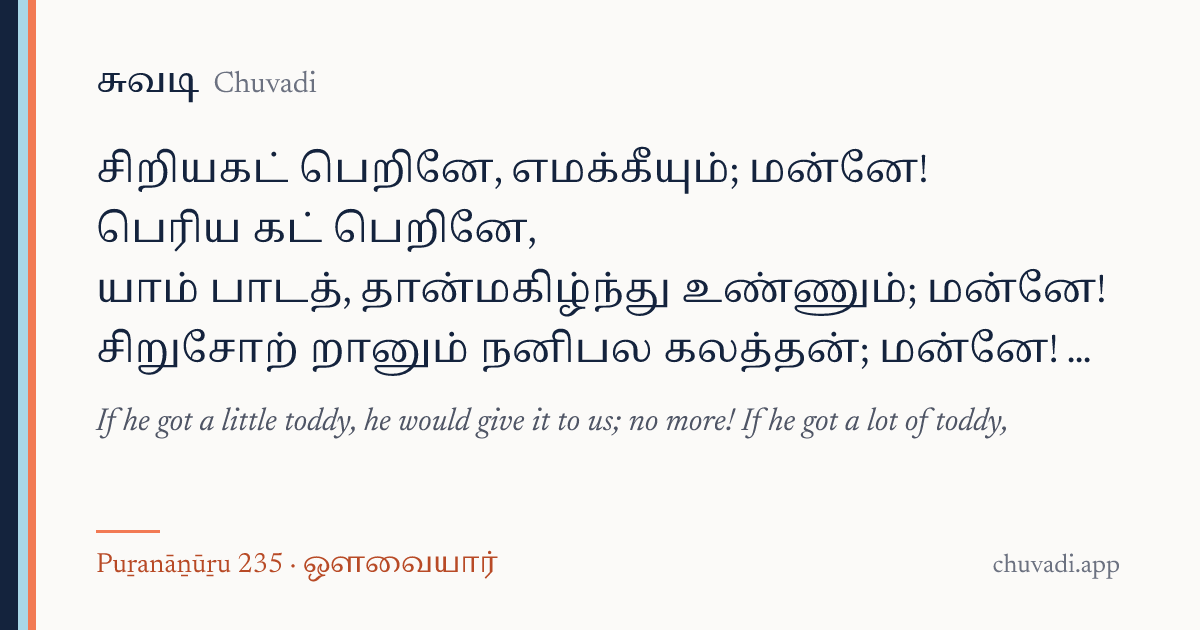
சிறிதளவு கள் கிடைத்தால் அதை எங்களுக்குக் கொடுப்பான்; அந்தக் காலம் போய்விட்டதே! நிறையக் கள் கிடைத்தால் நாங்கள் பாட, அவன் மகிழ்ந்து உண்பான்; அந்தக் காலம் போய்விட்டதே! சிறிதளவு சோறு இருந்தாலும் பல கலங்களில் பகிர்ந்து கொடுப்பான்; நிறையச் சோறு இருந்தாலும் பல கலங்களில் பகிர்ந்து கொடுப்பான்; அந்தக் காலம் போய்விட்டதே! எலும்போடு இறைச்சி உள்ள பகுதிகளையெல்லாம் எங்களுக்குக் கொடுப்பான்; அம்பும் வேலும் பாயும் இடங்களிலெல்லாம் தானே நிற்பான்; அந்தக் காலம் போய்விட்டதே! நரந்தம் மணக்கும் தன் கையால், புலால் மணக்கும் என் தலையைத் தடவுவான்; அந்தக் காலம் போய்விட்டதே! அவனுடைய அரிய மார்பில் பாய்ந்த வேல், சிறந்த பெரும்பாணர்களின் அகன்ற உண்கலங்களைத் துளைத்து, இரப்பவர்களின் கண்மணிகள் துயரத்தால் சோர, அழகிய சொல்லும் நுட்பமான அறிவும் உடைய புலவர்களின் நாவில் சென்று விழுந்தது. எங்களுக்குப் பற்றுக்கோடான எம் தந்தை இப்போது எங்கே இருக்கிறானோ? இனிப் பாடுபவர்களும் இல்லை; வறியவர்களுக்கு ஒன்றைக் கொடுப்பவர்களும் இல்லை. குளிர்ந்த நீர்த்துறையில் உள்ள பகன்றையின் மணமுள்ள பெரிய மலர் யாரும் சூடாமல் வாடுவது போல, பிறருக்கு எதையும் கொடுக்காமல் இறக்கும் உயிர்கள் மிகப் பல!
இது பொதுவியல் திணை; துறை கையறுநிலை. பாடியவர் ஔவையார்; பாடப்பட்டவன் அதியமான் நெடுமான் அஞ்சி. ‘மன்னே’ என்ற சொல் முன்பு இருந்து இப்போது இல்லாமல் போனதைக் குறிக்கிறது. ‘படுநர்’ என்பது வறியவர் என்றோ ‘பாடுநர்’ என்பதன் வடிவம் என்றோ கொள்ளலாம்; உறுதியாகத் தெரியவில்லை.
ஆங்கிலம் · English translationAI
Translation
- If he got a little toddy, he would give it to us; no more!
- If he got a lot of toddy,
- he would drink it gladly while we sang; no more!
- Even with a little rice, he would share it out in many bowls; no more!
- Even with a great deal of rice, he would share it out in many bowls; no more!
- Wherever there was flesh on the bone, he would give it to us; no more!
- Wherever arrow and spear would pierce, there he would stand; no more!
- With his hand fragrant with narantam,
- he would stroke my head that smells of meat; no more!
- Piercing the wide bowls of the great bards of noble line,
- making the pupils of the suppliants' eyes droop in grief,
- into the tongues of poets of fine words and subtle judgment
- it went and fell, his
- spear that passed through his precious breast!
- Where is he now, my father who was our support?
- Now there are none who sing, and none to give anything to those in need.
- Like the great fragrant flowers of the pakaṉṟai at the cool ford
- that wither without being worn, without giving
- anything to others, the lives that perish are very many!
What the poem says
Auvaiyār's best-known lament for Atiyamāṉ Neṭumāṉ Añci. The tiṇai is potuviyal and the turai kaiyaṟunilai, helpless grief.
The first nine lines are a litany of memories, each closed by maṉṉē, a particle that marks something that was once so and is now gone (rendered "no more!"). If there was a little toddy, he gave it to the poets; if there was much, he drank it with them while they sang. Small or large, he shared his rice; the best meat he gave to them; in battle he stood wherever the arrows and spears fell thickest. Most tender is his fragrant hand stroking the poet's head, which smelled of the meat she had eaten.
Then the spear that killed him: it pierced his chest, but in the poem it goes on to pierce the bards' begging bowls, dim the suppliants' eyes, and fall on the tongues of poets, since all of them lose their life with his. The ending is a general reflection: now there is no one to sing and no one to give, and many people live and die like flowers of the pakaṉṟai that wither unworn, giving nothing to anyone. In line 16 the word paṭunar is taken as "those in need"; it may instead be a form of pāṭunar, "those who sing". The edition's placing of the exclamation mark before maṉṉē in line 9 is editorial.