



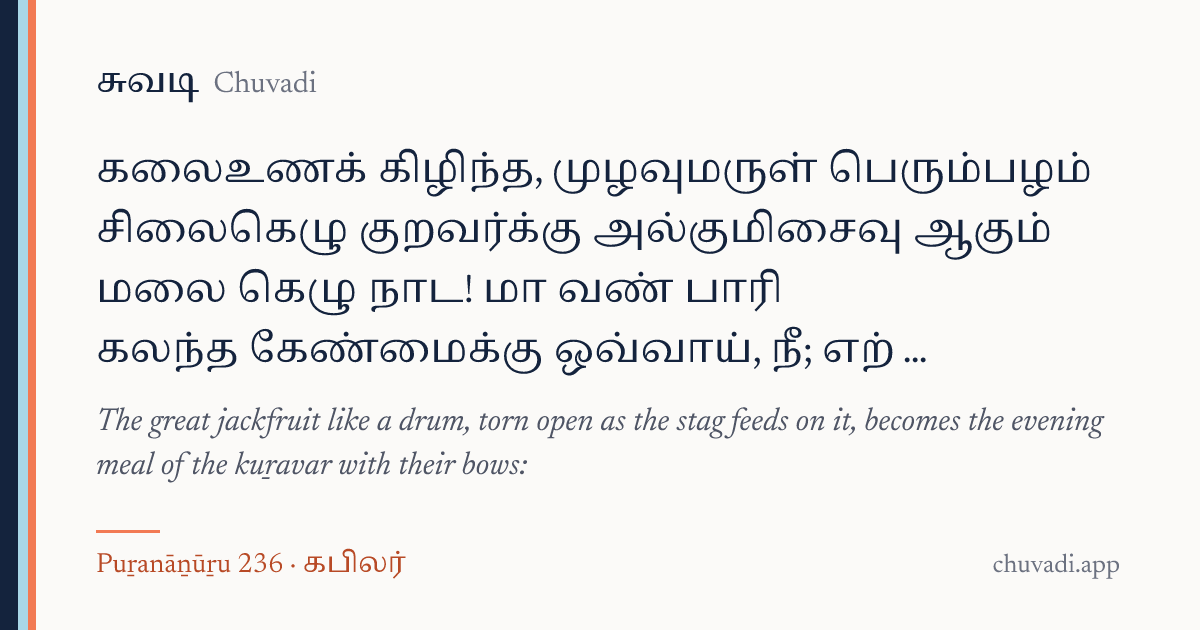
புறநானூறு 236
பாடல் · The poem
Tap a word to see where else it occurs.
பொருள் · Meaning in TamilAI
ஆண்மான் தின்னக் கிழிந்த, முழவு போன்ற பெரிய பலாப்பழம், வில்லேந்திய குறவர்களுக்கு மாலை உணவாகும் மலைநாட்டுத் தலைவனே! பெருங்கொடையாளனான பாரியே! நாம் கலந்து பழகிய நட்புக்கு நீ ஏற்றவனாக நடக்கவில்லை. என்மேல் நீ சினம் கொண்டிருக்க வேண்டும். என்னைக் காத்த ஆண்டுகளில் இருந்த பெருமைமிக்க நட்புக்குப் பொருந்தாமல், உன்னோடு நான் சேர்ந்து வருவதை ஏற்காமல், ‘இங்கேயே இரு’ என்று சொல்லி நீ இப்படி நடந்துகொண்டாய்; நானும் அதற்கு உடன்படவில்லை. ஆனாலும், இப்பிறவியில் நம்மை ஒன்றாகக் காட்டியது போல, மறுபிறவியிலும் இடையறாத தோழமையோடு உன்னுடன் சேர்ந்து வாழும்படி உயர்ந்த ஊழ் செய்யட்டும்!
இது பொதுவியல் திணை; துறை கையறுநிலை. பாடியவர் கபிலர்; பாடப்பட்டவர் பெயர் குறிப்பில் இல்லை, ஆனால் பாடல் பாரியை விளிக்கிறது. ‘மேயினேன் அன்மை யானே’ என்ற தொடரின் பொருளும் அதன் தொடர்பும் உறுதியாகத் தெரியவில்லை.
ஆங்கிலம் · English translationAI
Translation
- The great jackfruit like a drum, torn open as the stag feeds on it,
- becomes the evening meal of the kuṟavar with their bows:
- lord of the mountain country! Pāri, great in giving,
- you were not true to the close friendship we shared; with me
- you must have been angry: in the years you kept me,
- not living up to our friendship of great worth,
- not letting me come with you, saying "Stay behind",
- since you have been like this, and since I, for my part,
- did not consent to it; and yet,
- as in this life it showed us together, in the next life
- may an unbroken companionship with you
- make us dwell together: may lofty fate do this!
What the poem says
Kapilar's lament for Pāri, lord of the mountain country (the metadata gives no patron, but the poem names him). The tiṇai is potuviyal and the turai kaiyaṟunilai, helpless grief.
The opening lines picture Pāri's country: a stag tears open a great jackfruit, as big as a drum, and what is left becomes supper for the hill people. Then Kapilar reproaches his dead friend. Pāri, he says, was not true to their friendship: he went to his death and would not let Kapilar come with him, telling him to stay behind. Kapilar says he did not agree to this.
The poem ends with a prayer to fate: as this life showed them together, may the next life join them again in a companionship without a break. Tradition connects this with the time after Pāri's death, when Kapilar cared for his daughters (see puram.201 and 202). Lines 8 and 9 are difficult; mēyiṉēṉ aṉmai is taken as "I did not consent", but the sense of the clause and its link to the following "and yet" are not certain.