



புறநானூறு 239
பாடல் · The poem
Tap a word to see where else it occurs.
பொருள் · Meaning in TamilAI
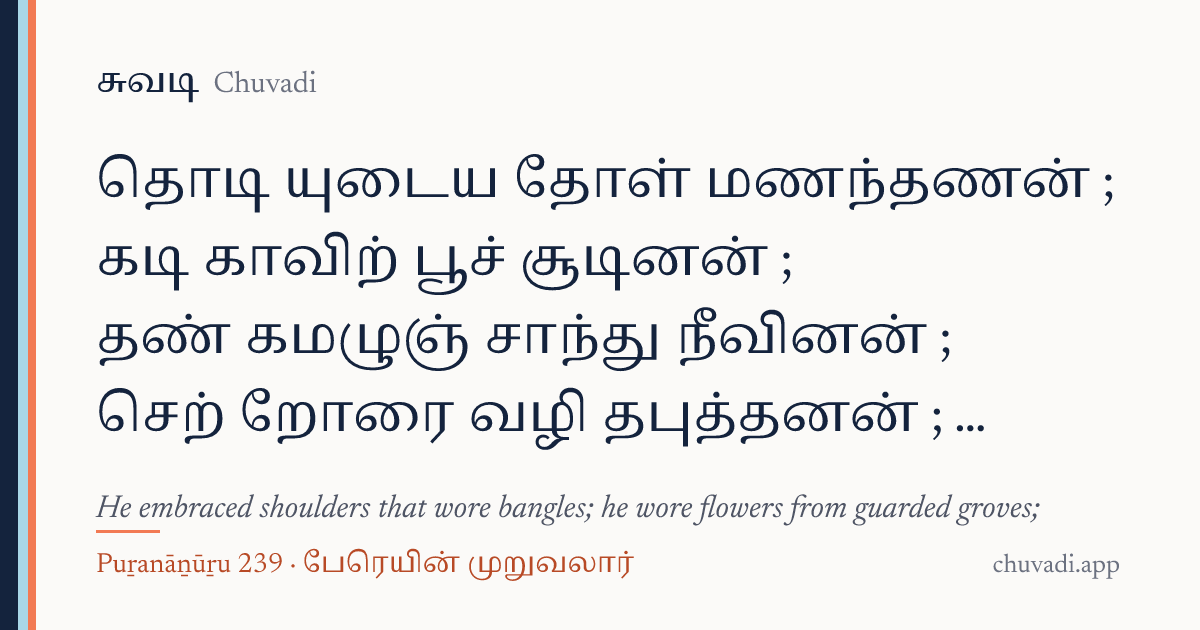
வளையல் அணிந்த மகளிரின் தோள்களைத் தழுவினான்; காவல் உள்ள சோலைகளின் பூக்களைச் சூடினான்; குளிர்ந்து மணக்கும் சந்தனத்தைப் பூசினான்; பகைவர்களை வழியோடு அழித்தான்; நண்பர்களை உயர்த்திப் பேசினான்; வலியவர்கள் என்று அவர்களுக்குப் பணிந்து பேசவில்லை; மெலியவர்கள் என்று அவர்களிடம் செருக்கோடு பேசவில்லை; பிறரிடம் இரப்பதை அறியாதவன்; இரந்தவர்களுக்கு மறுப்பதை அறியாதவன்; மன்னர்களின் அவையில் உயர்ந்த புகழை வெளிப்படுத்தினான்; எதிர்த்து வந்த படையைத் தாங்கி நின்றான்; தோற்றோடிய படையின் முதுகைக் கண்டான்; விரைந்த நடையுடைய குதிரைகளைச் செலுத்தினான்; நீண்ட தெருக்களில் தேரைச் செலுத்தினான்; உயர்ந்த களிறுகளின்மேல் ஏறினான்; இனிய கள் நிறைந்த குடங்களைத் தீர்த்தான்; பாணர்கள் மகிழும்படி அவர்களுடைய பசியைப் போக்கினான்; மயக்கம் தரும் சொற்களைக் கைவிட்டான். இவ்வாறு செய்யவேண்டியவை அனைத்தையும் செய்துவிட்டதால், புகழை விரும்பிய இவனுடைய தலையைப் புதைத்தாலும் சரி, எரித்தாலும் சரி, அது விழும் இடத்தில் விழட்டும்!
இது பொதுவியல் திணை; துறை கையறுநிலை. பாடியவர் பேரெயின் முறுவலார்; பாடப்பட்டவன் நம்பி நெடுஞ்செழியன். முதல் அடியில் ‘மணந்தணன்’ என்பது ‘மணந்தனன்’ என்பதன் அச்சுப்பிழை.
ஆங்கிலம் · English translationAI
Translation
- He embraced shoulders that wore bangles;
- he wore flowers from guarded groves;
- he rubbed on cool, fragrant sandal paste;
- he wiped out the line of his foes;
- he spoke highly of his friends;
- he did not speak humbly, thinking "they are strong";
- he did not speak proudly, thinking "they are weak";
- he never knew how to beg from others;
- he never knew how to refuse those who begged;
- he showed his lofty fame in the assemblies of kings;
- he stood firm against the armies that came at him;
- he saw the backs of the armies that fled;
- he drove horses of fierce pace;
- he drove his chariot through long streets;
- he rode on tall, stately elephants;
- he emptied jars packed with sweet liquor;
- he ended hunger so that the bards rejoiced;
- he put aside words that confuse; and so,
- since he has done all that should be done,
- bury it, or else burn it,
- let it fall where it will fall, the head of this man who loved fame!
What the poem says
Pēreyiṉ Muṟuvalār laments Nampi Neṭuñceḻiyaṉ. The tiṇai is potuviyal and the turai kaiyaṟunilai, helpless grief, though the poem's tone is closer to proud summation than to helplessness.
The poem is a list of eighteen short clauses, almost all ending in the same past-tense verb form (-ṉaṉ), each a thing the man did. Together they make a portrait of a complete life in the heroic ideal: love and pleasure (women, flowers, sandal paste, wine), war (destroying foes, holding firm, seeing the enemy flee), dignity in speech (neither fawning on the strong nor scorning the weak), and generosity (never begging, never refusing a beggar, feeding the bards).
The ending is the famous turn. Since he has done everything a man should do, it does not matter whether his body is buried or burned; let his head fall wherever it falls. Both burial and cremation are named as possibilities, and the poet sets them aside as unimportant beside the life lived. Line 1 prints மணந்தணன், a misprint for மணந்தனன் ("he embraced").