



புறநானூறு 240
பாடல் · The poem
Tap a word to see where else it occurs.
பொருள் · Meaning in TamilAI
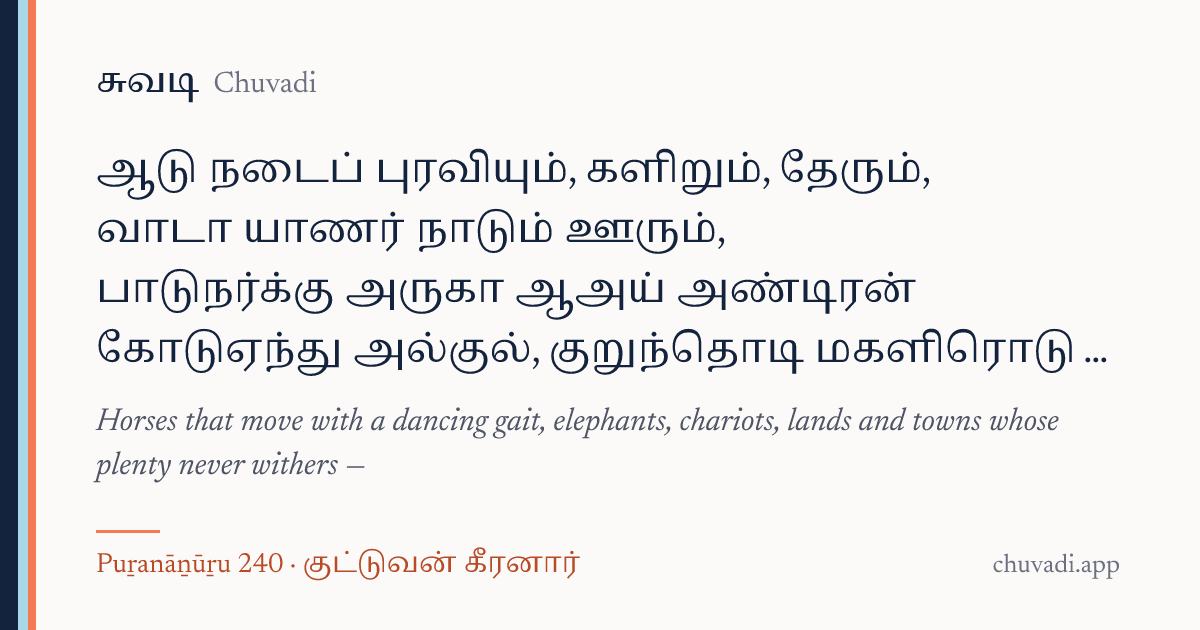
பாட்டுப் பாடுவோருக்கு, ஆடும் நடையுடைய குதிரைகளையும் யானைகளையும் தேர்களையும், வளம் குன்றாத நாடுகளையும் ஊர்களையும் குறையாமல் வழங்கியவன் ஆய் அண்டிரன். அணிகலன்கள் விளங்கும் இடையும் சிறு வளையல்களும் உடைய தன் மகளிரோடு, காலன் என்னும் கண்ணில்லாதவன் அவனைக் கொண்டு செல்ல, அவன் மேலுலகத்தை அடைந்தான் என்கின்றனர். பொந்துள்ள பாறை இடுக்கில் இருக்கும் பிளந்த வாயுடைய கூகை, "சுட்டுக் குவியுங்கள்" என்பதுபோல இறந்தவர்களை அழைத்துக் கூவும், கள்ளிச் செடிகள் நிறைந்த பாழ்நிலத்தின் ஒரு பக்கத்தில் அவன் உடல் கிடந்தது; ஒளிவீசும் நெருப்பு அதை எரிக்க, அந்த உடலும் அழிந்துவிட்டது. இப்போது புலவர்கள் தம்மைக் காக்கும் வள்ளலைக் காணாமல் ஒளியிழந்த கண்களோடு, ஆரவாரிக்கும் சுற்றத்தாரோடு மனம் உடைந்து, பசியால் வாடி, பிற நாடுகளை நோக்கிப் பயணம் செய்பவர்கள் ஆகிவிட்டனர்.
இது பொதுவியல் திணை, கையறுநிலைத் துறை; புரவலன் இறந்தபின் அவனைச் சார்ந்தோர் செயலற்று வருந்தும் நிலையைச் சொல்வது. ஆய் அண்டிரன் இறந்ததைக் குறித்துக் குட்டுவன் கீரனார் பாடியது. வள்ளலின் சாவு புலவர்களின் வாழ்வுக்கே முடிவாகிறது என்பதை இறுதி அடிகள் காட்டுகின்றன.
ஆங்கிலம் · English translationAI
Translation
- Horses that move with a dancing gait, elephants, chariots,
- lands and towns whose plenty never withers —
- Āy Aṇṭiraṉ, who never held these back from those who sang,
- together with his women of small bangles and ornamented waists,
- driven off by the eyeless one whom men call Death,
- has reached the world above, they say;
- where in a hollow cleft the owl with its gaping beak
- calls to the dead as if crying 'Burn them and heap them up',
- on one side of the waste ground thick with spurge his body lay,
- and as the bright fire wasted it, it was gone;
- with dull and lifeless eyes, no longer seeing their patron,
- with their clamouring families, broken in spirit, the poets,
- withered with hunger,
- have become travellers bound for other men's lands, now.
What the poem says
Kuṭṭuvaṉ Kīraṉār sings this lament for Āy Aṇṭiraṉ, the chieftain who appears in several neighbouring poems as a giver without equal. The tiṇai is potuviyal, the 'general' class that gathers poems not tied to a single martial theme, and the turai is kaiyaṟunilai, the helpless grief of those left behind when a patron dies.
The poem moves in three steps. First comes what Āy gave: horses, elephants, chariots, even whole lands and towns. Then comes his death, told plainly: the 'eyeless' Kālaṉ, Death who cannot see whom he takes, led him away, and he has gone to the upper world together with his women. The poem says only this much about the women; it gives no further detail. Then the cremation ground: an owl in a hollow seems to call out to the dead to be burned and piled up, the spurge-covered waste is the setting, and the fire consumes the body.
The last lines turn to the poets. Without their patron their eyes are dull, their families clamour around them, and, hungry, they must now set out for other countries in search of a giver. The grief is personal but also practical: a patron's death is the end of a livelihood.