



புறநானூறு 242
பாடல் · The poem
Tap a word to see where else it occurs.
பொருள் · Meaning in TamilAI
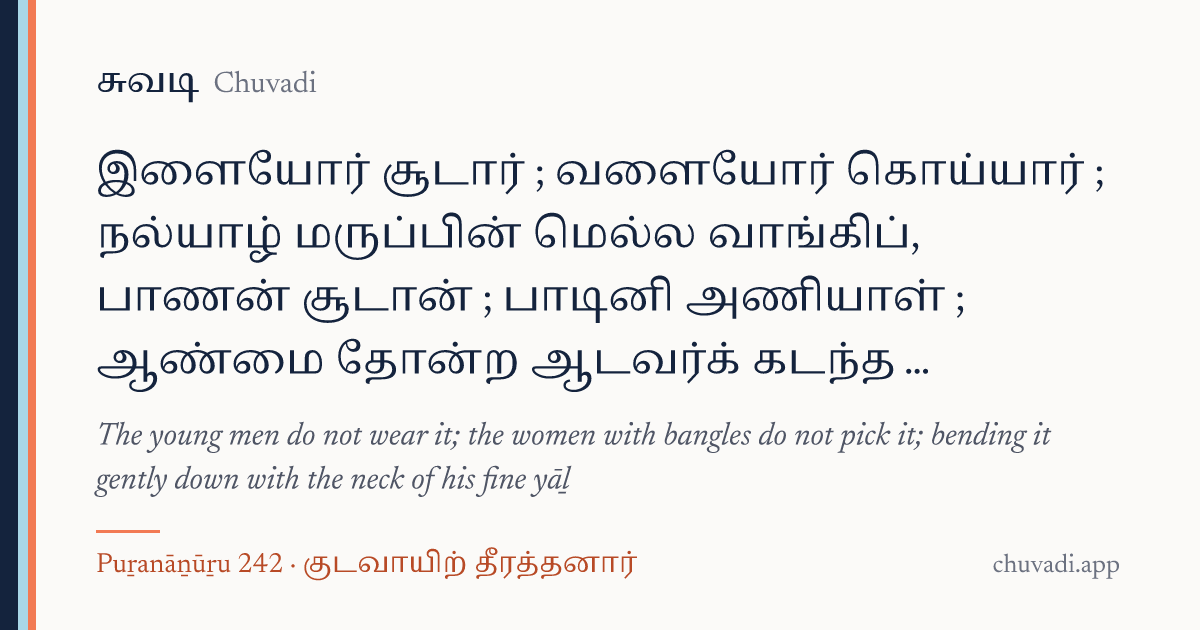
இளைஞர்கள் சூடுவதில்லை; வளையல் அணிந்த மகளிர் பறிப்பதில்லை; தன் நல்ல யாழின் தண்டால் கொடியை மெல்ல வளைத்துப் பறித்துப் பாணன் சூடுவதில்லை; பாடினியும் அணிவதில்லை. தன் ஆண்மை விளங்கும்படி வீரர்களை வென்ற, வலிய வேலையுடைய சாத்தன் இறந்துவிட்ட பிறகும், முல்லையே, நீ ஒல்லையூர் நாட்டில் பூக்கின்றாயோ?
இது பொதுவியல் திணை, கையறுநிலைத் துறை. ஒல்லையூர் கிழான் மகன் பெருஞ்சாத்தன் இறந்ததைக் குறித்துக் குடவாயிற் தீரத்தனார் பாடியது. துயரத்தில் மூழ்கிய நாட்டில் யாரும் பூச் சூடாத நிலையில், முல்லை மட்டும் எதையும் அறியாமல் பூப்பதைக் கேட்டு, மக்களின் துயரத்தைப் புலவர் உணர்த்துகிறார்.
ஆங்கிலம் · English translationAI
Translation
- The young men do not wear it; the women with bangles do not pick it;
- bending it gently down with the neck of his fine yāḻ
- the bard does not wear it; the bard's woman does not put it on;
- now that Cāttaṉ of the strong spear, who overcame warriors
- so that his manhood shone, has died — after that,
- do you still bloom, jasmine, in the land of Ollaiyūr?
What the poem says
Kuṭavāyil Tīrattaṉār (so the edition prints the name) addresses the jasmine (mullai) of Ollaiyūr after the death of Peruñcāttaṉ, son of the lord of Ollaiyūr, whom the colophon names as the subject. The tiṇai is potuviyal and the turai kaiyaṟunilai, the grief of those left without their patron.
The whole poem is one question. The flowers that young men once wore, that women plucked, that the bard pulled down with the curved neck of his yāḻ to put in his hair, and that the singing woman wore, are now touched by no one: in a land of mourning nobody adorns themselves. So why does the jasmine still bloom? The flower's indifference throws the people's grief into relief.
The detail of the bard hooking a branch with the neck of his lute is a small, vivid picture of ordinary life in the chieftain's days. Cāttaṉ himself is given only one line of praise: a strong-speared man who defeated warriors and showed his valour.