



புறநானூறு 243
பாடல் · The poem
Tap a word to see where else it occurs.
பொருள் · Meaning in TamilAI
இப்போது நினைத்துப் பார்த்தால் வருத்தமாக இருக்கிறது. இறுகிய மணலால் செய்த பாவைக்குப் பறித்த பூக்களைச் சூட்டி, குளிர்ந்த குளத்தில் நீராடும் பெண்களோடு கைகோத்து, அவர்கள் தழுவும்போது தழுவி, அவர்கள் ஊசலாடும்போது ஊசலாடி, மறைத்தல் என்பதையே அறியாத கள்ளமற்ற தோழர் கூட்டத்தோடு திரிந்தோம். உயர்ந்த கிளைகளையுடைய மருத மரம் தாழ்ந்து நிற்கும் நீர்த்துறையில், நீரருகே சாய்ந்த கிளையில் ஏறி, கரையில் நின்றவர்கள் வியக்கும்படியும், அலைகள் சிதறும்படியும், ஆழமான நீர்க்குட்டத்தில் "துடும்" என்று பாய்ந்து, முழுகி அடிமணலை அள்ளி வந்தோம். அந்தக் கல்வியறியாத இளமை இரங்கத்தக்கது! பூண் கட்டிய தலையுடைய வலிய தடியை ஊன்றி, நடுங்கி, இருமல் இடையிடையே கலந்த சில சொற்களையே பேசும் பெருங்கிழவர்களாகிவிட்ட எமக்கு, அந்த இளமை இனி எங்கே இருக்கிறதோ?
இது பொதுவியல் திணை, கையறுநிலைத் துறை; இங்கே வருத்தம் இழந்த இளமைக்காக. பாடியவர் தொடித்தலை விழுத்தண்டினார்; அவர் பெயர் இப்பாடலின் சொற்றொடரிலிருந்தே வந்ததாகத் தெரிகிறது. பாடப்பட்டவர் எவரும் குறிக்கப்படவில்லை.
ஆங்கிலம் · English translationAI
Translation
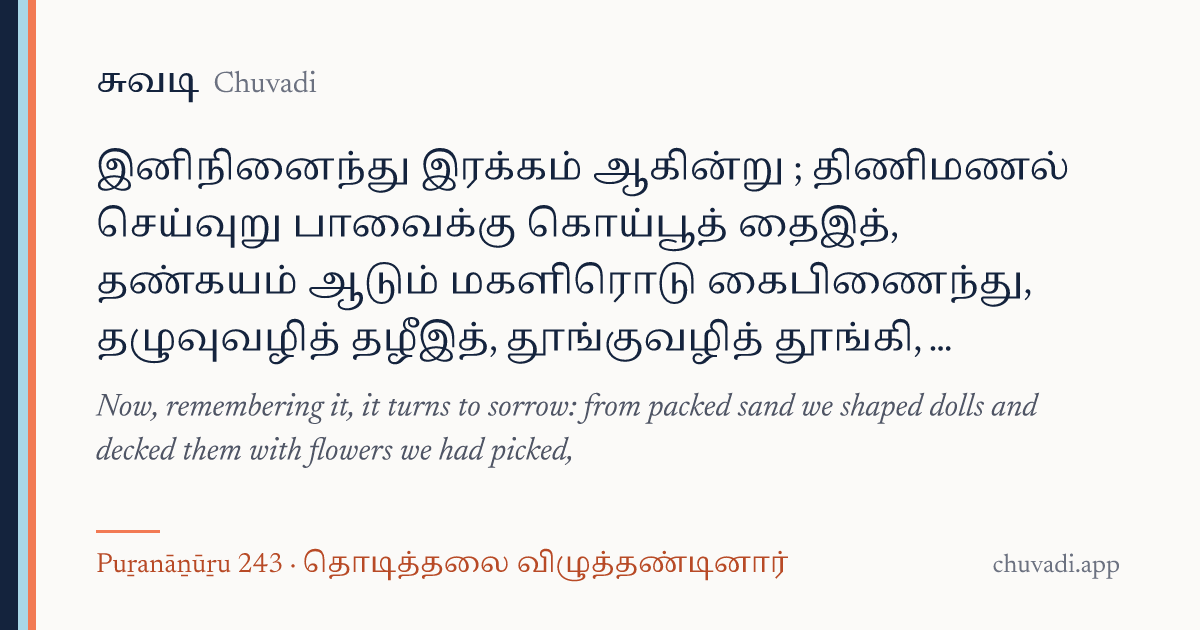
- Now, remembering it, it turns to sorrow: from packed sand
- we shaped dolls and decked them with flowers we had picked,
- we joined hands with the girls who played in the cool pond,
- we embraced where they embraced, we swung where they swung,
- with a guileless band of friends who knew nothing of secrets;
- where the high-branched marutam bent low over the bathing place,
- we climbed the bough that dipped down near the water, and with a flourish,
- so that those on the bank were amazed, scattering the waves,
- we leapt with a splash into the deep pool,
- dived and came up with sand — that untaught youth,
- how pitiable it is! Where can it be now,
- 'leaning on a stout staff capped with a ring, trembling,
- speaking few words broken by coughing,
- very old men' — for us, who have become such?
What the poem says
An old man looks back on his boyhood. The poet's name, Toṭittalai Viḻuttaṇṭiṉār, 'he of the stout staff with a ringed head', is taken from the poem's own phrase, as often happens in this anthology. The tiṇai is potuviyal and the turai kaiyaṟunilai; here the helpless grief is not for a dead patron but for lost youth, and no patron is named.
The memories are tumbled together in one long sentence: making sand dolls and decorating them with flowers, holding hands with girls bathing in a cool pond, swinging and embracing in their games, with friends who had nothing to hide. Then the best of it: climbing a marutam branch that hung over the water and leaping into the deep pool with a splash that astonished the people on the bank, and diving down to bring up sand from the bottom.
All this the speaker calls 'untaught youth' (kallā iḷamai), young before learning, and he pities it now as something gone. The final lines quote, as if from someone else, the description of what he has become: an old man leaning on a staff, trembling, his few words broken by coughing. The contrast between the leap into the pool and the shaking hand on the staff carries the poem.