



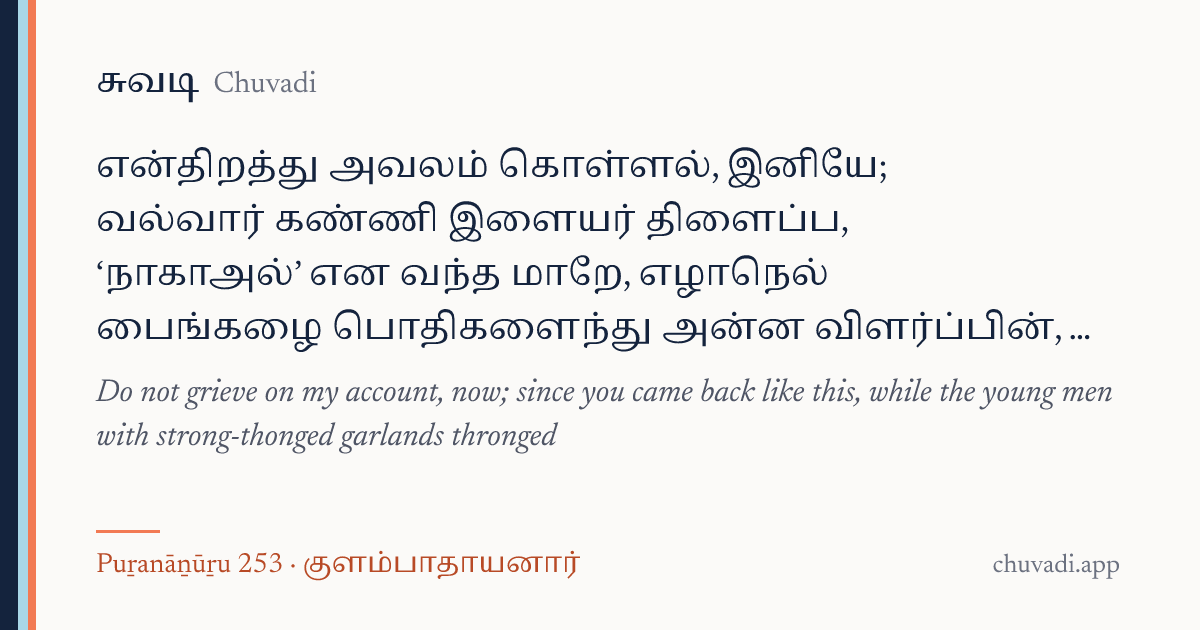
புறநானூறு 253
பாடல் · The poem
Tap a word to see where else it occurs.
பொருள் · Meaning in TamilAI
என்னைக் குறித்து இனி வருந்தாதே. வலிய வாரால் கட்டிய கண்ணியணிந்த இளைஞர்கள் கூடி ஆரவாரித்து, 'நகாதே' என்று சொல்ல, நீ இவ்வாறு வந்துவிட்டாய்; உறை களைந்த எழாநெல்லின் பசிய தண்டைப் போல வெளுத்த, வளையல் இல்லாத வெறுங்கைகளை உயர்த்திக்கொண்டு, நம் சுற்றத்தாரிடம் உன் சொல்லை நான் கொண்டு செல்லவோ? உன் செய்தியைச் சொல்!
இது பொதுவியல் திணை, முதுபாலைத் துறை; பாலை நிலத்தில் கணவனை இழந்த பெண்ணின் துயரைச் சொல்வது. குளம்பாதாயனார் பாடியது. இரண்டாம், மூன்றாம் அடிகளின் பொருள், குறிப்பாக 'நாகாஅல்' என்ற சொல்லின் பொருள், உறுதியாகத் தெரியவில்லை; 'எழாநெல்' என்பது எந்தத் தானியம் என்பதும் தெளிவாக இல்லை.
ஆங்கிலம் · English translationAI
Translation
- Do not grieve on my account, now;
- since you came back like this, while the young men with strong-thonged garlands thronged
- and cried 'Do not laugh', with a pallor like the green stalk
- of the never-rising rice stripped of its sheath,
- raising my empty hands without bangles,
- shall I carry your word among the kin? Tell me your message!
What the poem says
Kuḷampātāyaṉār's poem belongs to potuviyal tiṇai with the turai mutupālai, the grief of a woman whose husband has died in the wilderness. She speaks to the dead man.
She tells him not to grieve for her, and then asks what she is to say to their kin when she returns among them, raising her bare arms from which the bangles have been broken. Her paleness is compared to the green stem of a rice-like grass stripped of its sheath; the phrase eḻā nel, literally 'rice that does not rise', is taken as a name for a kind of grain or bamboo-rice, but its identity is not certain.
Lines 2–3 are the most doubtful part of the poem. They speak of young men wearing garlands bound with strong thongs, crowding round, and of the cry nākāal, which is read here as 'do not laugh'; the reading and the situation it implies are uncertain. The question at the end, 'tell me your message', is a cry to someone who cannot answer.