



புறநானூறு 254
பாடல் · The poem
Tap a word to see where else it occurs.
பொருள் · Meaning in TamilAI
இளையோரும் முதியோரும் வேறு இடங்களுக்குச் சென்றுவிட, நீ அவர்களை எதிர்கொண்டு எழாமல், மார்பு மண்ணைத் தழுவ, பாலைவழியின் நடுவில் விழுந்து கிடக்கிறாய், வீரனே! வெளுத்த, வளையல் இல்லாத வெறுங்கைகளை உயர்த்திக்கொண்டு, சுற்றத்தாரிடையே "இளையவன் இப்படி ஆகிவிட்டான்" என்று உன்னைப் பற்றிய செய்தி பரவுமானால், "ஊரின் முன்னே நிற்கும், பூவாமலே காய்க்கும், பழுத்த பழங்கள் நிறைந்த ஆலமரத்தில் பறவைகள் கூடி வளம் பெறுவதைப் போன்றது என் மகனின் செல்வமும் பெருமையும் எங்களுக்கு" என்று நாள்தோறும் ஓயாமல் உன்னைப் புகழ்ந்த உன் தாய் என்ன ஆவாளோ? அவள் இரங்கத்தக்கவள்!
இது பொதுவியல் திணை, முதுபாலைத் துறை; பாலை நிலத்தில் இறந்த வீரனுக்காக வருந்துவது. கயமனார் பாடியது. பேசுபவள் அவன் மனைவியாக இருக்கலாம்; பாடல் அதைத் தெளிவாகச் சொல்லவில்லை.
ஆங்கிலம் · English translationAI
Translation
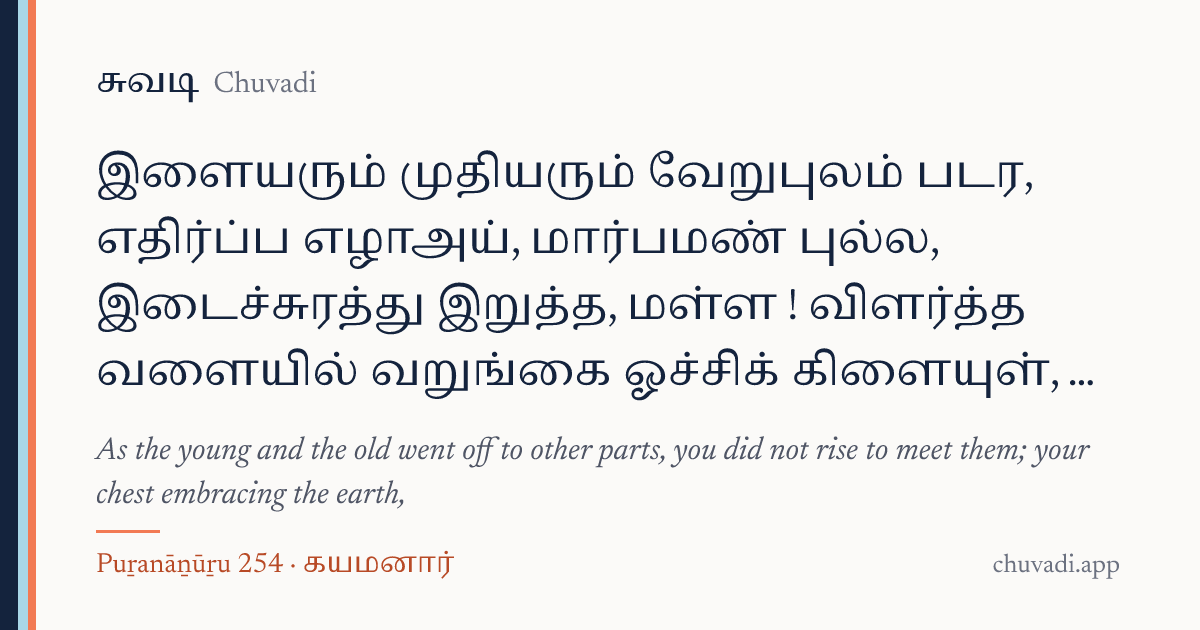
- As the young and the old went off to other parts,
- you did not rise to meet them; your chest embracing the earth,
- you lie fallen in the middle of the wasteland, O warrior! With pale
- empty hands without bangles raised, among the kin,
- 'This is what has become of the young one' —
- if word of you goes round like that, then
- 'Like the banyan in front of the town, flowerless yet ripe with fruit,
- rich with the birds that throng it, is my son's
- wealth and greatness to us' — so, every day,
- praised you without end your mother:
- what will become of her? She is to be pitied!
What the poem says
Kayamaṉār's poem, in potuviyal tiṇai with the turai mutupālai, is spoken over a young man who has died in the wilderness. The speaker seems to be a woman of his household, perhaps his wife, though the poem does not say.
Everyone else has gone away, young and old; he did not rise to face them but lies with his chest on the ground in the middle of the dry country. She imagines returning to the kin with bare, pale arms, and the news going round: 'this is what has become of the young man.'
Then her thought turns to his mother. Every day she used to praise her son, saying that his wealth and standing were to the family what a fruit-laden banyan in front of the village, crowded with birds, is to the village. The banyan is called kōḷi, a tree that fruits without visible flowers. The poem ends on the mother: what will become of her? The repeated phrase about bare arms raised among the kin links this poem to the previous one.